
Unprecedented Growth on the Horizon for Morocco
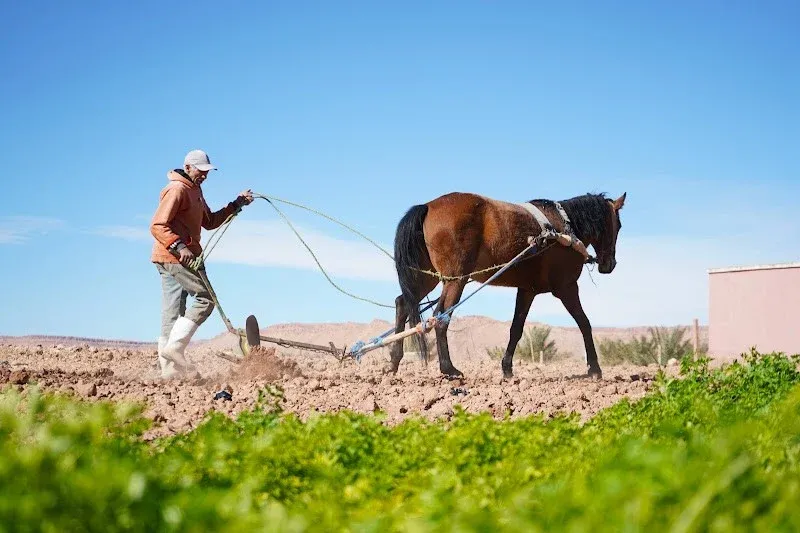
In light of recent official figures and analytical insights, economists are expressing optimism regarding Morocco's economic future, particularly attributing it to an exceptional agricultural season. The Bank of Morocco has projected a significant leap in the national economy, forecasting a growth rate of 5.6% for 2026, marking the highest growth rate the country has witnessed in years. This consensus is not solely based on macroeconomic indicators but is fundamentally supported by the anticipated strong performance of the agricultural sector. Following a rainy year, the expected grain yield is around 82 million quintals, providing a robust internal fuel for economic growth, complemented by a notable stability in non-agricultural activities and increasing institutional confidence.
Nevertheless, the enthusiastic data presents a paradox for Morocco, as it faces the challenge of stability amidst potential external shocks, particularly in the energy sector. While the safety margins, represented by foreign currency reserves and the flexible credit line—which may be activated in response to the repercussions of geopolitical tensions—serve as a protective shield for the financial balances, the daily living challenges and the dual dependency on climate conditions and energy prices remain structural obstacles that continue to test the resilience of the national economy.
Growth Trajectory and Economic Resilience
Abderrazak El Hiri, a researcher and director of the Economic Analysis and Forecast Coordination Laboratory at the University of Fez, observes that Morocco is currently experiencing its highest growth rate in several years. Following the first quarterly meeting of 2026, the Bank of Morocco revealed a remarkable growth trajectory, indicating a rate of 4.8% for 2025 and an anticipated increase to 5.6% for 2026, before stabilizing around 3.5% in 2027, based on a return to average agricultural yields. The robust recovery expected in 2026 is primarily attributed to the exceptional agricultural season, with nearly 4 million hectares cultivated and predictions of grain production reaching 82 million quintals. Concurrently, the non-agricultural sector is maintaining a stable dynamic with a growth rate of approximately 4.5%, driven by investments in infrastructure and major projects.
Moreover, Morocco's access to a flexible credit line valued at $4.5 billion is viewed as a preventive measure to enhance resilience and sustainability, especially in light of international uncertainties and geopolitical developments. This line is only granted to countries that meet stringent criteria regarding sound budgetary and monetary policies, as well as the quality of statistical data, all of which Morocco satisfies.
Despite the elevation in energy risks as an external shock, economist Mohamed Adel Eshoo notes that the Bank of Morocco has raised its growth expectations for the Moroccan economy in 2026 to 5.6%, due to improved agricultural performance and a projected grain yield of 82 million quintals. However, he emphasizes a crucial analytical point that the anticipated improvement does not negate the impact of fuel supply shocks; rather, it may only partially mitigate them through support for agricultural supply and rural income. Thus, positive agricultural news does not eliminate energy risks but indicates the presence of an internal balancing element that can partially absorb the effects of external shocks.
On the macroeconomic stability front, Eshoo asserts that the available data indicate Morocco possesses a degree of resilience, with expectations of official currency reserves rising to 482 billion dirhams by 2027, enough to cover 5.5 months of imports. However, these reserves, while safeguarding financial and monetary balances, do not automatically prevent the transmission of rising international prices to the domestic market, especially concerning strategic energy commodities such as diesel and gasoline.
In conclusion, both experts agree that the Moroccan economy, despite its current strengths, still grapples with dual dependencies: reliance on climate conditions—which causes fluctuations in growth between 2026 and 2027—and dependence on international energy prices. This reality underscores the necessity of bolstering energy security and social justice as complementary pillars to financial reforms.
As reported by hespress.com.