
Subscribe to our notifications to receive the latest news and updates.
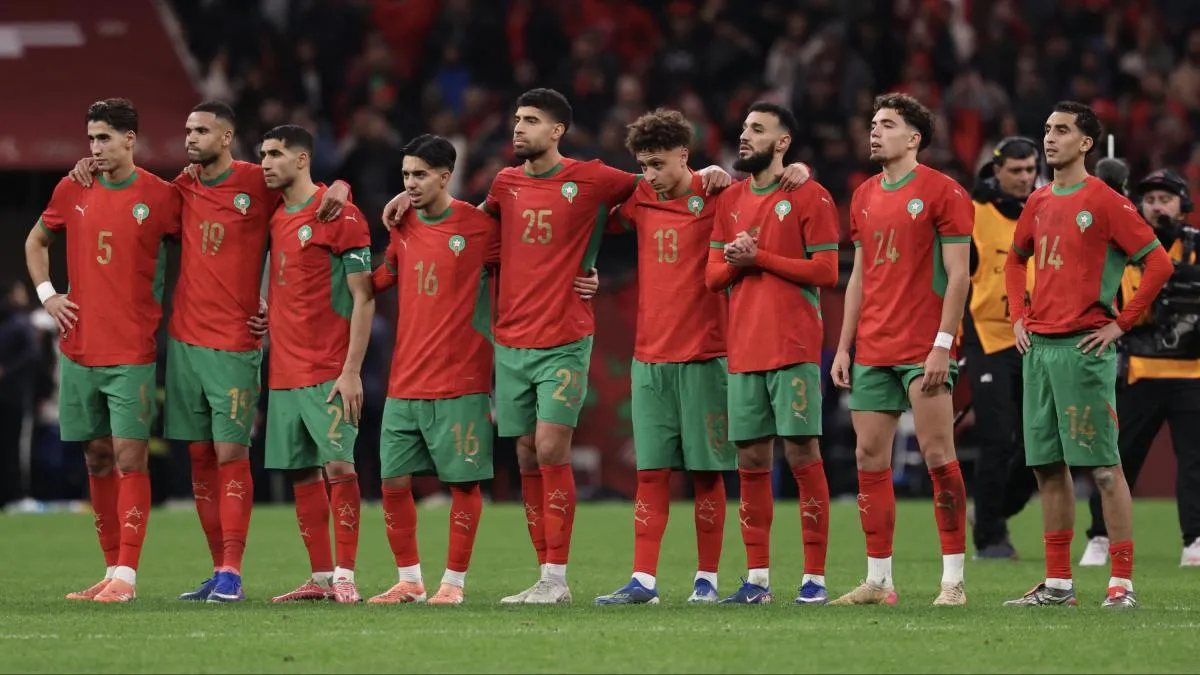
On January 14, 2026, Morocco faced Nigeria in a penalty shootout for the Africa Cup of Nations. However, the recent and unprecedented decision by the Confederation of African Football (CAF) to strip Senegal of its title, awarded in January, and reassign it to Morocco has ignited a debate regarding the influence of the Moroccan kingdom within the sport. This shift is particularly significant as Morocco is set to co-host the 2030 World Cup alongside Spain and Portugal, with Fouzi Lekjaa, the president of the Moroccan Football Federation, adeptly navigating the political landscape. Lekjaa serves as the first vice president of CAF and has been a member of FIFA's Council since 2021, positioning himself as a close ally of FIFA president Gianni Infantino.
International competitions, such as the recent men's Africa Cup of Nations, are frequently hosted in Morocco, which often provides a venue for matches involving other African nations like Burkina Faso, Mozambique, Guinea, Mali, Sudan, and Djibouti. This is often due to political instability or insufficient infrastructure in those countries. As Jean-Baptiste Guégan, a sports geopolitics expert and professor at Sciences Po in Paris, notes, "Since Infantino took the helm of FIFA in 2016, Morocco has gained heightened importance, particularly through the figure of Fouzi Lekjaa." This growing influence has raised eyebrows, prompting Senegalese authorities to call for an international investigation into potential corruption within CAF, alluding to suspicions that surround Morocco's recent ascendance.
Guégan emphasizes the distinction between Morocco's real influence and the myths that propagate through conspiracy theories regarding its impact on African football. He notes that such narratives have created an environment affecting the final match's outcome, which might explain Senegal's strong reaction. The CAF's decision to invalidate Senegal's title invoked articles 82 and 84 of the African Cup of Nations regulations, which state that if a team "refuses to play or leaves the field before the end of the match, it will be considered a loser and eliminated from the ongoing competition." The contentious final, held on January 18 in Rabat, saw Senegal originally claim victory with a 1-0 score in extra time, following a series of protests by Senegalese players against a dubious penalty awarded to Morocco shortly after a goal by Senegal was disallowed.
CAF president Patrice Motsepe addressed the matter in a recent video statement, asserting that "no African country will benefit from preferential treatment or more favorable conditions than others," reiterating the independence of the judges within the appeals committee of the organization. The Moroccan Federation pointed to a similar incident in 2019 when Esperance of Tunisia was declared the winner of the African Champions League three months after a final in which Wydad Casablanca left the field to protest a VAR malfunction. A well-informed source commented, "Find me a clearer disciplinary violation. Senegal left the field. It is crucial for governing bodies to prevent teams from creating chaos to pressure referees into making decisions that they do not agree with."
Despite the contentious nature of the ruling, there is uncertainty regarding whether Moroccan officials anticipated this outcome, as they primarily aimed to rectify initial sanctions imposed on them. The Moroccan Football Federation had previously faced fines totaling USD 315,000, and their captain, Achraf Hakimi, was suspended for one match. Alain Giresse, former coach of Senegal, remarked, "This decision benefits no one, not even the Moroccan players, as winning the AFCON through bureaucratic means lacks any true satisfaction." The matter remains unresolved, with the Senegalese Football Federation appealing to the Court of Arbitration for Sport (CAS) in a bid to reclaim their title.
As reported by primicias.ec.