
The Miraculous Rise of Morocco in the 1986 World Cup
Morocco entered the 1986 FIFA World Cup in Mexico as the team to beat, yet they managed to surprise everyone by securing draws against both Poland and England, ending those matches in a scoreless tie. Critics claimed they lacked the ability to score goals, but Morocco silenced doubters by netting two goals against Portugal within just 26 minutes. This underdog team, initially expected to finish at the bottom of their group, has now embarked on a remarkable journey that has taken them to the knockout stages, marking a historic moment for the nation and a miraculous achievement in sports history.
On June 11, 1986, Morocco became the first African nation to advance beyond the group stage of a World Cup, an accomplishment that will forever be etched in the hearts of its people. This unexpected success was spearheaded by an unconventional coach, José Faria, a Brazilian who, despite not speaking a word of Arabic, effectively communicated his strategies and messages to his players, achieving remarkable results on the field. Faria famously proclaimed that "football is mathematics," and following the stunning victory against Portugal, which positioned Morocco at the top of Group F, he humorously remarked to Portuguese coach José Torres, "He doesn't know that football is mathematics."
A National Celebration and Royal Recognition
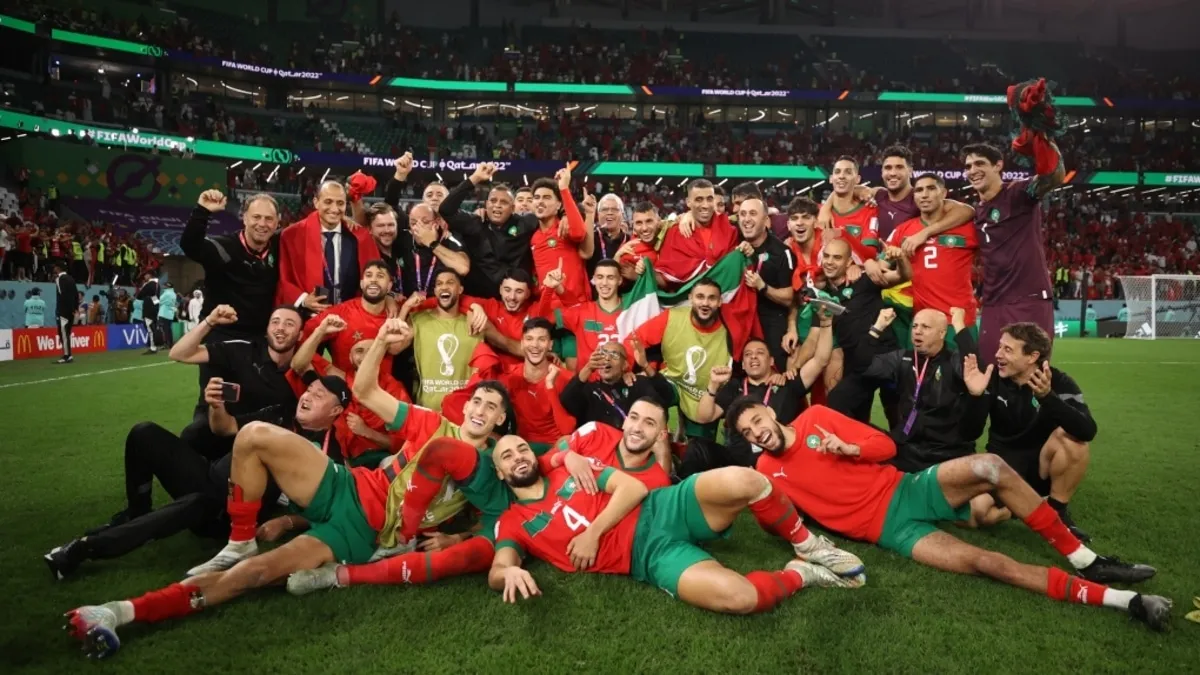
The qualification for the knockout round ignited an unprecedented national celebration in Morocco. As the final whistle blew in the match against Portugal, hundreds of thousands of Moroccans flooded the streets of Rabat, Casablanca, Marrakech, and Fez, celebrating their team's historic achievement. Major thoroughfares were choked with parades of cars, motorcycles, and trucks filled with jubilant fans waving national flags. The crowd erupted in chants, honoring the heroes of Guadalajara, particularly goalkeeper Ezaki Badou, who later signed with Mallorca, and the goalscorer Abdelrazak Khairi. The festivities continued into the early hours of the morning, prompting businesses and offices to open later the following day.
King Hassan II, a passionate supporter of the team, personally called the delegation in Mexico after each match to congratulate Faria and the players. Upon their return home, the team was escorted by the royal guard from the airport, greeted by throngs of enthusiastic fans lining the roads and streets. The Moroccan supporters honored their team, which, despite a valiant effort, succumbed to the formidable West Germany in the round of 16, with the match ending in a tight 1-0 defeat due to a late free-kick by Matthäus. The 'Atlas Lions', aware of their historic accomplishment, displayed no signs of disappointment, instead taking the time to greet and seek autographs from the German players, many of whom were global football stars like Rummenigge, Littbarski, Schumacher, and Matthäus.
The joy was further amplified by the promised rewards for advancing beyond the group stage. According to Luciano Wernicke in his book 'Unusual Stories from World Cup Football', a tobacco company generously gifted each player a significant amount of cigarette packs, "enough to stock a well-supplied kiosk." More rewards followed; as Haddaoui, a midfielder from that squad, recalled, "We were preparing to return home when King Hassan II insisted that the entire team stay in Mexico until the final." The king also treated them to a 10-day stay in New York and another in Geneva, where they were joined by Olympic champions Said Aouita and Nawal Moutawakil before making their way home, where they were warmly welcomed by the late King Hassan II.
Morocco's outstanding performance in the 1986 World Cup was built on the solid foundation of a disciplined, tactically astute team with a fierce defense. Coach Faria became a national icon during this period and, shortly after, converted to Islam, adopting the Muslim name Mehdi Faria. Fully integrated into Moroccan society, he went on to coach the FAR Rabat (the Moroccan Army club), leading the team to victory in the league, the cup, and the African Champions League.
As reported by abc.es.