
Morocco's Response to European Criticism
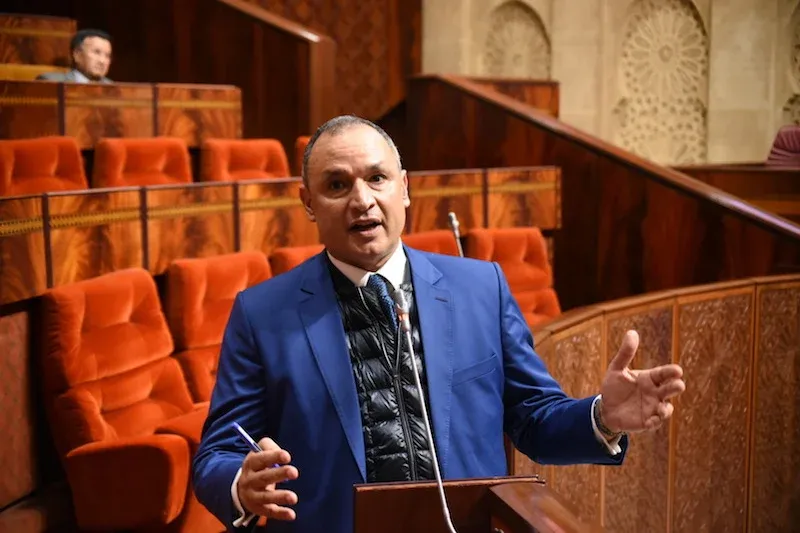
The Minister of Industry and Trade in Morocco, Ryad Mezzour, has staunchly dismissed allegations from European sources suggesting that Morocco is acting as a gateway for subsidized Chinese products into the European Union market. During an appearance on Médias24’s prominent program, Mezzour specifically addressed a Financial Times article that labeled Morocco as a potential Chinese manufacturing hub aimed at Europe, as well as concerns expressed by the European Commission regarding a perceived backdoor for Chinese industrial investments.
Mezzour challenged the accuracy of these claims, pointing out that while the Financial Times reported a pipeline of six billion dollars in Chinese investments in Morocco, the actual figure currently invested stands at a mere 1.2 billion dollars. He provided context by comparing this to China's total investments in Europe over the past decade, which amount to approximately 160 billion dollars. He pointed out that a single battery factory in Europe can receive up to seven billion euros in public subsidies, emphasizing that the amount attributed to Morocco is insignificant compared to what individual European nations allocate to specific industrial projects.
Clarifying the Automotive and Battery Sectors
The minister further clarified misconceptions regarding Morocco's automotive industry, noting that the two principal vehicle assemblers in the country operate under European brands. He highlighted that Europe itself has established a manufacturing capacity for Chinese automotive production that exceeds one million units on its territory, with over 800,000 Chinese vehicles sold in the European market annually. In contrast, Morocco exports 400,000 vehicles manufactured in Europe to Europe. Specifically addressing the battery sector, Mezzour explained that Morocco has developed its value chain in direct response to the European Union’s decision to enforce full electrification of vehicle fleets by 2035, revealing that while they sought global investments, only Chinese partners expressed interest.
Regarding the proposed EU Industrial Accelerator Act, Mezzour identified three contentious issues affecting Morocco: the stipulation that final assembly must occur within the EU, a super CO2 bonus for vehicles under 4.20 meters, and stringent content rules governing the battery value chain. He advocated for increased flexibility, asserting that by the end of 2026, Morocco will have established the most comprehensive battery value chain outside of Asia. Mezzour posed a critical question about the sourcing of essential materials such as phosphate, nickel, cobalt, and manganese for European gigafactories, suggesting that Morocco is a vital partner in this context.
A noteworthy development recognized by the minister is that the initial draft of the IAA, which excluded partner countries from receiving 'made in Europe' designations, has been revised to include all nations with EU free trade agreements, a category that includes Morocco. Mezzour expressed optimism that the rationale for Morocco-Europe industrial integration would ultimately prevail in ongoing negotiations, while also highlighting Morocco's agility and access to alternative markets as significant strategic advantages.
In other developments, data indicated that Morocco ranked third in the number of Schengen visas issued in 2019, with 346,032 applications approved, positioning Moroccans as the leading applicants in Africa, following only Chinese and Russian nationals. This situation has sparked considerable frustration among Moroccans in recent months, particularly after Schengen countries increased application fees.
Furthermore, UN Secretary General Antonio Guterres emphasized the importance of the migration meeting in Marrakech, aimed at adopting the Global Compact on Migration, urging various stakeholders to engage in meaningful commitments that would enhance the management of migration.
Morocco's exports of phosphates, fertilizers, and automotive products have reached a record high of 20 billion dollars, playing a crucial role in alleviating the country’s escalating trade deficit caused by rising prices of energy, food, and equipment. Exports of phosphates and derivatives surged by 54.8% to 10.3 billion dollars, while the automotive sector saw imports increase by 35%.
In diplomatic news, UN Sahara Envoy Staffan de Mistura is expected to visit the Tindouf Camps this weekend to deliver a final warning to the leaders of the separatist group regarding compliance with UN Security Council Resolution 2797, which endorses the Autonomy plan under Moroccan sovereignty. This visit follows recent rocket attacks by Polisario militants, highlighting ongoing regional tensions.
As reported by northafricapost.com.