
Morocco's Bold Investment Plans for the 2030 World Cup
In preparation for the prestigious 2030 World Cup, Morocco is initiating an expansive investment program aimed at enhancing its infrastructure. However, a recent report from the International Monetary Fund (IMF) raises caution, indicating that the expected economic benefits from this ambitious initiative rely heavily on the effective execution of projects, stringent cost management, and prudent oversight of financial risks. Infrastructure has been identified as a fundamental pillar of Morocco's development strategy, significantly boosting productivity, competitiveness, and economic integration since the mid-2000s. The analysis reveals that enhancements in infrastructure quality and quantity, especially in sectors like telecommunications and port facilities, have accounted for nearly 20% of Morocco's productivity growth since 2005. This rate of progress has outperformed averages seen in both the Middle East and North Africa, as well as among middle-income nations.
Benchmark assessments have positioned Morocco favorably on various quality indicators, notably the liner shipping connectivity index. The Tanger Med Port stands out as a key achievement, having emerged as the largest port in both the Mediterranean and Africa based on its capacity. Furthermore, the efficiency of infrastructure spending has notably improved from 1980 to 2010, placing Morocco ahead of many emerging markets regarding infrastructure development.
Investment Strategy and Associated Risks
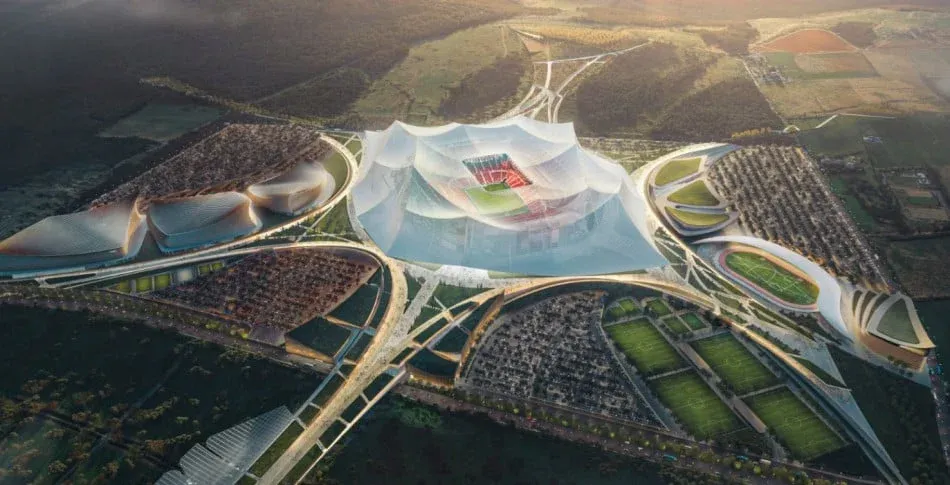
Looking forward, Morocco's strategy includes ramping up public investment in transport connectivity and tourism-related infrastructure, projected to reach approximately 11.9% of GDP annually between 2024 and 2030. These investments will encompass a range of projects, including railways, airports, and roads, along with the construction and renovation of sports stadiums. The financial framework for this initiative relies significantly on domestic resources, with public enterprises contributing the largest share at 7.4% of GDP, funded through local and concessional foreign loans. Local governments are expected to contribute 3.2% of GDP via bank loans, while the central government will provide 1.4% of GDP through budget reallocations.
The IMF's dynamic general equilibrium model suggests that the baseline investment scenario could elevate real GDP by 2% compared to a no-investment scenario by 2030, and potentially by around 3% in the long term, spurred by productivity improvements. However, public debt is anticipated to rise by 7 to 8 percentage points of GDP by 2030, later expected to decline gradually, supported by infrastructure usage fees and robust economic growth. In the short term, rising interest rates may momentarily hinder private investment; nonetheless, a rebound is anticipated in the medium term as productivity gains materialize.
The report emphasizes four critical risks that could jeopardize the economic viability of Morocco's infrastructure projects. The first risk pertains to the effectiveness of public spending. Simulations indicate that enhancing efficiency by 20% could propel long-term GDP growth to between 3.5% and 4% without increasing debt, whereas a similar decline in efficiency could restrict gains to a mere 2% to 2.5%, highlighting the equal importance of quality alongside quantity. The second risk involves cost overruns, as international data suggest that substantial infrastructure projects frequently exceed budgets by 20% to 50%. A scenario involving a 30% overrun could lead to no additional GDP growth while increasing public debt by 2 to 3 percentage points above the baseline by 2034.
The third risk revolves around maintenance costs and contingent liabilities. The model anticipates that usage fees post-2030 will cover both debt servicing and maintenance expenses; however, any shortfall could impose significant financial strain, especially since much of the debt remains off the government’s balance sheet. The fourth risk is centered on import leakage and tax financing, with an estimated 60% of infrastructure investment directed towards imports, such as high-speed trains and airport equipment, which could limit the domestic economic multiplier effect. Additionally, financing projects through elevated consumption taxes rather than borrowing could temporarily burden household spending.
In conclusion, while Morocco has made substantial strides in infrastructure, particularly in the port and telecommunications sectors, fully capitalizing on the opportunities presented by hosting the 2030 World Cup will necessitate a stronger approach to public investment management. This includes enhancing spending efficiency, imposing rigorous cost controls, integrating maintenance into budgetary planning, and closely monitoring the financial health of public enterprises and local authorities—factors that, despite not being reflected in central government debt figures, pose significant fiscal risks.
As reported by en.yabiladi.com.