
Transforming Morocco's Transportation Networks
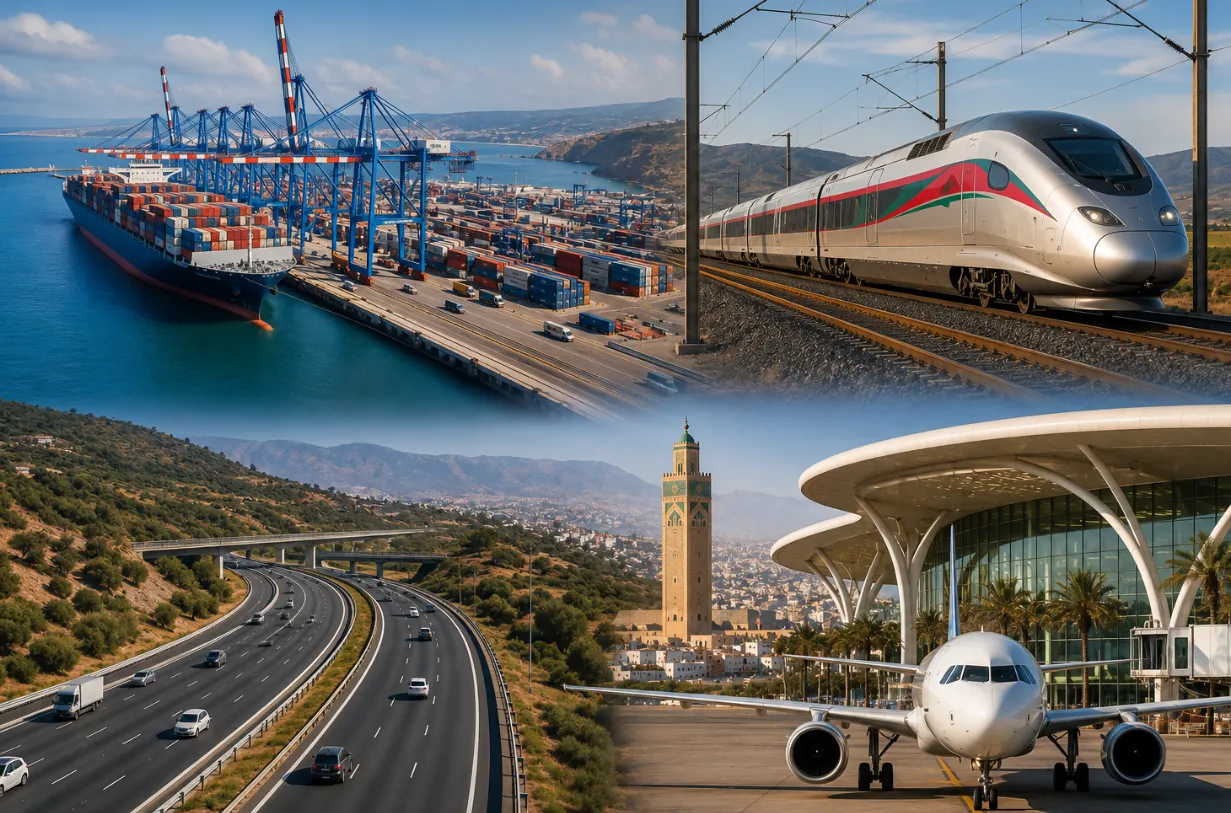
Over the decades, Morocco has strategically developed its road, rail, port, and airport networks, leveraging these advancements as crucial drivers of economic growth and regional integration. The African Development Bank (BAD) has noted that this comprehensive approach has significantly enhanced the mobility of people, improved the flow of goods, and bolstered the nation's competitiveness on a global scale.
The initial phase of this transformative journey began with the development of the road network, which played a vital role in reducing distances between various territories. This advancement not only facilitated economic exchanges but also fostered improved connectivity among the different regions of the Kingdom. The pace of this progress accelerated with the construction of highways, such as the Marrakech-Agadir corridor, which has emerged as one of the primary links within the country.
In the eastern part of Morocco, the Guercif-Nador axis exemplifies this strategic vision. It connects the upcoming Nador West Med port complex to major transport corridors, aiming to enhance Morocco's positioning along international trade routes.
Building an Integrated Logistics Chain
The partnership between Morocco and the BAD has also manifested in robust support for port and rail infrastructure. The establishment of the Tanger Med port has provided the country with a logistics platform integrated into the rail network, which has expedited the transportation of goods to industrial zones and major economic centers.
Furthermore, rail transport is increasingly becoming a cornerstone of this strategy. The development of rail lines linking key economic hubs, coupled with the introduction of high-speed trains, has significantly transformed travel times and strengthened connections between regions.
The BAD's support extends into the aviation sector as well. Investments made in the airport infrastructures of Marrakech, Agadir, Fès, and Rabat have kept pace with the rising air traffic, bolstering tourism activities and enhancing Morocco's international connectivity.
Beyond the physical infrastructures, the Bank believes that these projects contribute to a broader transformation of the Moroccan economy. Enhanced connectivity facilitates trade, increases the attractiveness of various regions, and supports the development of new industrial and logistical hubs.
This forward-looking vision continues to manifest through new commitments. Recently, the BAD's board of directors approved a financing package of **205 million euros** dedicated to the Railway Infrastructure Development Support Project (PADIF). This program aims to strengthen the Kénitra-Marrakech corridor, extend high-speed rail lines, and modernize existing infrastructures, reaffirming the central role that transportation now plays in the partnership between Morocco and this pan-African institution.
As reported by fnh.ma.