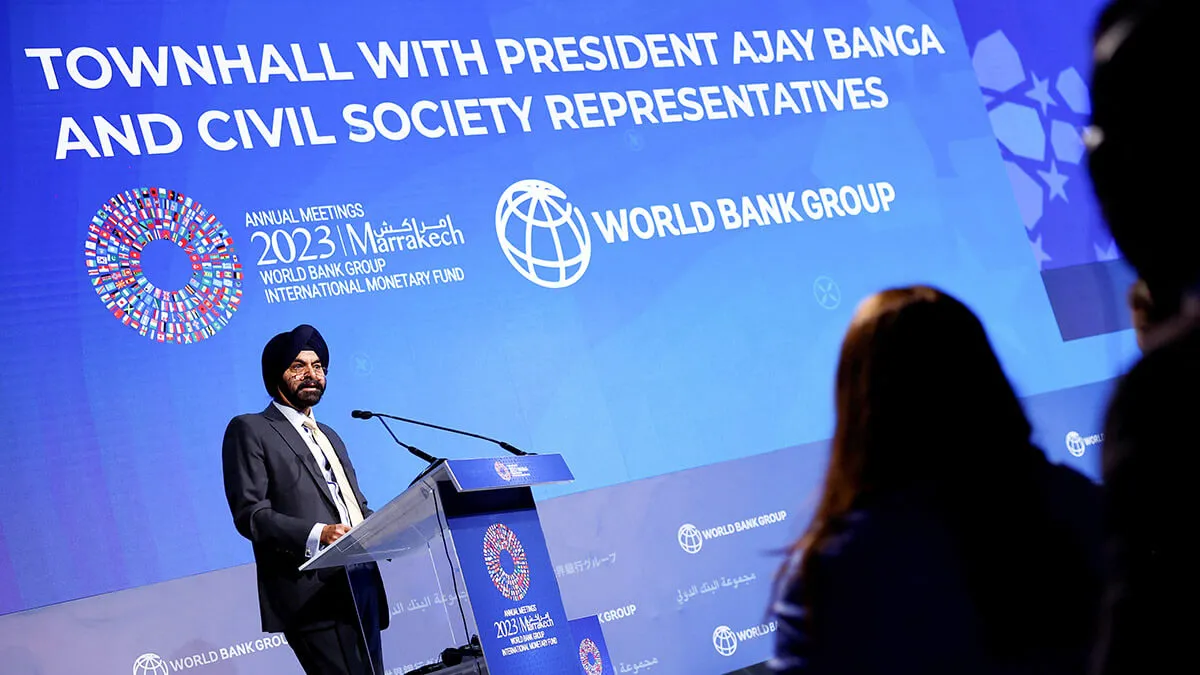

The World Bank has recently released a report emphasizing Morocco's significant potential to attract private investments across four strategic sectors: renewable energy, low-carbon textile production, argan-based cosmetics, and aquaculture. These sectors are considered crucial for the development of the southern provinces of Morocco, which are currently experiencing a pivotal moment in their economic transformation.
According to the report, investments in this region could mobilize up to $7.4 billion and create more than 166,000 jobs in the medium term. However, the realization of this investment potential is hindered by ongoing regulatory and administrative challenges, as well as a shortage of skilled labor. Access to clean and competitive energy, quality infrastructure, efficient export logistics, and the development of competencies are essential conditions for the growth of these four economic sectors, which enjoy privileged access to the European market.
Morocco possesses vast potential for clean energy production, particularly solar energy. Yet, the decentralized production remains marginal, holding only 3.5% of the installed solar capacity (857 megawatts), primarily due to an incomplete regulatory framework, complex procedures, and a lack of clear standards for injecting excess electricity into the grid. The World Bank's report advocates for the finalization of the legal framework, simplification of procedures through the establishment of one-stop shops, and harmonization of pricing mechanisms. The aim is to generate $2.9 billion in investment, create over 43,500 jobs, and significantly reduce greenhouse gas emissions.
In this context, Western Sahara represents Morocco's ambitious energy vision, transforming renewable resource exploitation into a strategic tool for sovereignty. Energy plants like Noor in Ouarzazate, along with wind farms in Tarfaya and green hydrogen projects in Dakhla, are now driving a more resilient and sustainable model for Western Sahara. With the southern provinces at the heart of Morocco's green energy strategy, the country aims to become a key player in the global decarbonized energy market, aspiring to produce 52% of its energy mix by 2026 and 56% by 2030.
The national roadmap also envisions investments exceeding 370 billion dirhams ($34.1 billion) in this sector, positioning the southern provinces as a continental hub for clean energy and a decarbonized economy. The textile sector currently accounts for nearly 10% of national exports, a figure that is on the rise due to increasing demand linked to European nearshoring, with the potential to generate $1.9 billion in investment and create 30,800 jobs.
However, the report identifies several obstacles impeding the sector's transformation, such as financing difficulties, high costs for environmental certifications, inadequate regulation of textile waste, and limited access to land data. Concurrently, the southern provinces of Morocco are viewed as a new strategic hub for sustainable low-carbon textile production, bolstered by significant investments in renewable energy and port infrastructure in cities like Laayoune, Dakhla, and Tarfaya.
Under the New Regional Development Model aimed at decarbonizing the Moroccan textile industry to meet European Green Deal requirements and reduce carbon footprints, the textile sector in these provinces is utilizing low-impact natural fibers such as linen, hemp, and organic cotton, alongside the development of eco-friendly dyeing processes. Despite Morocco's dominance in global argan oil production, with 93% of exports still raw, limiting local value creation due to an inadequate regulatory framework, the World Bank report suggests establishing a digital traceability system and reforming cosmetic certification processes to enhance the value of natural cosmetics, potentially generating $600 million in investment and 17,700 jobs.
The production of argan oil and natural cosmetics in the southern provinces of Morocco, particularly in the Guelmim-Oued Noun region, is an expanding sector contributing to sustainable economic development, with dynamic female cooperatives producing unique Sahrawi products involving 12% of households. Beyond argan, the southern provinces are known for other natural and cosmetic products such as Nila powder, Berber seed oil, Sahara Ghassoul, floral waters, local plant-based creams, and argan soaps.
With an extensive coastline of over 3,500 kilometers along the Atlantic Ocean and the Mediterranean Sea, Morocco has significant underutilized aquaculture potential, particularly in the southern provinces, where the country aims not only to diversify the local economy but also to meet global fish demand. The Sahara region has identified over 24,000 hectares of suitable land for aquaculture, particularly for cultivating oysters, mussels, and fish species like dorada, seriola, and magre, while also considering algae. The goal of implementing development plans in this sector is to achieve national production exceeding 300,000 tons by 2035, with Dakhla-Oued Eddahab recognized as the pioneering region, accounting for nearly 50% of national marine aquaculture production and over 112 projects.
Additionally, the El Aaiún-Sakia El Hamra region is witnessing a new dynamic, focusing on structuring projects in shellfish and fish farming, although these remain limited due to complex permitting processes and a lack of land coordination. This sector has the potential to attract $1.96 billion in investment and create around 75,000 jobs, driven by the aforementioned measures.
Nonetheless, the World Bank highlights that labor productivity growth remains modest compared to rapidly transforming economies like Vietnam, Poland, or Malaysia. Given Morocco's pace in terms of employability, it would take over three decades to double its productivity. This outcome is a direct result of the prevalence of informality in the Moroccan market, with over 77% of total employment concentrated in the informal sector, which also accounts for nearly a third of the GDP. The World Bank's report notes that private investment remains insufficient to sustain high growth and absorb demographic dynamics, as the economic model still relies heavily on public spending.
However, with the new Investment Charter operational since 2023, Morocco is confirming a positive trajectory, marked by notable improvements in the quality of public services, business creation, and formal legislation, while also ensuring effective and transparent commercial justice for investors. For Mediterranean and Atlantic leaders, Morocco aims to serve as a bridge for communication, information, and understanding between cultures.
As reported by atalayar.com.