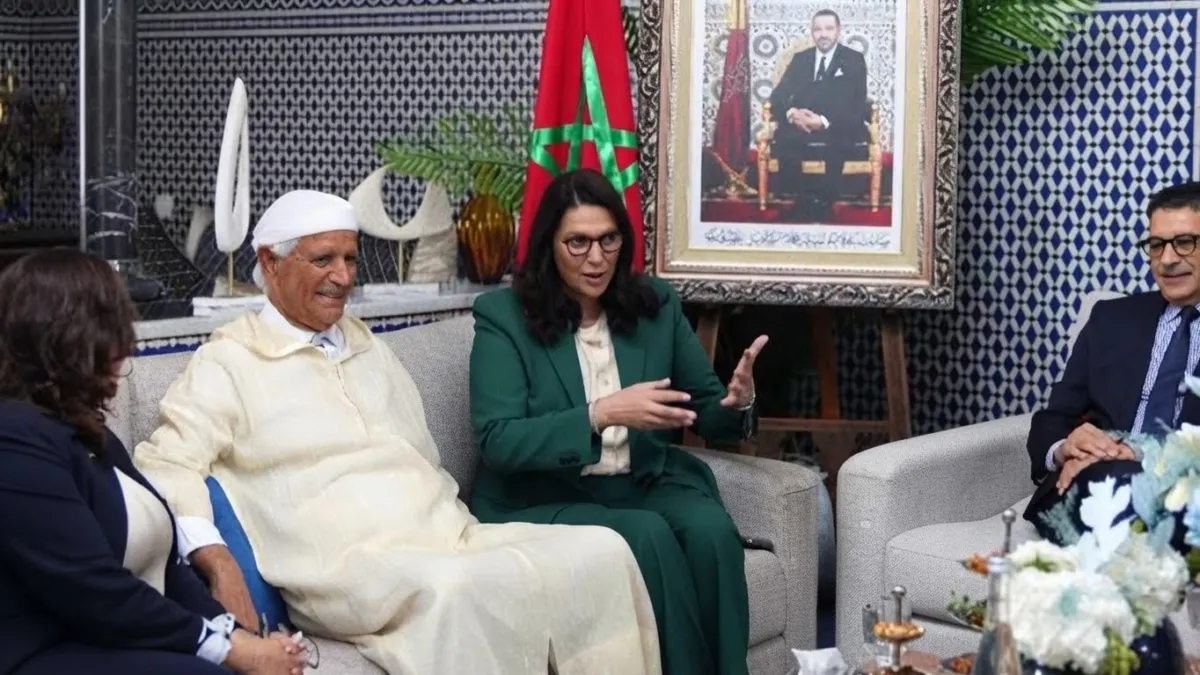
Enhancing Morocco's Position in the Maritime Industry
During a significant address in Tangier on Thursday, Minister of Transport and Logistics, Abdel Samad Kayouh, emphasized the importance of the first national maritime conference, which convenes in a context of profound and rapid transformations impacting the global economy, international supply chains, and geopolitical balances. This inaugural conference represents a pivotal moment as Morocco, under the leadership of King Mohammed VI, continues to solidify its status as a strategic hub for connectivity, exchange, and cooperation between Europe, Africa, and the Atlantic region. The framework for this ambition was vividly articulated in the royal speech during the 48th anniversary of the Green March on November 6, 2023, wherein the King called for the establishment of a robust and competitive national commercial maritime fleet.
Kayouh highlighted that these royal directives reflect the strategic significance of the maritime sector for the nation, asserting that the development of a competitive national fleet is one of the foremost strategic challenges linked to resilience, securing logistics flows, and ensuring logistical sovereignty. He noted that the Ministry of Transport and Logistics has initiated a comprehensive strategic study aimed at advancing the national maritime fleet, which involved extensive participatory approaches engaging various public and private stakeholders. The findings underscored that the development of a national fleet should be viewed as an integral part of constructing a comprehensive maritime system that encompasses financing, governance, training, and port and logistical services.
Strategic Initiatives and Future Prospects
Elaborating further, Kayouh pointed out that the study identified substantial potential for developing a competitive national presence in several strategic maritime activities, particularly in passenger and cargo shipping, container transport, and the transportation of raw materials and energy. This development is anticipated to enhance the logistical sovereignty of the Kingdom and support its regional integration and Atlantic-African outreach. Furthermore, the Ministry has launched the first phase of a call for proposals aimed at developing passenger and vehicle transport lines across the Strait of Gibraltar, designed to strengthen and diversify maritime transport services between Morocco and Spain. This initiative is intended to align with the dynamic increases in passenger movement and trade, particularly by providing summer travel services that cater to the 'Marhaba' operations, while also supporting international freight transport companies and the export sector for fruits, vegetables, and fish.
In the continued execution of the strategic study's outcomes, Kayouh mentioned that the ministry is prepared to establish new maritime routes connecting southern ports such as Agadir and Dakhla with European ports, facilitating direct maritime transport services for the export sector. He argued that Morocco's maritime aspirations, given their multifaceted economic, logistical, industrial, and strategic dimensions, can only be realized through collective mobilization and coordinated engagement from all relevant stakeholders, including government sectors, public institutions, port authorities, maritime transport and logistics players, industrial enterprises, financial institutions, universities, training centers, local communities, and international partners.
Kayouh underscored that building a strong and competitive national maritime system necessitates an integrated approach based on coordination, synergy, and unified efforts. He articulated that the first national maritime conference serves as an institutional platform for dialogue, consultation, and collective thought regarding the major challenges associated with the future of the national maritime sector. Additionally, it reflects the quality and diversity of participants who share a common commitment to constructing a comprehensive strategic vision capable of adapting to the rapid transformations occurring in the international maritime sector and capitalizing on emerging economic, logistical, and maritime dynamics.
The Minister also linked the development of the national maritime sector to the critical need for enhancing regional and international collaboration, particularly in areas such as maritime safety, navigation security, environmental protection, training, and digital transformation, alongside adapting to the regulatory and technological advancements witnessed globally in the maritime domain. He noted that Morocco continues to strengthen its partnerships with the International Maritime Organization and various specialized international and regional entities, including the European Maritime Safety Agency, to facilitate the exchange of expertise and best practices, enhance national capacities in maritime governance, training, and sustainability, and bolster the Kingdom's position as a reliable and active maritime partner at both regional and international levels.
In response, Arsenio Dominguez, the Secretary-General of the International Maritime Organization, praised the vision and objectives that King Mohammed VI has set forth for the continued development and increased investment in the maritime sector. He pointed out that the maritime sector accounts for the transportation of over 80% of global goods, expressing concern over the neglect and underestimation of its importance. Dominguez elaborated on the negative impact of geopolitical tensions on shipping and the global economy, citing the unacceptable situation in the Strait of Hormuz, which has left approximately 20,000 sailors stranded in the Arabian Gulf and around 1,500 vessels unable to conduct their commercial activities due to security risks.
He reaffirmed that the current situation not only affects the global oil market but extends beyond that, emphasizing the criticality of the 20% of oil sourced from that region, which does not reach other sectors for producing essential goods, along with the 13% of fertilizers and chemicals that jeopardize global food security, particularly in the agricultural sector. Dominguez welcomed the stance of governments like Morocco's in continuing to support multilateralism and proactive cooperation with the International Maritime Organization to focus on these solutions and uphold freedom of navigation while placing human considerations at the forefront.
He stressed the urgent need to enhance the resilience of the shipping sector, primarily through national efforts to strengthen maritime governance, asserting that organizing the first conference reflects Morocco's commitment to deepening and expanding its maritime domain beyond merely focusing on shipping.
The first national maritime conference, hosted in the city of Tangier over two days under the theme “Morocco, an Emerging Maritime Nation,” brings together ministers, public institution officials, private sector leaders, and international experts in the field.
As reported by hespress.com.