
Morocco Expands Its Security Partnerships
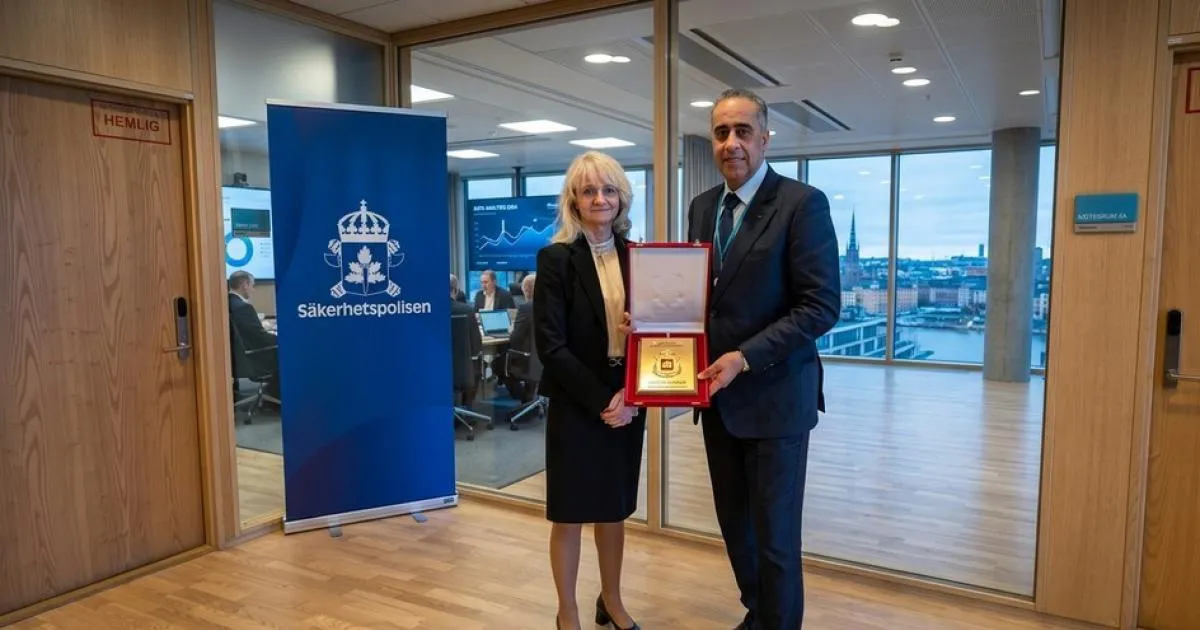
Morocco is not only broadening its network of security relations but is also strategically leveraging these ties to enhance its geopolitical standing and establish its security model as a benchmark within both regional and international contexts. Recently, the Director General of National Security and Territorial Surveillance, Abdellatif Hammouchi, signed a memorandum of understanding with the General Commissioner of the Swedish National Police, marking a new chapter in Morocco's approach to expanding its security partnerships beyond traditional frameworks. This significant agreement, concluded earlier this week, creates a robust legal framework aimed at bolstering cooperation between Rabat and Stockholm in combating terrorism, extremism, and transnational organized crime—threats that have become increasingly global and disregard geographical boundaries.
However, the implications of this agreement extend beyond immediate security concerns; they delve into deeper geopolitical significance. Scandinavian countries, particularly Sweden, have historically maintained a distance from Morocco, both in terms of security collaboration and political engagement. In the past, misunderstandings surrounding the Western Sahara issue complicated their relations, sometimes resulting in positions that leaned towards separatism under the guise of 'self-determination,' a narrative perpetuated by the Polisario Front. This narrative has lost credibility as the group's shortcomings have come to light, thereby reshaping international public opinion in favor of Morocco's realistic and credible stance on this matter.
From this perspective, the recent agreement can be viewed as a 'qualitative breakthrough' that breaks the ice in a geographical space that has remained relatively inaccessible to Moroccan security diplomacy. It not only opens operational coordination channels but also contributes to reshaping the perspectives of these countries regarding Morocco's national constants, particularly the sovereignty over Western Sahara. This is achieved through building trust and establishing partnerships based on mutual interests and stability.
This shift reflects a gradual transformation in Moroccan security philosophy, which has evolved from merely ensuring domestic security or collaborating with traditional partners in Western Europe and the United States. Morocco is now employing its security apparatus as an effective diplomatic tool to foster communication bridges with new regions and solidify its role as a reliable actor in the international security architecture. This 'measured opening' that Hammouchi has championed over the years—underpinned by a pragmatic and calm royal vision—has enabled Morocco to overcome periods of stagnation in its relationships with certain Scandinavian countries, particularly in intelligence and security domains. The signing of the memorandum with Sweden is anticipated to serve as a foundation for sustainable collaboration and pave the way for similar partnerships in Northern Europe.
Additional indicators of this expanding approach are evident, as Norway has recently expressed interest in enhancing its security relations with Morocco, with plans to sign a similar agreement addressing shared concerns. This reinforces the notion that the pact with Sweden is not an isolated incident but rather part of a broader strategy to redefine Morocco’s security partnerships.
This momentum is not confined to the Scandinavian region; it has also extended to more distant geographical areas, clearly embodying a strategy of diversifying partners. On May 21, 2024, Hammouchi signed a memorandum of understanding with the Director General of the Brazilian Federal Police, a move described as the beginning of unprecedented engagement with Latin America. Moreover, in October of the same year, he held talks with the Director of Criminal Investigations in Chile, signaling intentions for future collaboration with new security actors beyond traditional circles. In line with this strategy, Morocco has also reinforced its presence on the African continent, exemplified by Hammouchi’s agreement with the police in November 2025, which further illustrates the expanding scope of Morocco's international security partnerships.
As reported by middle-east-online.com.