
Morocco's Traffic Safety Challenges and Ongoing Efforts
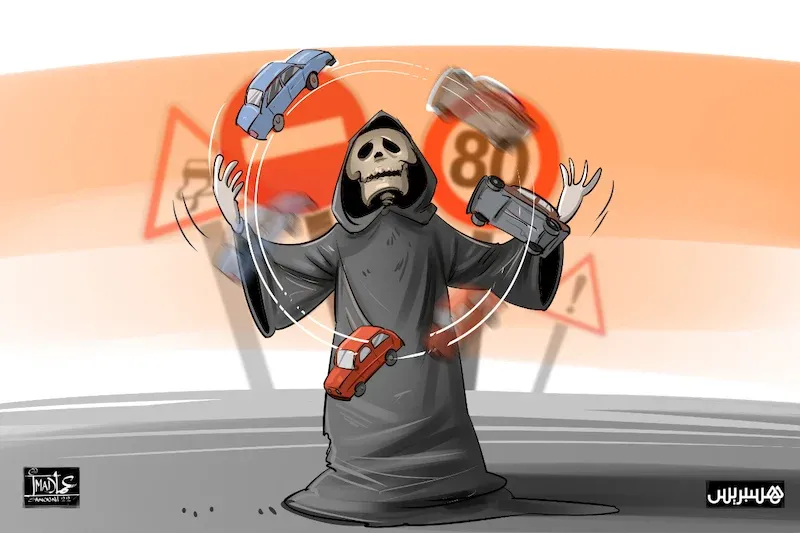
In Morocco, traffic accidents continue to evoke significant concern and fear among the population due to the alarming number of casualties resulting from these tragic incidents. This situation resembles an ongoing war, where the efforts made to mitigate the issue have yet to yield satisfactory results. Recent statistics reveal that from April 27 to May 3, 2026, there were 2,243 traffic accidents recorded in urban areas, resulting in the deaths of 27 individuals and injuries to 3,105 others, with 116 of those injuries classified as severe.
The General Directorate of National Security has attributed the primary causes of these accidents to several human factors, including driver inattention, failure to respect right-of-way rules, excessive speeding, pedestrian distraction, inadequate safety distance, loss of vehicle control, improper lane changes, ignoring stop signs, driving in prohibited directions, and driving under the influence of alcohol. All these factors point to a troubling trend of recklessness and negligence, which incurs a heavy toll on the country in terms of human life and injuries, prompting the necessity for enhanced efforts and stricter penalties to ensure effective deterrence against traffic violations.
Calls for Comprehensive Traffic Safety Solutions
Abdelsadek Maafa, the Director of Communication and Education at the National Road Safety Agency (NARSA), commented on the issue, stating that the rising number of fatalities from traffic accidents reflects the complex and multifaceted nature of road safety management. He emphasized that this issue must be approached with an integrated strategy based on the national road safety plan. Maafa noted that statistical data indicates a relatively stable trend in accident indicators, particularly when considering the significant increase in vehicle numbers and traffic density. He believes this suggests a positive cumulative effect from the measures implemented, particularly in infrastructure, monitoring, training, and communication.
However, Maafa stressed that changing road user behavior is a gradual process that requires collective efforts and enhanced collaboration among various stakeholders, alongside ongoing awareness campaigns grounded in scientifically accurate assessments. He underlined that monitoring and enforcing penalties are essential components of road safety systems, yet they remain part of a broader approach that must include education, awareness, training, infrastructure improvement, prevention, and emergency response.
Emad Al-Asri, the President of the National Road Safety Federation in Morocco, reiterated that the country continues to experience an increase in traffic accident rates despite significant efforts by various stakeholders involved in road safety, particularly NARSA, the General Directorate of National Security, and the Royal Gendarmerie, along with other partners in the sector. He explained that this persistent rise hinders the achievement of the objectives set forth in the national road safety strategy, which aims to reduce traffic accidents by 50% by 2030. Current indicators suggest that this target has not yet been reached, primarily due to human factors.
Al-Asri pointed out that human factors in traffic accidents extend beyond just pedestrians, encompassing all road users, including drivers, pedestrians, and motorcyclists. He noted that motorcycle users are increasingly contributing to the surge in traffic accidents due to various risky behaviors, such as reckless riding, failure to wear helmets, and illegal modifications to motorcycle specifications. These alterations can lead to imbalances in the relationship between engine power and speed, heightening the danger of accidents, especially since motorcycle users are classified among the vulnerable road user groups.
Despite the ongoing efforts of various authorities through monitoring, awareness campaigns, and initiatives to distribute helmets to motorcyclists, Al-Asri emphasized that human behavior on the roads still requires further attention, training, and awareness. He highlighted that awareness campaigns are ongoing, whether through direct interactions with road users or media initiatives aimed at promoting road safety. Yet, these efforts have not succeeded in curtailing the rising trend of traffic accidents, particularly among motorcyclists. Protecting children under the age of fourteen, a demographic particularly at risk, is also a key focus of these initiatives. The national road safety strategy adopts a holistic approach, resulting in regional strategies that consider the unique characteristics of each area, emphasizing that all involved parties must intensify their efforts to achieve the set objectives.
As reported by hespress.com.