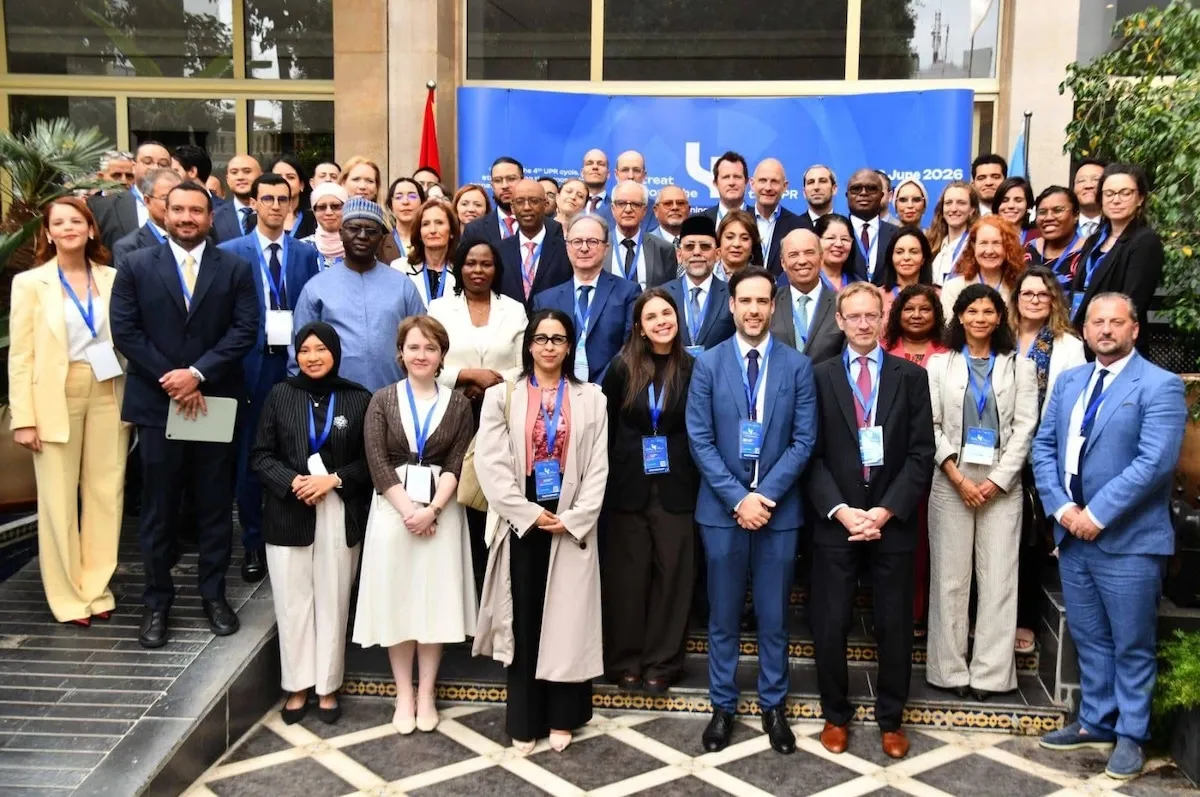

The recent International Retreat on the Universal Periodic Review (UPR), held in Rabat, transcended the realm of a standard technical assembly of experts and policymakers. It highlighted Morocco's evolution into a respected global actor, whose contributions now extend beyond mere participation to significant influence and leadership within one of the most crucial mechanisms for human rights established by the United Nations.
As we mark two decades since the inception of the UPR, the discourse on a global scale has shifted away from merely evaluating states' commitments on paper. The pressing challenge lies in the translation of those commitments into real, tangible enhancements in the lives of individuals. Morocco has steadfastly advocated for a results-oriented approach to human rights, emphasizing a framework grounded in practical impact, institutional efficiency, and sustainable development.
The recognition bestowed upon Morocco by senior United Nations officials, international experts, and representatives from civil society during the Rabat retreat reflects a significant reality: Morocco has emerged as a trusted ally in promoting the progressive evolution of the UPR. Notably, many attendees perceived the discussions in Rabat as foundational for the fifth cycle of the mechanism, underlining the Kingdom of Morocco's expanding role in shaping upcoming global dialogues surrounding human rights implementation.
This international credibility has not been an overnight phenomenon. It is the result of a long-term reform agenda spearheaded by His Majesty King Mohammed VI, whose visionary leadership has placed human rights, good governance, and institutional modernization at the core of Morocco's developmental framework. Over the past twenty years, the Kingdom has consistently pursued a trajectory of political, constitutional, and institutional reforms aimed at bolstering the rule of law, enhancing public participation, and embedding human rights principles into public policy frameworks.
What sets Morocco apart in its approach is its refusal to regard human rights as merely a legalistic or diplomatic concern. Instead, it has fostered a holistic perspective that interlinks rights with development, social inclusion, and human dignity. This strategic understanding has empowered Morocco to cultivate valuable expertise and to share meaningful experiences that resonate well beyond its immediate regional context.
Consequently, the significance of the Rabat retreat extends far beyond the conclusions drawn from two days of dialogue. It symbolizes Morocco’s increasing capability to contribute to the intellectual and political framework of international collaboration. In a world that is becoming increasingly fragmented, Morocco exemplifies that constructive engagement, dialogue, and reform are potent instruments for tackling global challenges.
The forward-looking leadership of His Majesty King Mohammed VI underpins this ambitious trajectory. His unwavering commitment to modernization, openness, and international cooperation has positioned Morocco as a bridge between different regions, a facilitator of dialogue, and a credible advocate for a more effective and inclusive multilateral system.
The message emerging from Rabat is both timely and profound: human rights should not be confined to political strife or ideological rifts. They should serve as a foundation for cooperation, shared responsibilities, and collective advancement. As the international community contemplates the next chapter of the Universal Periodic Review, Morocco is poised not merely to engage in the dialogue but to actively shape its future.
As reported by atalayar.com.