
Morocco's Evolving Role in Global Migration
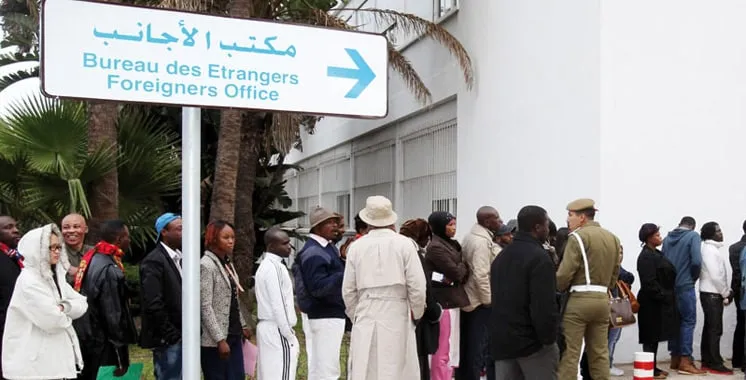
The landscape of Moroccan cities, from the bustling neighborhoods of Casablanca to the agricultural fields of Souss, now reflects a significant demographic change. Once primarily regarded as a mere transit point for migrants heading to Europe, Morocco has increasingly become a destination for many seeking a new life. This transition, however, is not without its challenges, as the country grapples with social tensions arising from this new reality.
According to the latest census conducted in September 2024, there are now approximately 148,152 foreign nationals residing in Morocco. This shift towards permanent settlement can be attributed to the complex migratory journeys many undertake. For instance, Sudanese migrants, fleeing dire conditions in their home country, often traverse treacherous routes through Libya and Algeria before entering Morocco through its eastern border. While many still aspire to reach Europe via the Mediterranean or the Atlantic, an increasing number find themselves establishing roots in Morocco.
Social media has played a pivotal role in this migration trend, with numerous videos circulating that depict Sudanese individuals already residing in Morocco encouraging their compatriots to join them. This phenomenon has created a significant influx of new arrivals, contributing to the changing demographic fabric of the nation.
Social Integration Challenges and Government Initiatives
Despite the Moroccan government's official stance promoting integration, the reality on the ground often reveals friction between local communities and migrants, particularly those in irregular situations. Recent incidents in Casablanca highlight these tensions, where conflicts have arisen over public space usage and the dire living conditions in informal camps. Such challenges underscore the necessity for effective social integration strategies.
Since 2013, Morocco has implemented the National Immigration and Asylum Strategy (SNIA), moving away from a purely security-oriented approach. Following waves of regularization in 2014 and 2017, the Moroccan government has focused on institutionalizing support for migrants, enabling their inclusion in the national population register and social security systems. This initiative aims to facilitate access to essential services and social protection, thereby stabilizing migrant populations.
However, civil society organizations warn that there remains a significant gap between the political promises and the lived experiences of migrants, with persistent barriers to accessing basic services and ongoing repressive practices at borders. Dr. Mohamed Charef, a geographer and mobility expert, emphasizes the need for a cultural shift to address misconceptions surrounding migration. He argues that society must move beyond a binary perspective of migrants, recognizing them as individuals with diverse experiences rather than as caricatures of either heroes or villains.
Dr. Charef advocates for mutual adaptation between migrants and locals, stressing that integration is not a one-sided process but a collective effort essential for maintaining social cohesion. He highlights the Souss-Massa region as a model for progressive integration strategies, where local initiatives support migrants through employment opportunities and cultural exchange programs.
In conclusion, as Morocco transitions from a transient hub to a migratory anchor, it faces the dual challenge of managing social tensions while leveraging the potential of its diverse population. The path ahead will require thoughtful policies and community engagement to ensure that all residents can thrive in harmony.
As reported by medias24.com.