
Transforming Maritime Infrastructure for Economic Resilience
Morocco's strategic investment in port infrastructure has gained renewed importance as global supply chains navigate increasing disruptions and major economies tighten control over critical maritime access points. In an era characterized by geopolitical competition, fragile logistics, and heightened scrutiny of foreign influence, ports have emerged as pivotal instruments of national sovereignty, resilience, and economic security. Morocco was among the few nations to foresee this transformation early on. Under the guidance of King Mohammed VI, the Kingdom initiated modernization and expansion of its port network in the early 2000s, a visionary move that preceded the global tensions revealing vulnerabilities in international trade routes.
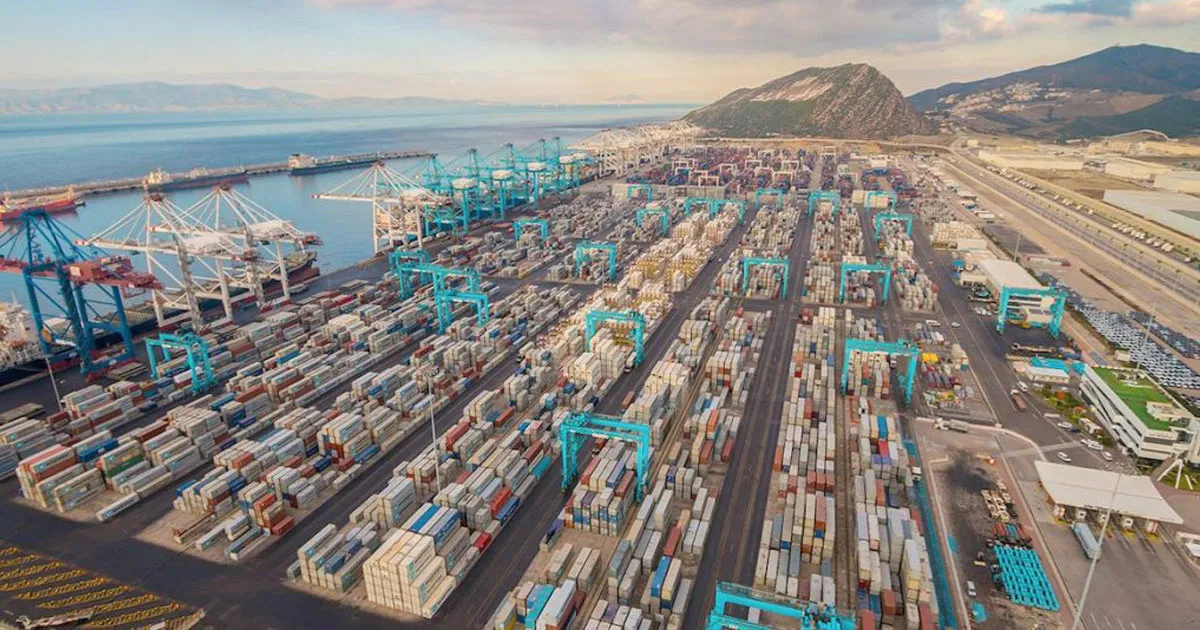
The inauguration of the Tanger Med complex in 2003 marked a significant milestone in this strategic endeavor. At its launch, King Mohammed VI described the port as “the nucleus of a major port, logistical, industrial and commercial complex,” positioning Morocco as a vital bridge between Europe and Africa, as well as the Mediterranean and the Atlantic. Fast forward two decades, and this strategy has proven to be pivotal. Ports are responsible for handling 98% of Morocco’s external trade, with Tanger Med evolving into one of the world’s leading transshipment hubs, seamlessly connecting the nation to 180 ports across 70 countries. The port's scale and efficiency have bolstered Morocco’s industrial growth while simultaneously reducing reliance on foreign gateways for crucial resources such as energy, food, and raw materials.
Future Expansion and Global Context
This ambitious strategy has been further enhanced through two additional megaprojects: Nador West Med, which is expected to commence operations in late 2026, and Dakhla Atlantique, slated to start in 2029. Nador West Med represents a remarkable 51 billion dirhams in public and private investment, ultimately offering over 5 million TEUs of container capacity, along with Morocco’s inaugural LNG terminal and significant hydrocarbon storage facilities. Meanwhile, Dakhla Atlantique, already over 53% complete, will establish Morocco’s Atlantic logistics corridor, featuring commercial, fisheries, and repair basins specifically designed to support regional and transatlantic trade flows.
On a global scale, the strategic significance of ports has surged dramatically. The European Union has intensified oversight of foreign ownership in critical port infrastructure, implementing new measures to enhance security, resilience, and dual-use capabilities. A recent example of this trend is Panama's decision to reclaim control of its Balboa and Cristobal terminals from a foreign operator, reflecting a broader movement of national authorities asserting control over logistics assets deemed essential for national economic and security interests.
In this evolving context, Morocco’s proactive investments in sovereign and globally competitive ports have proven to be remarkably foresighted. The trio of Tanger Med, Nador West Med, and Dakhla Atlantique now constitutes the backbone of a national logistics framework designed not only for economic advancement but also for achieving strategic autonomy in a rapidly changing global landscape. This vision positions Morocco favorably as it navigates the complexities of international trade in an increasingly fragmented world.
As reported by northafricapost.com.