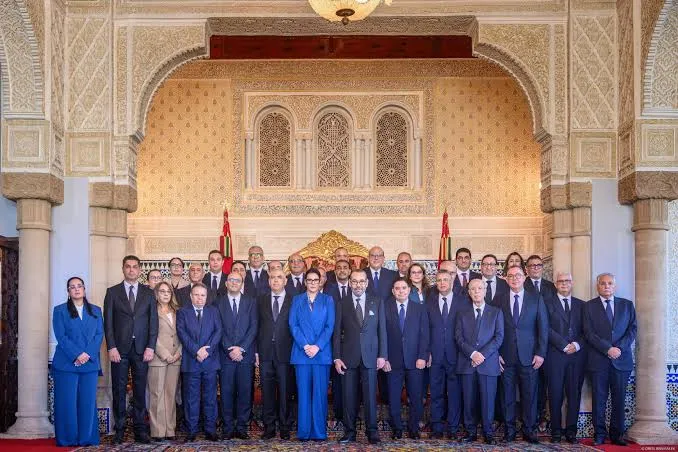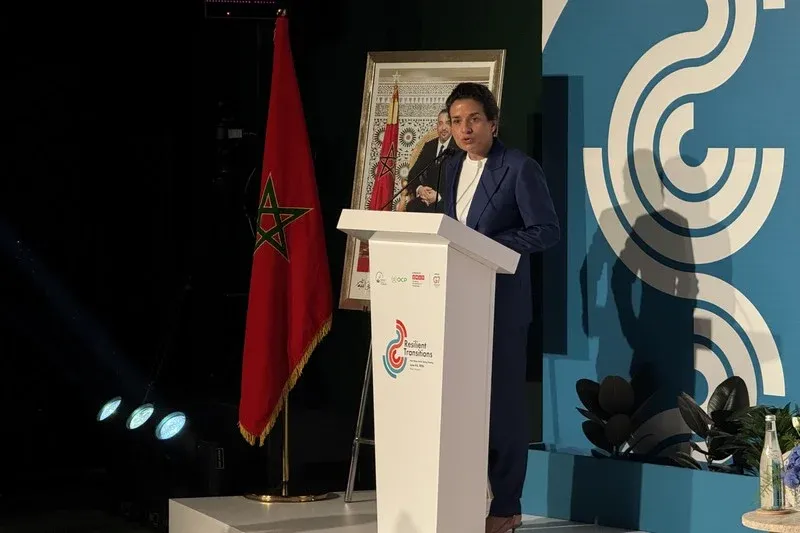
In her opening remarks at the "Spring Meeting of the 2026 Paris Peace Forum," held in Rabat, Leyla Benali, Morocco's Minister of Energy Transition and Sustainable Development, emphasized that Morocco and the African continent possess a robust field experience and a profound understanding of resilience mechanisms and the management of significant economic and environmental transformations. This year's spring meeting is dedicated to the theme of "resilient transformations," organized in partnership with the OCP Group and supported by Mohammed VI Polytechnic University. During the meeting, which has received the endorsement of the French G7 presidency, the forum aims to advance its political initiatives.
Benali noted that since assuming her ministerial role in October 2021, the international arena has faced a series of successive shocks, including major wars, a suffocating energy crisis, ongoing pandemics, and heightened geopolitical tensions influenced by the emerging alliance between traditional political powers, artificial intelligence, and technology giants. She pointed out that strategic deterrence tools and securing national resilience have become less costly in terms of direct economic value, thanks to the advent of drones, social media campaigns, and the power of data. She underscored the necessity of enhancing system efficiencies to absorb these rapid shocks and transform them into promising and sustainable developmental opportunities.
Critical Role of Essential Minerals
Regarding the mining sector, Minister Benali revealed unprecedented figures that highlight the global challenge of securing the sustainability of the digital lifestyle and access to clean electricity. She confirmed that meeting these demands requires the utilization of over 42 types of critical and sensitive minerals. Benali emphasized that humanity is obligated to extract quantities of minerals over the next three decades equivalent to all that has been produced throughout human history. The basic scenario alone necessitates a 25% increase in copper production, a 100% increase in cobalt, and over a 300% increase in lithium within the next six years, not accounting for the massive needs of modern data centers and artificial intelligence models that consume rare elements such as gallium, germanium, and tantalum.
She stressed that these pathways are not merely technical energy and digital transitions but represent radical social and economic transformations that reshape communities and democratic practices, necessitating the establishment of a completely new social contract that prioritizes human safety and workers' health in mining policies. In this context, the Moroccan official recalled a significant solidarity initiative led by Morocco in November 2025 in Marrakech, which gathered over forty African mining ministers to launch a corporate social responsibility declaration in the sustainable mining sector. She pointed out that the guiding frameworks set in Geneva or New York do not align with the actual African reality and its field challenges.
Reforming the Mining Licensing Framework
Benali announced a structural reform initiative within the kingdom, which involves opening a public tender in the Drâa-Tafilalet region covering one million hectares of mining licenses as a first phase. This reform includes introducing regulatory innovation that allows for a joint system of osmotic collaboration between mining projects and renewable energy projects to address the land use dilemma, alongside a comprehensive digitization of the mining registry through a unique platform launched in April 2026 to eliminate bureaucratic red tape and minimize error opportunities while ensuring principles of integrity and transparency.
On the energy system front, the minister outlined the elements of the national strategy based on royal directives, emphasizing that the trio of security, abundance, and sustainability has transformed into a historic investment opportunity due to the record drop in the costs of renewable energy, batteries, and AI directed at network management. She announced to the participants that Morocco has officially surpassed 45% of installed electricity capacity from renewable sources, with plans to develop over 16 gigawatts by 2030, backed by programmed investments exceeding $12 billion. Furthermore, she highlighted the activation of self-production reforms and microgrids that strengthen the democratic energy system by enabling citizens to own solar panels and feed excess energy into the national grid.
Benali affirmed Morocco's strategic identity as a secure "transit country" connecting its African depth with Europe through bidirectional links in gas, electricity, and logistics. She cited the kingdom's success in transparently reversing the flow of the transcontinental gas pipeline with Spain in 2021 amid the cut-off of Algerian gas supplies, considering the strategic partnership signed between King Mohammed VI and President Macron during his visit in October 2025 as a model for a new partnership in the 21st century that rejects the old extractive patterns limited to immediate purchasing. It establishes an era of joint investment, technology transfer, employment, and sustainable training to protect the rights and sovereignty of peoples.
As reported by hespress.com.