
Morocco's Growing UAV Capabilities
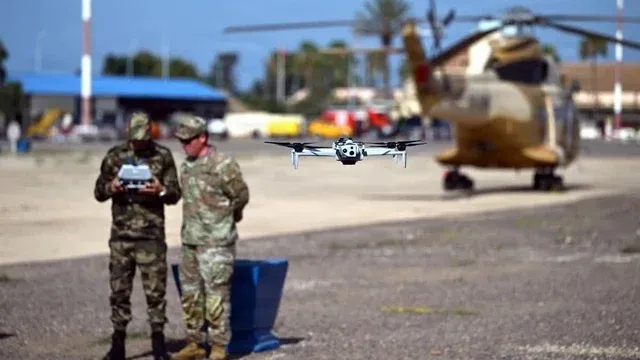
Morocco currently boasts a formidable fleet of 279 military unmanned aerial vehicles (UAVs), positioning it as a key player in the North African defense landscape, though it still trails behind Egypt, which leads the region with 313 UAVs, while Algeria ranks third with 128. The report highlights Morocco's significant investments in advanced UAV technology, focusing on high-end models capable of operating at medium and high altitudes with extended flight durations. These sophisticated devices are primarily utilized for strategic reconnaissance, border surveillance, intelligence gathering, and precision long-range strikes.
In recent years, Morocco has acquired several state-of-the-art UAV models, including the Bayraktar TB2 from Turkey and the MQ-9B SeaGuardian from the United States, alongside a range of attack and reconnaissance drones produced by Israel. This rapid expansion of Morocco's UAV capabilities occurs against a backdrop of escalating military competition with Algeria. While Morocco is heavily investing in unmanned aerial systems, Algeria has opted to enhance its military capabilities through manned aircraft, such as the Su-30MKA, Su-34, and Su-57. This divergence in military modernization strategies suggests that both nations are focused on enhancing their combat capabilities and deterrence in the North African region.
Shifts in Arms Imports and Regional Dynamics
According to a report released by the Stockholm International Peace Research Institute (SIPRI) in March 2026, Morocco's arms imports have surged by 12% from 2021 to 2025 compared to the 2016-2020 period, elevating the nation to 28th place globally among arms importers, contributing 1% to total global arms imports. The United States has emerged as Morocco's largest arms supplier during this period, holding a substantial market share of 60%, followed by Israel and France, with market shares of 24% and 10% respectively.
In contrast, Algeria, which once held the title of Africa's largest arms importer, has drastically reduced its arms imports by 78% over the past five years, resulting in a drop to 33rd place worldwide. Russia remains Algeria's primary arms supplier with a market share of 39%, followed by China at 27% and Germany at 18%. SIPRI indicates that the ongoing diplomatic tensions between Morocco and Algeria are among the key factors driving both nations to intensify their arms purchases in recent years, reflecting a broader regional struggle for military superiority.
As reported by vietnam.vn.