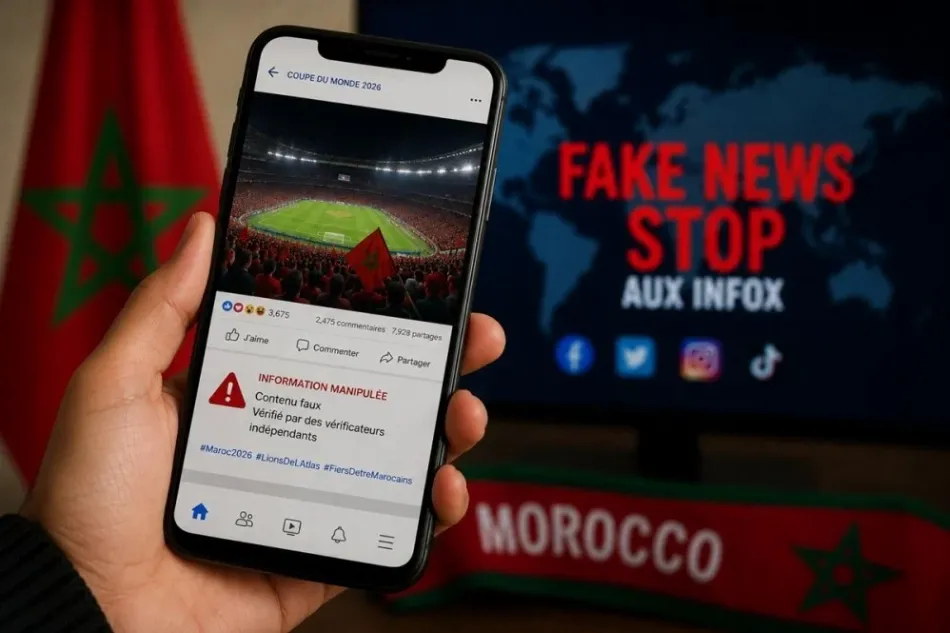
Digital Disinformation During Morocco's World Cup Journey
Morocco's participation in the 2026 World Cup transcended the traditional boundaries of the football field, evolving into a significant digital engagement where a fierce battle ensued across social media platforms. This phenomenon, as highlighted in a recent report by the Moroccan Observatory for Media and Digital Vigilance, illustrates how the tournament not only amplified Morocco's international presence but also exposed the nation to a wave of artificial intelligence-generated disinformation campaigns. The report, which meticulously analyzed over 500 publications and interactions from June 1 to July 13, 2026, reveals a complex landscape where patriotism and support for the national team were juxtaposed with the challenges posed by misleading digital content.
As the Atlas Lions captured the hearts of fans both locally and throughout Africa and the Arab world, their commendable performances on the pitch catalyzed a surge of national pride. This resonated deeply, reinforcing the notion that football serves as a potent tool for soft power and global reputation enhancement. However, the increased visibility brought about by this sporting success simultaneously opened the floodgates to hostile digital campaigns, transforming major sporting events into battlegrounds for reputation management and information sovereignty.
AI and the Spread of Misinformation
A key takeaway from the report highlights the alarming rise of artificial intelligence in disseminating deceptive content. Throughout the World Cup, a plethora of AI-generated images, manipulated videos, and misleading edits proliferated across social media channels, creating a murky distinction between genuine and fabricated content. This surge in misinformation often aimed to tarnish Morocco's image and that of its national team. The Observatory further notes that social media algorithms, which tend to promote emotionally charged content, frequently grant undue prominence to controversial posts, allowing them to gain traction before their accuracy can be verified.
The discourse surrounding the tournament often veered away from football and into the realms of identity politics and regional rivalries, particularly among users from Morocco, Algeria, and Egypt. This shift underscores how social media has become an extension of existing tensions related to identity, national reputation, and regional influence. It's crucial to recognize that the most visible content does not always represent the sentiments of the broader population; instead, a small number of active accounts or coordinated campaigns can skew perceptions and create a false sense of consensus among users.
In response to these challenges, the Observatory has put forth twelve actionable recommendations aimed at bolstering Morocco's defenses against disinformation. These include establishing a permanent national media and digital monitoring body, implementing an early-warning system, enhancing digital diplomacy, developing tools to verify AI-generated content, and promoting the production of high-quality, multilingual content. Moreover, the report emphasizes the importance of fostering media literacy and a robust digital culture among citizens, encouraging them to engage in fact-checking before disseminating information.
As reported by northafricapost.com.