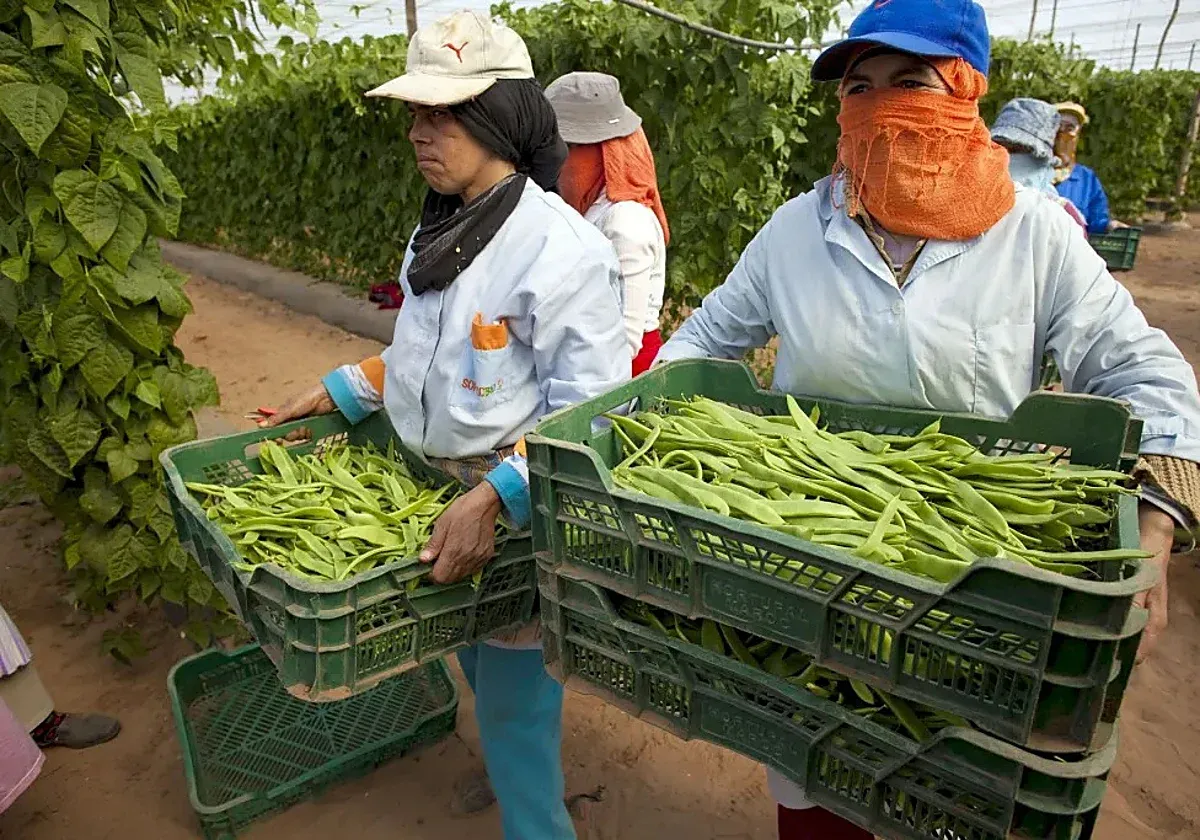

Significant Growth in Agricultural Imports from Morocco
In the past year, agricultural and fishery enterprises in the Murcia Region of Spain have significantly increased their imports from Morocco, reaching a remarkable total of over 85 million euros. This North African nation has solidified its position as one of the leading suppliers of food products to the local market, with the region now sourcing approximately 50,000 tons of fruits, vegetables, fish, and seafood from Morocco since 2023. The acceleration of this trade relationship can be traced back to the aftermath of the pandemic and the ongoing conflict in Ukraine, which led to a doubling of trade volume compared to 2020, when imports only accounted for 41.3 million euros.
Economic Trends and Regional Implications
The peak of these imports was recorded in 2023, with the value reaching 90 million euros for fresh, frozen, and preserved products, according to data provided by the Territorial Directorate of Commerce and ICEX in the Murcia Region. In comparison to five years ago, when the total shipments to the region were 10,000 tons less, the growth trajectory is notable. However, in the last three years, the economic value of these purchases has seen a slight decrease of 6%, a trend attributed to inflation and increased production and transportation costs, although the volume of imports has remained relatively stable.
This growing reliance on Moroccan agricultural products occurs during a time of protests from local Murcia farmers, who feel threatened as Morocco gains competitive advantages in the cultivation and marketing of a wide array of horticultural products within the European Union. Lower production costs, coupled with more flexible regulations on the use of fertilizers and active sanitary materials, have attracted local agro-industries seeking competitive pricing from North Africa. Meanwhile, the ICEX has yet to reflect the impact of the revised EU-Morocco trade agreement enacted in January, which altered labeling systems to allow Moroccan fruits and vegetables cultivated in Western Sahara to enter the market.
In the first two months of 2026, imports from the Murcia Region have shown signs of recovery, amounting to 22.34 million euros, marking a 7.3% increase compared to the same period last year. Up until 2022, imports had not exceeded 72 million euros, but last year's total purchases skyrocketed to 114 million euros. The primary commercial relationships in the agricultural sector predominantly involve fresh and frozen vegetables, which generated 45 million euros for Moroccan companies in 2025, the highest figure in a decade. Conversely, purchases of fish and seafood from Moroccan waters have halved within a year, resulting in just over 3,000 tons and 23.6 million euros in revenue.
France, the Netherlands, Belgium, and China are also significant markets where regional companies procure vegetables. While fruits and nuts represent a smaller percentage of total imports, their value has nearly sextupled, soaring from 2.4 million euros in 2021 to 13.6 million euros last year. In 2025, these products constituted the second-largest volume (8,354 tons) imported from Morocco in the last decade. In terms of preserved fruits and vegetables, including juices, the volume sold to Murcia was modest, with only 1,300 tons transported.
The primary sources supplying fresh and frozen vegetables to Murcia businesses include Morocco, France, the Netherlands, Belgium, and China, similar to the providers of fish and seafood, which are primarily sourced from Morocco, France, Mauritania, China, and Peru. Regarding canned goods, data from Info, linked to the Ministry of Enterprises, indicates that countries such as Peru, China, Egypt, India, and Morocco are the leading exporters to the Murcia Region. Fresh and frozen fruits are predominantly acquired from South Africa, Peru, Brazil, Senegal, and Argentina.
The tomato industry in Murcia has seen a decline in both international trade and local cultivation, with only 2,000 hectares dedicated to tomato production across Mazarrón, Águilas, and Lorca. The region contributes 12% to Spain's tomato exports. The recent capability to label vegetables grown in Western Sahara as Moroccan when sold to Europe has encouraged the expansion of greenhouse agricultural land in that area, posing a significant challenge for local producers. The year 2022 marked the highest level of trade between Morocco and Murcia businesses, utilizing 12,600 tons of products.
Another notable product gaining traction in Morocco's export market is the cucumber. Last year, 18,000 tons were exported to Spain alone, generating an economic impact of 21 million euros, representing 71% of the total cucumber imports from abroad. In contrast, the Murcia Region imported just 182,329 kilograms, accounting for only 0.7% of national totals, with the majority sourced from Morocco.
As reported by laverdad.es.