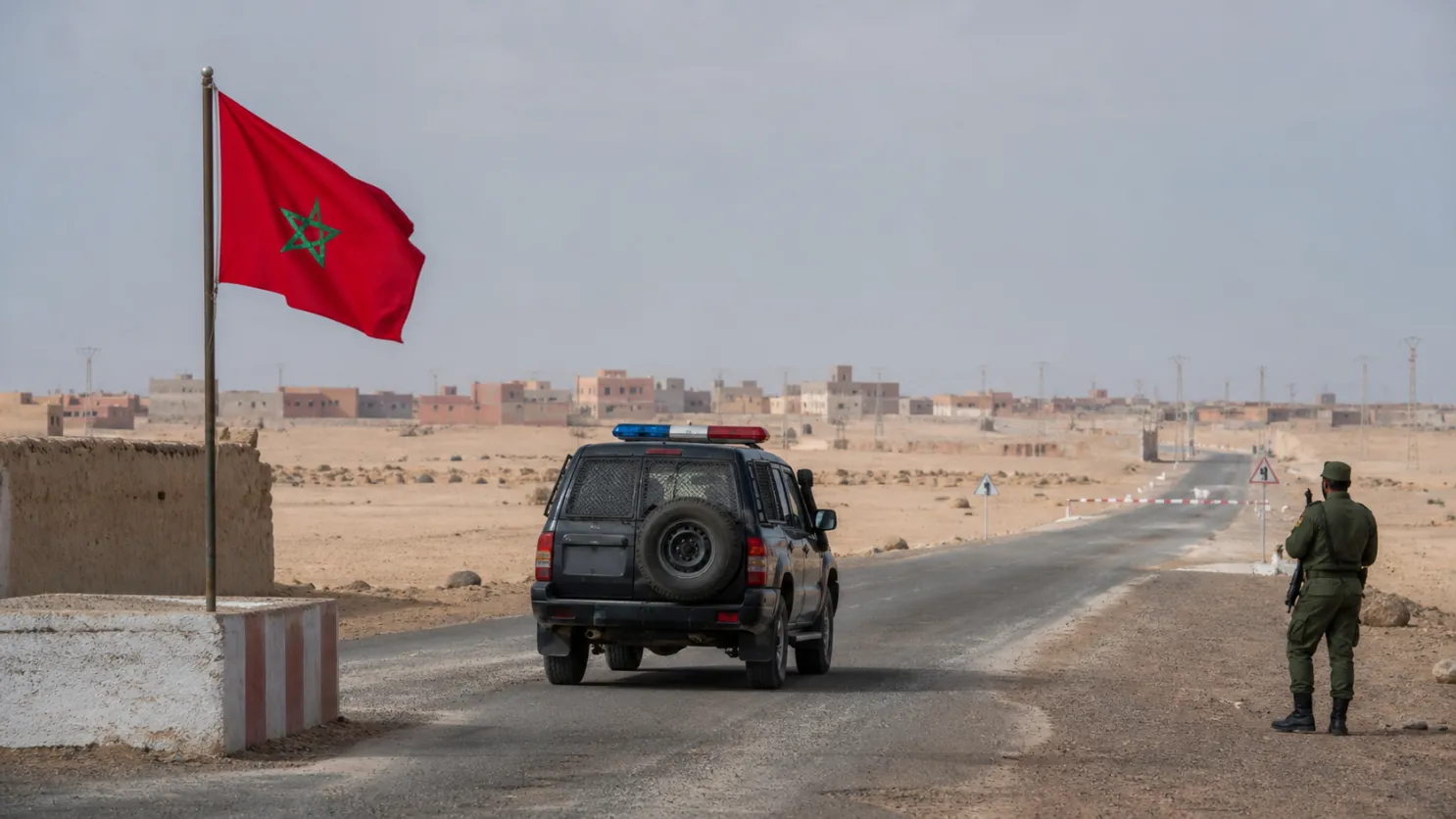

The ongoing dispute over Western Sahara has become increasingly focused on the potential role of the United States in applying pressure not only on the Polisario Front but also in crafting a comprehensive strategy towards Algeria. A common approach utilized by Washington to manage hostile non-state actors is the designation of these groups as terrorist organizations. This designation serves multiple purposes: it freezes assets, hampers diplomatic efforts, and serves as a strong signal of disapproval. On March 13, 2026, Senators Ted Cruz, Tom Cotton, and Rick Scott introduced the Polisario Front Terrorist Designation Act, which would mandate an investigation into the military collaborations between the Polisario and Iranian-affiliated entities, potentially leading to its classification as a Foreign Terrorist Organization.
Senator Cruz has characterized the Polisario Front as an extension of Iran’s influence, akin to the “Houthis of West Africa.” While this perspective is understandable, a more nuanced examination of the geopolitical landscape and the actual power dynamics at play in this conflict reveals a sobering reality: simply designating the Polisario as a terrorist organization will not effectively resolve the Western Sahara dispute. The core issue lies with Algeria, and the implications of terrorist labels do not easily traverse sovereign borders.
The United States designated Hamas as a terrorist organization back in 1997, yet nearly three decades later, Hamas has not only governed Gaza but also orchestrated devastating attacks against Jewish communities, as seen during the tragic events of October 7, 2023. Similarly, Hezbollah, designated the same year, has evolved into the most heavily armed non-state actor globally, while the Islamic Revolutionary Guard Corps, which has significantly bolstered both groups, only received its designation in 2019 after years of unchecked proxy warfare. This trend underscores a critical point: while designations can impose significant costs on organizations reliant on international financial systems and Western legitimacy, they are largely ineffective against entities backed by sovereign states willing to absorb those repercussions.
To target the Polisario without a complementary approach towards Algeria is akin to throwing a punch at a mere shadow. Polisario is fundamentally intertwined with Algerian interests; it operates from the Tindouf camps located on Algerian territory, enjoys military protection from Algeria, is financed by Algerian oil revenues, and is supported through Algerian logistical networks. Therefore, it is essential to recognize that the Polisario is not merely an autonomous liberation movement enjoying Algerian hospitality; rather, it serves as a tool of Algerian foreign policy, designed to exert strategic pressure on Morocco and maintain Algeria's dominance in the Maghreb region.
For decades, Algerian generals have funded the Tindouf camps, not out of a sense of post-colonial solidarity but to leverage a frozen conflict as a strategic asset. This situation forces Morocco to allocate military resources defensively, complicates the African Union's unity, and provides Algeria with a bargaining chip in negotiations with both Washington and Brussels. Furthermore, Algeria's military equipment is primarily sourced from Moscow, and it has consistently positioned itself outside the sphere of Western influence while remaining a key gas supplier to Southern Europe, particularly to Italy, which is reliant on the Transmed pipeline. Despite energy pressures in the region, Algeria has refused to reactivate the Maghreb-Europe pipeline, sacrificing potential economic integration to uphold its rivalry with Morocco.
Resolution 2797, adopted by the United Nations Security Council on October 31, 2025, marks a significant shift in international dynamics regarding this conflict. With 11 votes in favor and Algeria abstaining, the resolution explicitly endorsed Morocco's Autonomy Proposal as the framework for negotiations, recognizing that genuine autonomy could represent the most viable outcome. The United States took the lead in this initiative; Ambassador Mike Waltz emphasized that Morocco's proposal is the sole basis for achieving a just and lasting solution. By April 2026, Canada also expressed support, with Foreign Minister Anita Anand labeling the autonomy plan as “serious and credible,” bringing the total number of endorsing states to at least 120.
The recent security developments in Mali add an urgent dimension to this situation. On April 25, 2026, coordinated assaults by JNIM jihadists and Tuareg separatists targeted military installations across several regions, resulting in the assassination of Defense Minister Sadio Camara. Unverified videos emerged showing an individual claiming to be affiliated with the Polisario participating in the attacks. These events followed Mali's decision to suspend its recognition of the Sahrawi Arab Democratic Republic and support Morocco's autonomy plan. Should the involvement of the Polisario be substantiated, it would validate the underlying rationale of the Cruz bill while simultaneously demonstrating that designating the group without addressing Algerian support only addresses part of the broader issue.
For Morocco to achieve lasting stability, it must prioritize statecraft over mere classification. The UN Secretary-General's strategic review of MINURSO's future, scheduled for April 30, 2026, presents a pivotal opportunity. The current peacekeeping model is an outdated and costly remnant of a referendum that is unlikely ever to take place. First, the United States should spearhead efforts to conclude MINURSO, with Secretary of State Marco Rubio's 2026 strategic plan already advocating for the termination of “costly and ineffective” peacekeeping missions. Restructuring MINURSO into a technical mission focused solely on facilitating the implementation of the Moroccan Autonomy Proposal would eliminate the outdated “referendum” language that the Polisario exploits for propaganda.
Second, the American recognition of Moroccan sovereignty from 2020 must be enshrined in binding legislation. While this recognition was a historic milestone, solidifying it through an act of Congress would safeguard it from future political fluctuations, rendering Moroccan sovereignty an irreversible legal fact in U.S. law. Third, Washington must impose strict conditionality on its security partnership with Algeria. Presently, Algiers benefits from U.S. military training and dual-use technology without any obligation to diminish its support for the Polisario, effectively subsidizing the very obstructionism that the U.S. seeks to mitigate. It is imperative to understand that conditionality, rather than mere designation, is crucial for breaking the ongoing deadlock.
Lastly, the Abraham Accords illustrate a potential framework for success. By facilitating deeper integration of Morocco into a regional security architecture—emphasizing enhanced defense collaboration with Israel and substantial Gulf state investment in the Sahara—this approach could redefine the territory as an economic hub rather than merely a conflict zone. While recognizing the Polisario as a terrorist organization is an essential acknowledgment of a genuine security threat, the experiences with groups like Hamas and Hezbollah demonstrate that such a designation alone is insufficient. Morocco deserves a strategy that addresses the root causes of the conflict, and with the current diplomatic momentum, Washington is well-positioned to implement a more effective and comprehensive approach.
As reported by meforum.org.