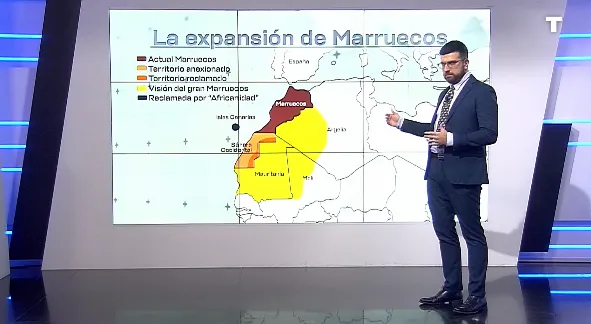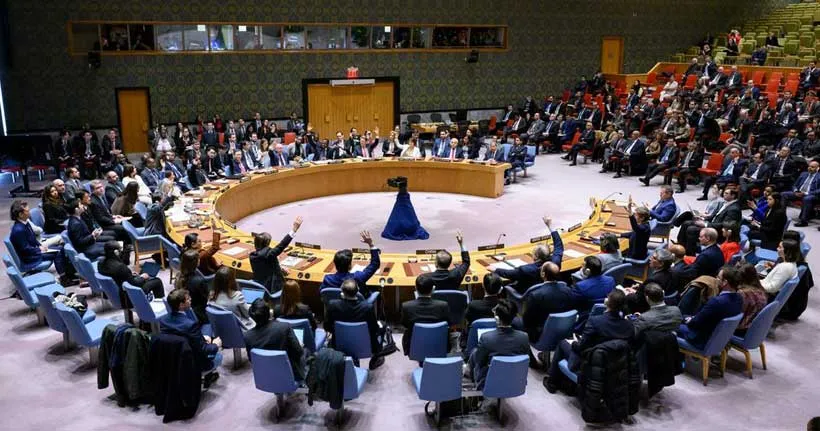
As the United Nations Security Council reconvenes at the end of April, it finds itself grappling with a long-standing issue that has remained unresolved for over three decades: the status of Western Sahara. The council will review the mandate of the United Nations Mission for the Referendum in Western Sahara (MINURSO), based on a strategic assessment submitted by the Secretary-General. The decisions made during this session in New York will not only influence the future of one of Africa's last colonies but also test the integrity of the international principles that the council was established to uphold.
The Case for MINURSO: Upholding International Commitments
There are three significant currents that threaten to derail progress regarding Western Sahara, all of which must be actively resisted. The first current advocates for a hands-off approach towards MINURSO, suggesting that it be allowed to operate without interference. This perspective, often supported by Moroccan interests, proposes reducing MINURSO’s mandate or presence, which would be a grave miscalculation. Established in 1991 to oversee a referendum for the Sahrawi people's self-determination, MINURSO has yet to fulfill its primary mission due to Morocco's persistent obstruction. The failure to conduct this referendum is not attributed to any insurmountable barriers but to Morocco's withdrawal from the process once it became evident that a loss was imminent. Weakening MINURSO in light of such obstruction would send a dangerous message to regimes contemplating territorial aggrandizement, essentially rewarding delay tactics and risking a return to full-scale conflict.
Furthermore, it is crucial to note that MINURSO remains the only major UN peacekeeping mission without a human rights monitoring component, a situation that Morocco has vigorously defended. Independent oversight is essential for documenting the abuses that Sahrawi activists face, including arbitrary detentions and the suppression of peaceful protests. Rather than diminishing MINURSO, the international community should empower it with the necessary human rights mandate and political backing to fulfill its original task of organizing a long-overdue referendum.
Autonomy Under Occupation: A Misguided Solution
The second current undermining progress is Morocco's aggressive campaign to promote its 2007 autonomy proposal as the sole viable solution for Western Sahara. This proposal, which was presented in a revised form during recent discussions in Madrid, seeks to allow the Sahrawi people a measure of self-governance while mandating acceptance of Moroccan sovereignty as a prerequisite. This condition fundamentally undermines the central issue of territorial sovereignty, which has been addressed by international law. The International Court of Justice's 1975 ruling explicitly stated that no territorial ties existed between Morocco and Western Sahara at the time of Spanish colonization, a finding that remains unchallenged. Political reality further complicates the feasibility of this autonomy proposal, as decades of Moroccan governance have relegated the Sahrawi people to second-class status, stripping them of their resources and cultural identity.
Moreover, Morocco’s political structure, characterized by an absolute monarchy, poses significant risks to any autonomy arrangement. The king wields unchecked authority, and any reforms are subject to his whims. The lack of an independent judiciary or a functional parliamentary system means that any autonomy granted can be rescinded at any time, leaving the Sahrawi people vulnerable. Recent resolutions from the Security Council have reaffirmed the necessity for mutually accepted solutions and have not dismissed the prospect of independence, which is an essential aspect of any negotiation.
The Polisario Front, representing the Sahrawi people, has also offered its own peace proposal, presenting options that align with established international resolutions: independence, free association, or integration. This reflects the genuine self-determination that the Sahrawi people deserve, in stark contrast to the limited options proposed by Morocco.
Lastly, it is essential to reject the recent attempts to label the Polisario Front as a terrorist organization, a tactic reminiscent of colonial-era strategies. The proposed legislation in the US Congress, which could classify the Polisario as a terrorist group unless it agrees to Morocco's autonomy plan, is not a legitimate counter-terrorism measure—it amounts to legislative coercion. The Polisario Front is recognized as the legitimate representative of the Sahrawi people by various international bodies, including the UN and the African Union, and has participated in negotiations under UN auspices. The historical context reveals that such labels are often politically motivated and have been used against various liberation movements throughout history.
To break the current impasse, a sincere and balanced mediator is required, one that treats all parties justly and facilitates discussions under UN auspices without preconditions. A just resolution must adhere to the principles of the UN Charter, uphold Sahrawi self-determination, and be acceptable to the Sahrawi people and their representatives. The absence of political will to achieve a fair and lasting outcome is the real obstacle in this ongoing conflict.
Countries advocating for a rules-based international order must now demonstrate their commitment by rejecting territorial annexation through force, reinforcing MINURSO’s mandate, dismissing the dubious terrorism bill, and supporting a genuine self-determination process that includes independence as a viable option. The decolonization of Africa cannot be deemed complete until the issue of Western Sahara is resolved. The persistence of this situation in the twenty-first century is not just an oversight but a profound injustice to a continent that has suffered from colonization.
As reported by moderndiplomacy.eu.