Understanding the Shift in Global Economic Dynamics
The landscape of global economics is undergoing a significant transformation driven by geopolitical tensions, which not only alter military balances but also reshape economic structures. While conflicts may disrupt trade, they rarely halt it altogether; instead, they redirect it in new directions. During these periods of uncertainty, capital tends to relocate rather than vanish. As tensions escalate in various regions, particularly the Middle East, the global system is entering a phase characterized by strategic repositioning, where resilience and diversification are becoming more critical than mere efficiency and concentration.
This shift is quantifiable. The World Trade Organization has projected a sharp decline in global merchandise trade growth, forecasting it to slow to approximately 0.5% in 2026, a stark drop from the 2.4% anticipated for 2025. This deceleration points to more than just a cyclical downturn; it reveals increasing structural pressures on global supply chains, driven by geopolitical risks, rising insurance and shipping costs, and a growing trend towards supply chain diversification. Such a slowdown in trade growth does not signify stagnation, but rather a reconfiguration of how trade operates on a global scale.
Morocco's Strategic Position in a Changing Economic Landscape
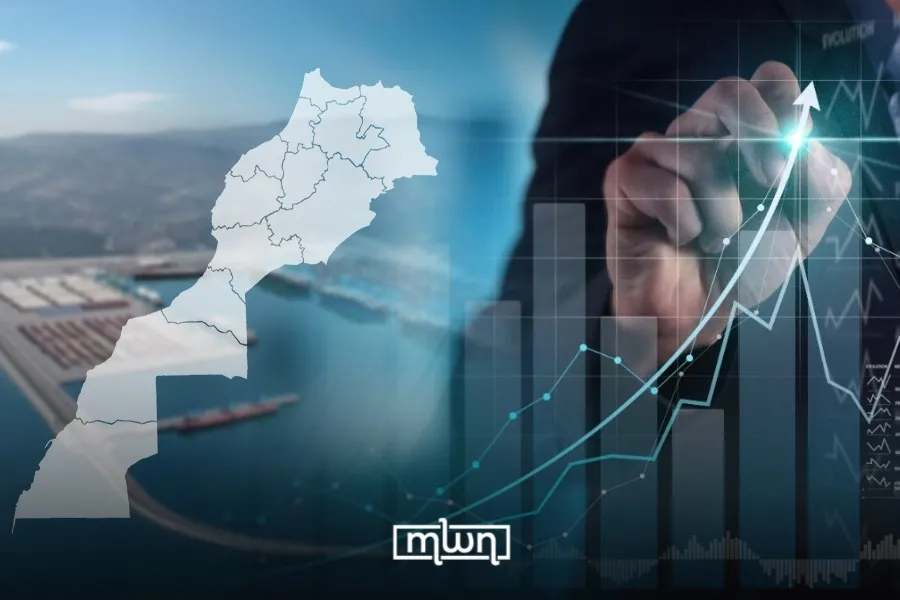
In this context, the geographical positioning of nations becomes a strategic asset. Countries adept at managing their geographical advantages within global value chains stand to gain significantly from this systemic realignment. Morocco, with its unique geographical location, serves as a pivotal point between Europe, Africa, and the Arab world, complemented by its Atlantic access, which is becoming increasingly vital as traditional trade routes face heightened risks.
The development of the Tanger Med Port exemplifies this change. This port has transitioned from a simple transshipment point to an integrated industrial and logistics hub that directly connects to European and African markets. In an era where companies seek to minimize supply chain length and mitigate exposure to unstable routes, Morocco's combination of proximity and institutional stability presents a significant competitive advantage. Furthermore, Africa is shedding its previous image as a peripheral player in global economic strategies. The establishment of the African Continental Free Trade Area (AfCFTA), which unites over 1.4 billion people, is laying the groundwork for regional value chains and deeper economic cooperation. If effectively executed, AfCFTA could transform both West and North Africa into vibrant zones of production and consumption, with Morocco positioned as a crucial gateway and production anchor that links European demand, Gulf investments, and African growth.
Additionally, the geopolitical realignment in the Middle East introduces further opportunities. Gulf capital, notably from sovereign wealth funds that are focusing on long-term strategic diversification, is increasingly considering geographic risk distribution in its investment decisions. By expanding their investments into Morocco and West Africa, these funds are not only seeking financial returns but also strategic depth. This approach allows Gulf investors to utilize Morocco as a platform economy that connects Atlantic trade routes with European proximity and African expansion.
However, merely recognizing these opportunities is not enough. The nations that will ultimately thrive in this evolving economic landscape are those that transition from reactive approaches to proactive, strategic policy alignment. For Morocco, this entails enhancing its industrial capacity beyond logistics and assembly. Increasing the domestic value-added component of exports is crucial for securing a sustainable position in the new global framework. Prioritizing industrial advancement in sectors such as renewable energy, advanced manufacturing, agro-processing, and digital services will ensure that Morocco is not just a facilitator of trade but an active participant in value creation.
Moreover, true integration within Africa must surpass mere formal agreements. Establishing financial connectivity, expanding regional banking, developing transport corridors that link ports with inland markets, and initiating joint industrial projects across West Africa are vital steps to transform geographical advantages into lasting economic influence. Without these deeper connections, Morocco's role as a gateway may remain symbolic rather than substantive.
Developing human capital is also essential. The supply chains of the future will rely not only on physical infrastructure but also on skilled labor. Aligning technical education and vocational training with industrial strategies, along with enhancing digital competencies, must keep pace with physical investments. Nations that attract capital without bolstering local capacities risk becoming vulnerable to external shocks, as value-added activities migrate with multinational enterprises.
Ultimately, the overarching lesson is that the global economy is not collapsing but rather redistributing. As trade growth is projected to decline to 0.5%, as indicated by the WTO, small gains in emerging regional corridors will become disproportionately valuable. The Atlantic-African axis, anchored by Morocco, has the potential to emerge as a significant corridor, provided it is supported by coherent policies and strategic investments. In this 21st-century landscape, economic influence is increasingly defined not just by market size but by how effectively a country positions itself within the flows of goods, capital, talent, and technology. Morocco's institutional stability, Atlantic access, industrial capabilities, and connectivity to both Europe and Africa lay a strong foundation for building long-term advantages.
In conclusion, economic repositioning favors agility over scale. Countries that adeptly govern their geography, integrate regions, and enhance domestic capacities can turn systemic uncertainties into structural opportunities. As the world recalibrates trade routes and redistributes risks, Morocco, along with various parts of Africa, may discover that their most significant asset lies not in being insulated from disruptions but in their intelligent engagement in the evolving global economic system.
As reported by moroccoworldnews.com.