Addressing Europe's Demographic Challenges
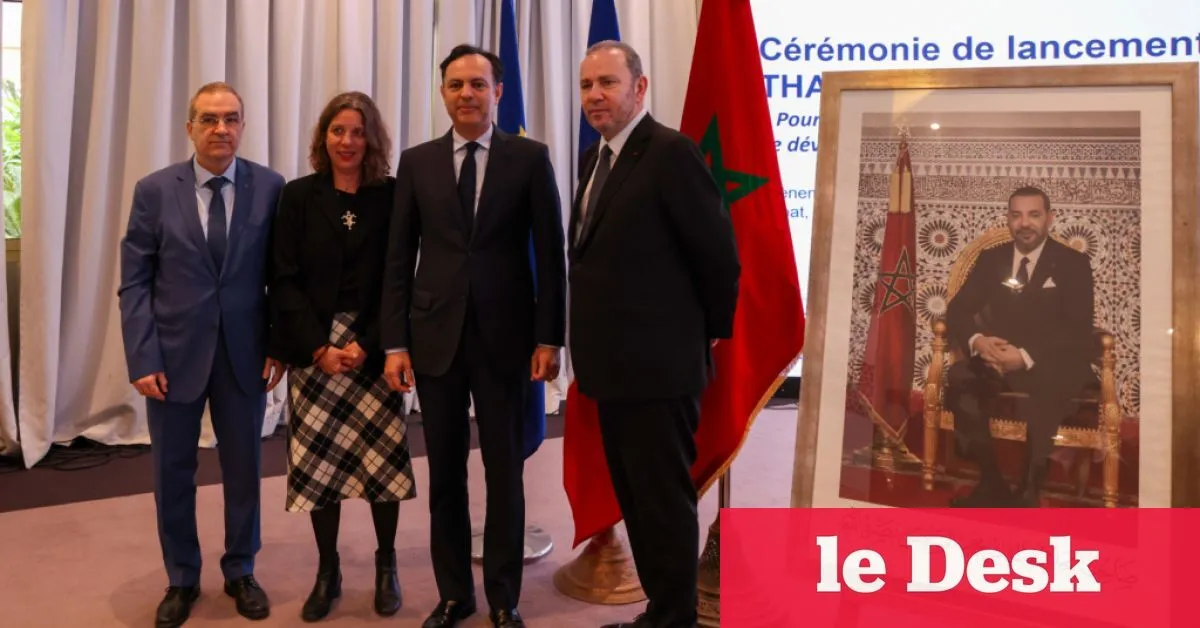
The issue at hand is well-known. On one side of the Strait of Gibraltar lies Europe, grappling with what demographers now refer to as a "demographic winter"; entire sectors of the economy—including agriculture, hospitality, and elder care—are facing severe labor shortages. On the other hand, there exists a pool of young, often rural talent in Morocco that lacks legal pathways to access these job opportunities. It is this mismatch that the two new programs, launched on Thursday at the Hotel Tour Hassan in Rabat by Morocco, France, and the European Union, aim to address.
The first initiative, titled "THAMM+ Équipe France," focuses on organizing temporary work pathways between the two countries. The second program, "PRIM 2," delves into the local dimensions of migration policy, targeting two Moroccan regions—Souss-Massa and Oriental—that serve as experimental grounds. Together, these initiatives outline a multifaceted approach that their proponents describe as a "triple advantage"—benefiting workers, Morocco, and Europe alike.
Strategizing for Future Workforce Needs
Moroccan Minister of Economic Inclusion and Employment, Younès Sekkouri, set the tone by advocating for a departure from reactive management. Instead of merely responding to sectoral shortages in crisis mode, he emphasized the importance of systematically anticipating labor needs. "Planning is the central pivot for serving the country's interests," he asserted before the gathered delegations in Rabat.
The essence of "THAMM+ Équipe France" lies in its alignment with the European initiative "Talent Partnership." This program extends beyond mere job placement; it aims to support every stage of the migration cycle, including pre-departure preparation, professional stays in France, and assistance upon return. The initiative mobilizes a dense institutional network, involving Moroccan entities such as ANAPEC and OFPPT, alongside French counterparts like OFII, France Travail, and various professional sectors, all unified under the goal of protecting workers' rights. Funding is jointly provided by the EU and France through the French Development Agency (AFD), with implementation entrusted to Expertise France.
French Ambassador to Rabat, Christophe Lecourtier, emphasized the long-term vision of this initiative. He recalled the contributions of Moroccan workers to France's reconstruction after World War II and their role during the robust growth period from 1945 to 1975, advocating for this shared history to foster a renewed partnership. He reiterated that the need for skilled labor has not vanished; rather, it has evolved.
Furthermore, Lecourtier praised Morocco's institutional framework regarding migration governance, asserting that the National Immigration and Asylum Strategy, adopted under King Mohammed VI, positions the Kingdom as a key interlocutor on these issues. He summarized that bilateral cooperation now aims to construct "a positive and structured migration," moving away from improvised approaches.
European Union Ambassador Dimiter Tzantchev noted that these projects do not emerge in a political vacuum. They are part of the broader Mediterranean Pact and the new European Pact on Migration and Asylum, which seeks to balance border control with the establishment of legal pathways. He pointed out that over five million Moroccans currently reside in Europe, highlighting the tangible connections between the two regions.
However, Tzantchev stressed a methodological point: for migration policies to yield real effects, they must be implemented at the local level—within regions, municipalities, and alongside civil society organizations. "Descending from the capitals to the territories," as he puts it, is a prerequisite for their effectiveness.
This very ambition underpins the second program. While "THAMM+" focuses on managing the flow of migration—organizing departures and returns—"PRIM 2" addresses local community engagement. In the Souss-Massa and Oriental regions, the project enhances access to healthcare, education, and economic integration for migrant populations and Moroccans returning from abroad. It also supports local authorities and civil society in developing tailored reception policies that reflect their unique realities.
Building upon a previous phase, the program is anchored in two Moroccan institutional pillars: the National Immigration and Asylum Strategy (SNIA) and the National Strategy for Moroccans Residing Abroad (SNMRE). It emphasizes the inclusion of women and the protection of vulnerable individuals, including sub-Saharan migrants, refugees, and families from the Moroccan diaspora.
Behind the technical aspects of these initiatives lies a political wager. For Morocco, the goal is to demonstrate that a sovereign and orderly management of migration is achievable while showcasing its national human capital. For France and the EU, the challenge is to prove that Europe can open credible legal pathways at a time when the migration debate on the continent remains polarized.
The simultaneous launch of these two programs—one focused on professional mobility and the other on local integration—conveys a powerful message: migration cannot be managed through a single lever. It requires simultaneous action on labor supply and demand, individual rights and institutional capacities, as well as attention to both capitals and regions. This is the collaborative effort that Rabat, Paris, and Brussels are now committed to pursuing.
As reported by ledesk.ma.