Strengthening Judicial and Security Cooperation
Norway is increasingly recognizing Morocco as a reliable ally in the fight against transnational crime, particularly as it seeks to enhance judicial and security cooperation with the North African nation. Norwegian officials have reported that the country is intensifying efforts to pursue suspected members of international criminal networks believed to operate from abroad. The National Criminal Investigation Service of Norway, known as Kripos, has advocated for a formal bilateral framework to expedite legal cooperation and improve the identification of key figures behind organized crime, especially in the realm of drug trafficking.
Addressing Slow Progress and Legal Frameworks
Kristin Kvigne, the head of the Kripos police, stated that since 2022, the agency has urged Norwegian authorities to foster deeper cooperation with Morocco; however, progress has been sluggish. Current estimations suggest that approximately 19 Norwegian citizens suspected of connections to criminal networks are presently in Morocco. Nora Pedersen, a lawyer with the Norwegian police, noted that judicial requests sent to Moroccan authorities often experience delays, primarily due to the absence of a specific legal agreement that would streamline cooperation. "Requests are processed, but very slowly," she emphasized, underscoring the need for a more robust legal framework as a priority for Norwegian authorities.
Nonetheless, the Norwegian Ministry of Justice has asserted that effective cooperation with Morocco already exists in combating serious cross-border crime, pointing out that existing international agreements provide a legal foundation for judicial collaboration. Officials have indicated that Moroccan authorities have responded to Norwegian requests, including in recent cases, and there are no formal legal obstacles hindering cooperation. Despite this, Oslo is keen to enhance coordination through improved mechanisms and ongoing dialogue with their Moroccan counterparts, aiming to increase the speed and efficiency of legal processes.
The push to strengthen ties comes at a time when Norwegian authorities are warning about the evolving nature of criminal networks that increasingly operate across borders. A recent police report highlights that these groups, particularly those involved in drug trafficking, have ramped up recruitment efforts among minors. The report emphasizes the adaptability of these networks, noting that their leaders often reside abroad and frequently hold dual nationality, complicating extradition efforts to Norway.
Cooperation between Norway and Morocco has expanded in recent years. In November, Morocco's security chief, Abdellatif Hammouchi, met with Norway's Police Commissioner Hakon Skulstad during an Interpol meeting, where both parties signed a memorandum of understanding aimed at enhancing operational coordination, intelligence sharing, and joint efforts against organized crime. According to Norwegian authorities, strengthening alliances with countries where suspects might reside is becoming increasingly crucial for combating transnational crime, as criminal groups exploit jurisdictional gaps and global mobility to evade law enforcement.
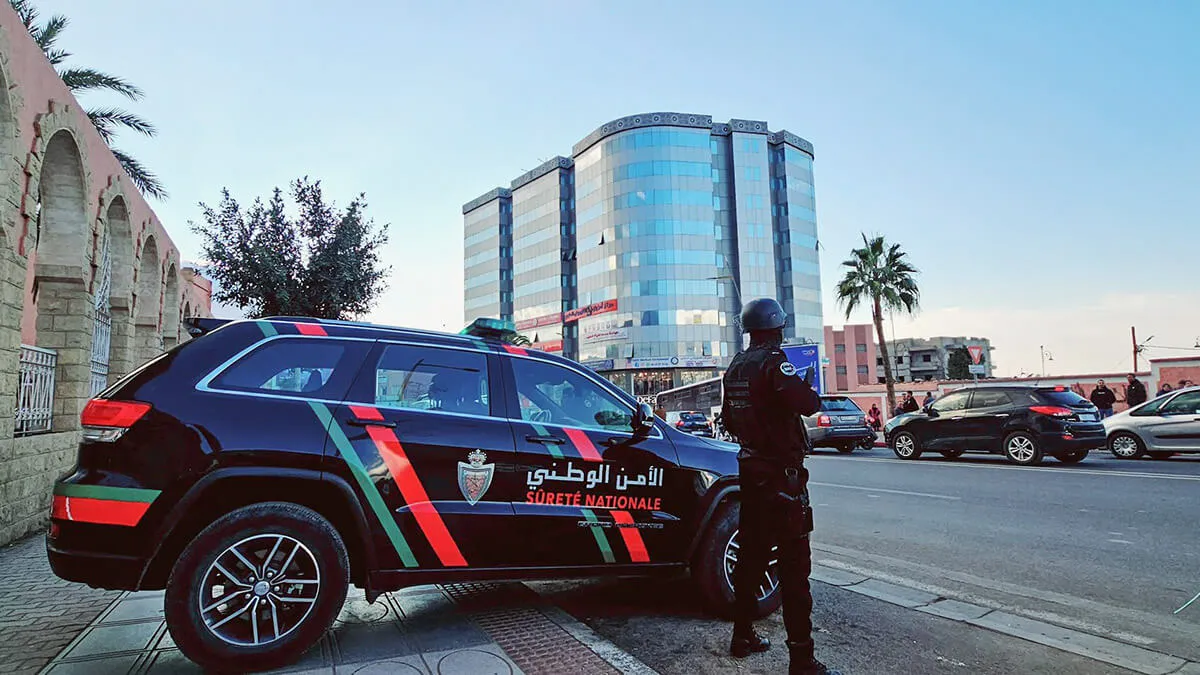
Morocco is viewed as a trustworthy partner in the fight against transnational crime and in maintaining security, both in the MENA region and globally. The efforts of Moroccan security forces are significant, having participated in numerous operations against terrorist groups and transnational criminal networks in coordination with major countries on the international stage. A testament to Morocco's important international cooperation is the ongoing and direct contact of Abdellatif Hammouchi, the head of the Moroccan General Directorate of National Security (DGSN), with key figures in security and defense from some of the world's leading powers. Hammouchi has coordinated security matters with high-ranking officials such as William Burns, the Director of the American Central Intelligence Agency (CIA), and other notable leaders from countries like Qatar, France, Spain, and Saudi Arabia.
For Mediterranean and Atlantic leaders, Morocco aims to serve as a bridge of communication, information, and understanding between cultures.
As reported by atalayar.com.