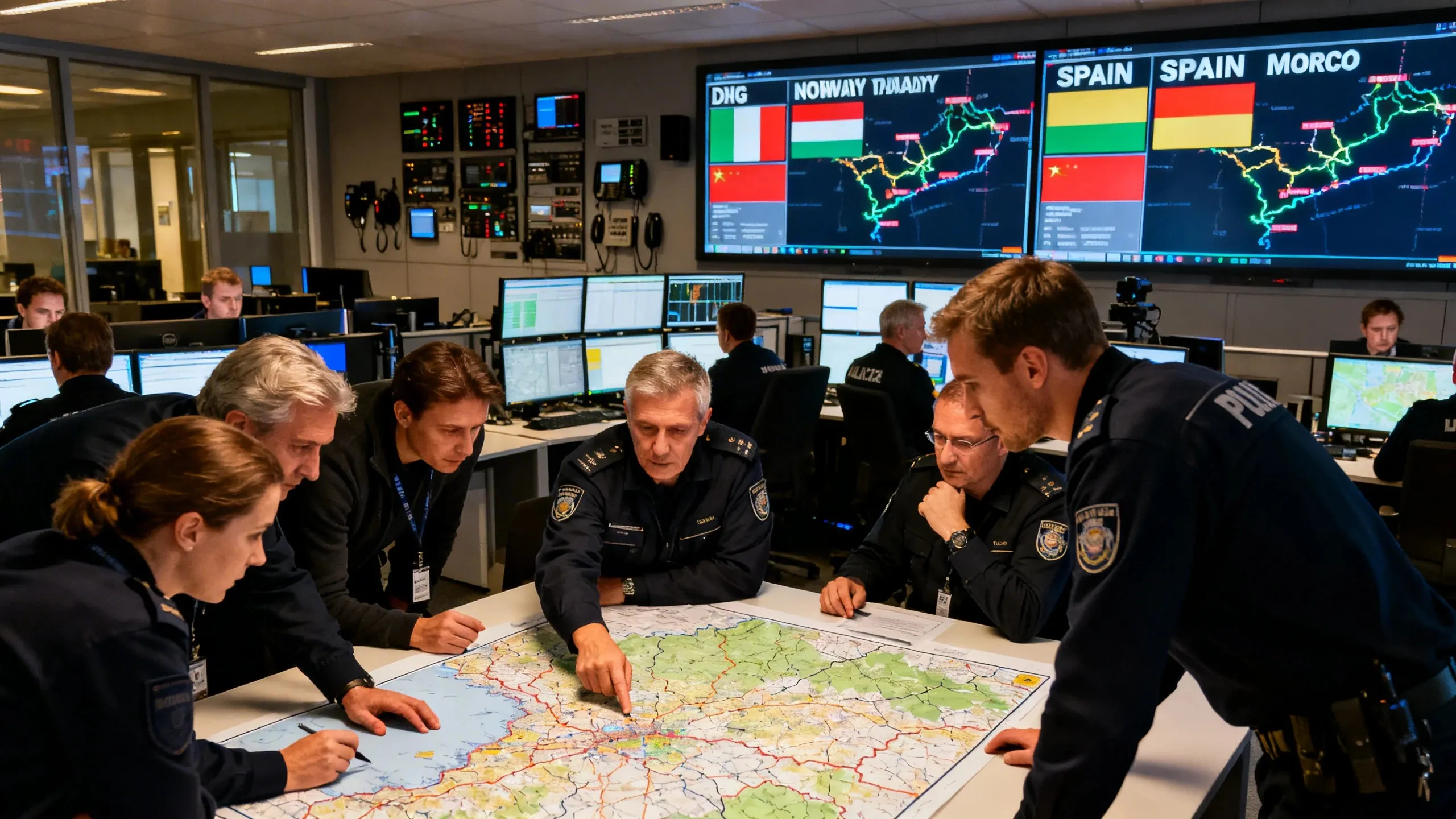
The escalating activities of Moroccan drug networks are significantly affecting Spain's security landscape and economic stability. Key trafficking routes into Europe predominantly traverse Spanish provinces, with Málaga emerging as a particularly crucial point in this illicit trade. The intensified focus from Norway on Morocco could potentially realign the dynamics of the drug black market, thereby impacting the operational interests of Spanish law enforcement, who are already grappling with an uptick in transit operations involving narcotics.
In recent years, Norwegian authorities have faced substantial challenges in prosecuting drug cartel leaders who have sought refuge in Morocco. Reports suggest that approximately twenty Norwegian citizens of Moroccan descent, linked to major drug networks, have found sanctuary within the Moroccan borders. Since 2022, the Norwegian police have been advocating for their Ministry of Justice to expedite negotiations with the Moroccan government to facilitate the extradition of these suspects or, at the very least, to enable the transfer of cases for prosecution within Morocco. However, the Moroccan legal framework prohibits the extradition of its nationals, which has resulted in a frustrating stalemate for Norwegian investigators.
Despite the signing of a letter of intent aimed at enhancing police cooperation last November, Norwegian officials remain dissatisfied with the current mechanisms in place. Representatives from Kripos, Norway's National Criminal Investigation Service, have expressed concerns that their requests for cooperation often go unanswered or are handled at a sluggish pace. They draw parallels with Sweden's experience, where special agreements with Morocco led to the apprehension of several criminal figures abroad. In contrast, Norway has not enjoyed similar success, leading to a growing sense of frustration among law enforcement personnel and mounting pressure on political leaders to take action.
The Ministry of Justice in Norway maintains that collaboration with Morocco is advancing in accordance with international treaties and asserts that there are no legal impediments to information exchange. However, as highlighted by VG, this framework has not yielded tangible outcomes in practice. Official visits and negotiations have not accelerated the processes, and criminal organizations continue to exploit Morocco as a secure base for coordinating their illicit operations.
According to Kripos, Moroccan drug networks dominate a significant portion of the cannabis and cocaine supply chains to Europe. These logistical networks navigate through Spain, with Málaga province recognized as a pivotal hub for drug distribution. A portion of these narcotics is transported to the Netherlands before being disseminated across northern Europe, including Norway. Recent analyses from russpain.com. indicate that Spanish law enforcement has been consistently uncovering new smuggling operations, including the discovery of hidden tunnels and covert stashes, which underscores the sophisticated level of organization within these criminal enterprises.
In a notable recent incident reported by VG, authorities uncovered a substantial cache of drugs and firearms in the residence of one of the detained individuals. A variety of illegal substances were confiscated, along with a considerable sum of cash. Such findings underscore the magnitude of the drug trafficking issue and highlight the urgent need for enhanced international cooperation to tackle it effectively.
For Spain, the proliferation of drug trafficking activities between Norway and Morocco signifies heightened pressure on local security services. The province of Málaga, as suggested by Kripos, occupies a critical position in the logistics of drug distribution, rendering it susceptible to the influence of international criminal organizations. In recent years, Spanish authorities have documented an increase in drug seizures and a rise in violence associated with the struggle for control over trafficking routes.
VG reports that the criminal activities extend beyond mere trafficking and distribution; they also encompass the use of violence to maintain dominance in the market. This scenario presents additional risks for residents and businesses situated along the primary trafficking corridors. In the absence of effective international agreements, Spain has been compelled to bolster its own control measures and share intelligence with other EU member states.
Europe has witnessed a surge in the operations of transnational drug networks that exploit legislative weaknesses and gaps in international cooperation. Similar challenges have been observed in countries like Italy and France, where local mafia groups have resorted to North African nations to evade prosecution. In 2025, Spain encountered a significant scandal involving drug trafficking through its Andalusian ports, leading to the implementation of stricter border controls. These circumstances emphasize the necessity for a comprehensive reevaluation of international agreements and the establishment of new frameworks to combat organized crime effectively.