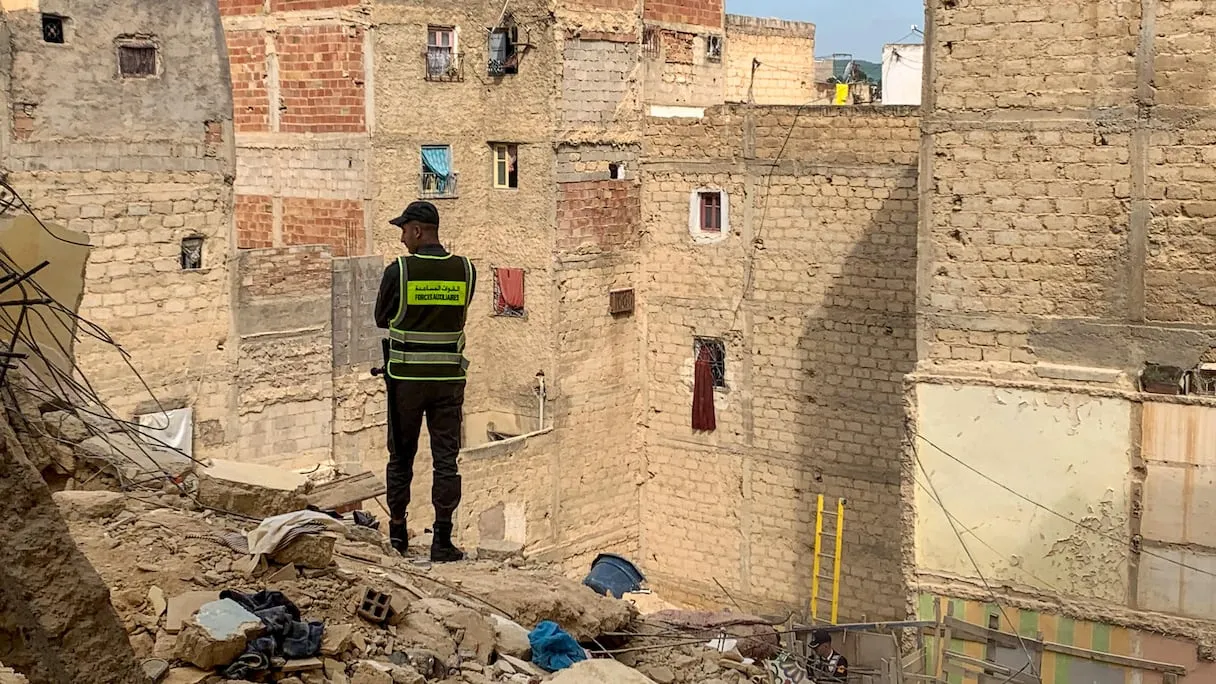

The State Secretary for Housing, Adib Ibn Ibrahim, has disclosed alarming statistics regarding the state of buildings across Morocco, revealing that a staggering total of 53,728 structures have been identified as at risk of collapse nationwide. Out of these, approximately 28,000 buildings have undergone technical assessments to ascertain the urgency of the danger and the necessary interventions required. These findings highlight the critical need for immediate action to address the safety concerns posed by these vulnerable buildings, with reports indicating which structures require urgent intervention being forwarded to the relevant authorities.
During a recent oral question session at the Council of Advisors, Ibn Ibrahim elaborated on the issue of deteriorating structures, specifically emphasizing the dangers posed by buildings in historic city centers as well as those in urban areas that exhibit structural deficiencies. Such conditions not only threaten public safety but also jeopardize the architectural and urban heritage of the region. In response to this pressing issue, the ministry has established a comprehensive framework centered on proactive measures, integration, efficiency, and spatial coordination, with particular emphasis on collaborative efforts exemplified in a model agreement in the Rabat-Salé-Kénitra region. This initiative has involved various stakeholders, including the Ministry of Interior, the Ministry of Economy and Finance, local authorities, and a dedicated fund aimed at addressing these pressing challenges.
Ibn Ibrahim noted that the management of this issue is coordinated at a local level by regional committees headed by governors or regional directors, who are responsible for overseeing the collaboration among multiple stakeholders and departments involved. He revealed that during February and March, the ministry conducted field visits across several regions, including Tangier-Tétouan-Al Hoceima, Fès-Meknès, Marrakesh-Safi, and Casablanca-Settat, with the presence of the relevant governors and regional directors highlighting the seriousness of the situation.
Furthermore, the State Secretary pointed out that a circular issued by the Minister of Interior has mandated a comprehensive census of buildings at risk of collapse, along with the establishment of a unified intervention methodology at the regional level. This initiative aims to proactively mitigate risks associated with such buildings. Regarding urban renewal efforts, Ibn Ibrahim affirmed that this project focuses on rehabilitating deteriorating neighborhoods, facilitating access to decent housing, and reducing vulnerability and social exclusion. The strategy includes integrating marginalized neighborhoods into the urban fabric and developing projects with urban, social, and commercial dimensions.
As reported by ar.telquel.ma.