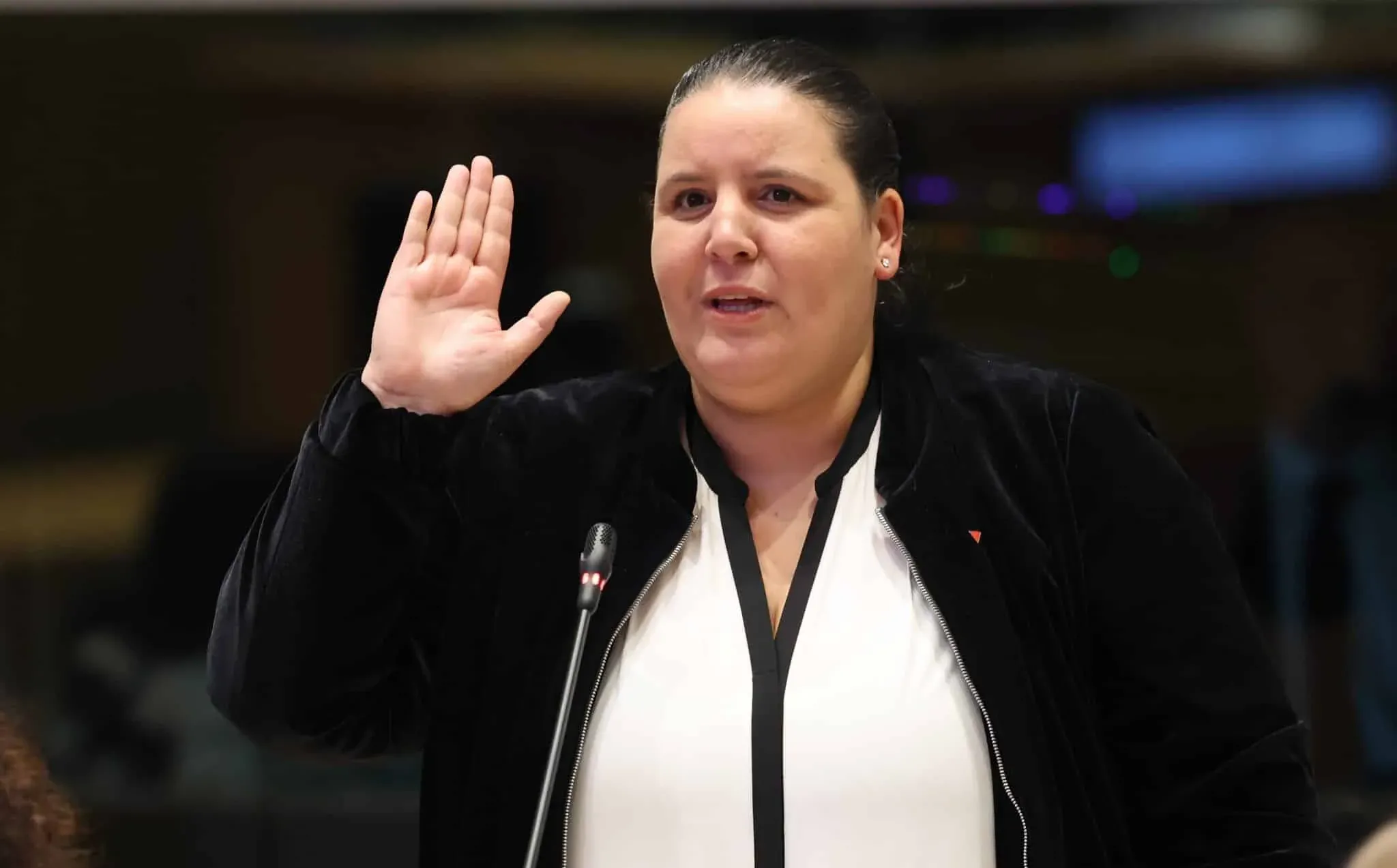

Rachida Aït-Alouha, a prominent member of the Walloon Parliament, has officially announced her departure from the Belgian Workers' Party (PTB). Aït-Alouha, whose roots trace back to Morocco, characterized her exit as a "fully assumed decision," highlighting a growing dissonance between her core values and the practices within the party. In a comprehensive letter shared on her social media platforms, she articulated her thoughts, revealing a profound political realization that has become increasingly undeniable over time. This realization centers around a significant divergence between the principles that initially inspired her engagement with the party and the practices she has observed since her involvement.
In her resignation, Aït-Alouha pointedly criticized the PTB for its ongoing ambiguity regarding her country of origin, Morocco, which she identifies as a critical issue. She emphasized that despite her repeated requests for clarity, the party failed to provide a definitive response, leaving her feeling politically uncomfortable. "This ambiguity is not trivial; it mirrors a political discomfort that I refuse to overlook," she expressed, underscoring the weight of her decision.
The PTB, for its part, claims not to maintain an official position on the ongoing Sahara conflict, labeling it as a "South-South conflict" in which the party refrains from intervention. However, this claim warrants scrutiny, as the PTB has historically shown support for the "Belgian Committee of Support for the Sahrawi People," which advocates for a referendum on self-determination for the Sahrawi people. Such contradictions suggest a complex relationship between the party's stated positions and its actions.
Rachida Aït-Alouha's departure is not an isolated incident, as two other members of Moroccan descent from the Brussels Parliament, Youssef Handichi and Soulaimane El Mokadem, had previously resigned from the PTB in the years 2024 and 2025, respectively. This trend points to a broader issue within the party, potentially reflecting a disconnect between its leadership and its diverse membership.
As reported by en.yabiladi.com.