Transforming Heritage into a Living Resource
The discourse surrounding "showcase architecture" has led to a profound examination of heritage in the book "Optimism and Architecture." Rather than merely suggesting a superficial alternative, this work advocates for a practical approach that calls for a fundamental shift in our thinking. Heritage is not merely an aesthetic backdrop or decorative material; it is a living knowledge system that can be reactivated. This perspective allows us to view architectural heritage as a repository of time-tested solutions rather than mere forms to replicate. Traditional techniques, climatic adaptation strategies, and the social relationships molded by spaces represent a cumulative experience embodying a type of "slow intelligence" that transcends the fast-paced consumer trends of contemporary architecture.
In this context, engaging with heritage becomes an act of optimism, as it assumes that the past can significantly contribute to shaping the future—not as a burden, but as a possibility. The role of optimism manifests in the shift from nostalgia and rigid preservation to reinterpretation and production. Instead of viewing heritage as something to be protected from change, we can consider it as a dynamic material that can be reshaped to meet current needs. This transformation requires confidence that societies can develop their own tools, free from the reliance on imported ready-made models, reflecting a cognitive optimism in the ability of the local context to generate contemporary solutions rooted in its origins.
From Preservation to Activation
Many urban policies reduce the handling of historical cities to a preservation logic based on strict laws, superficial restoration, and turning neighborhoods into mere tourist attractions. This approach often leads to a harsh paradox: we succeed in preserving the stone, yet fail to protect the community that imbued that stone with its meaning. This book proposes a qualitative leap from the concept of "preservation" to "activation," where optimism does not imply freezing the past but believing in the capacity of historical structures to accommodate new functions. Architectural traditions possess an environmental and social logic capable of serving the present, thus reframing heritage not as an organizational burden but as a reservoir of tested solutions.
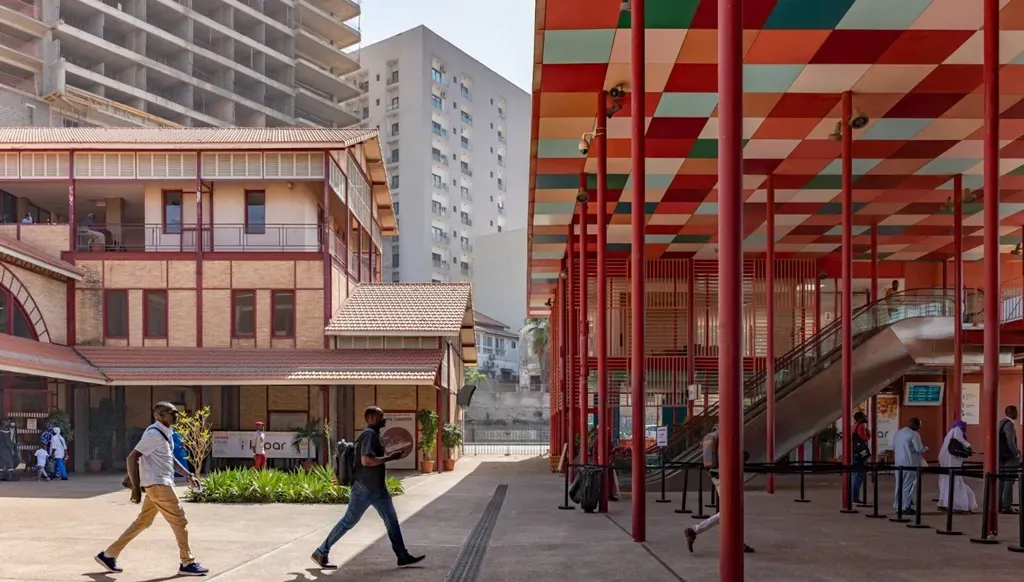
For instance, the revitalization project of the historical city of "Esna" in Egypt exemplifies the importance of preserving heritage while involving the local community in this process. The project treated the city not as a separate archaeological site but as a living entity through a series of precise interventions, such as façade restoration, enhancement of public spaces, and the reorganization of community activities to support traditional crafts. A similar approach was observed in the rehabilitation of the "Lalla Ydouna" square in Fez, Morocco, where the square, located in the heart of the old city, was viewed not as a deteriorated urban void but as a vital component of the social and economic relationship network.
Significantly, the project focused on reorganizing movement—not only vehicular traffic but also the flow of people, crafts, and goods. Historically, the square served as a transit point linking areas of artisanal production with markets, a connection that was severed due to its deterioration. Thus, redesigning the surfaces, improving accessibility, and clarifying pathways aimed to restore the square's function as a connector rather than a barrier. Furthermore, the project emphasized upgrading the surrounding buildings, particularly those linked to traditional crafts, not to convert them into static exhibits but to support their continuous use. This highlights the economic dimension of heritage; preserving craft practices is not merely a cultural act but a condition for the sustainability of the place itself.
What distinguishes this experience is its reliance on precise and gradual interventions instead of imposing a massive project all at once. This approach allows for adaptation to community feedback and fosters a state of continuous learning within the planning process, reflecting the essence of optimism discussed in the book—not as an abstract idea, but as a working methodology that embraces complexity and operates within its framework. The cases of Fez and Esna reveal that heritage lives only as part of a continuous economic, social, and cultural production cycle; squares, markets, and historic neighborhoods were built to be used, and separating them from this use strips them of their meaning, regardless of how well-preserved their forms may be.
The optimism here lies in the belief in the possibility of restoring this cycle, not through mere reproduction of the past as it was, but by reinterpreting it. Traditional crafts, for example, can adapt to new markets, and tourism can become a resource, provided it does not turn into a consumption tool that empties the place of its residents. In summary, the book proposes a fundamental shift in how we handle heritage—from viewing it as a static "scene" to considering it a dynamic "process." While success in the first model is measured by aesthetic appeal, in the second, it is assessed by the place's ability to remain a vibrant environment. Within this context, the experiences highlighted in the book, such as the case of Fez, are not merely successful models but examples of an alternative methodology. The transition from formal restoration to reintegrating historical spaces into daily life reveals a deeper vision of the city as a cohesive social and economic system, rather than just an urban fabric.
As reported by annahar.com.