Transforming Marrakech's Grand Stadium: A Critical Look at Future Investments
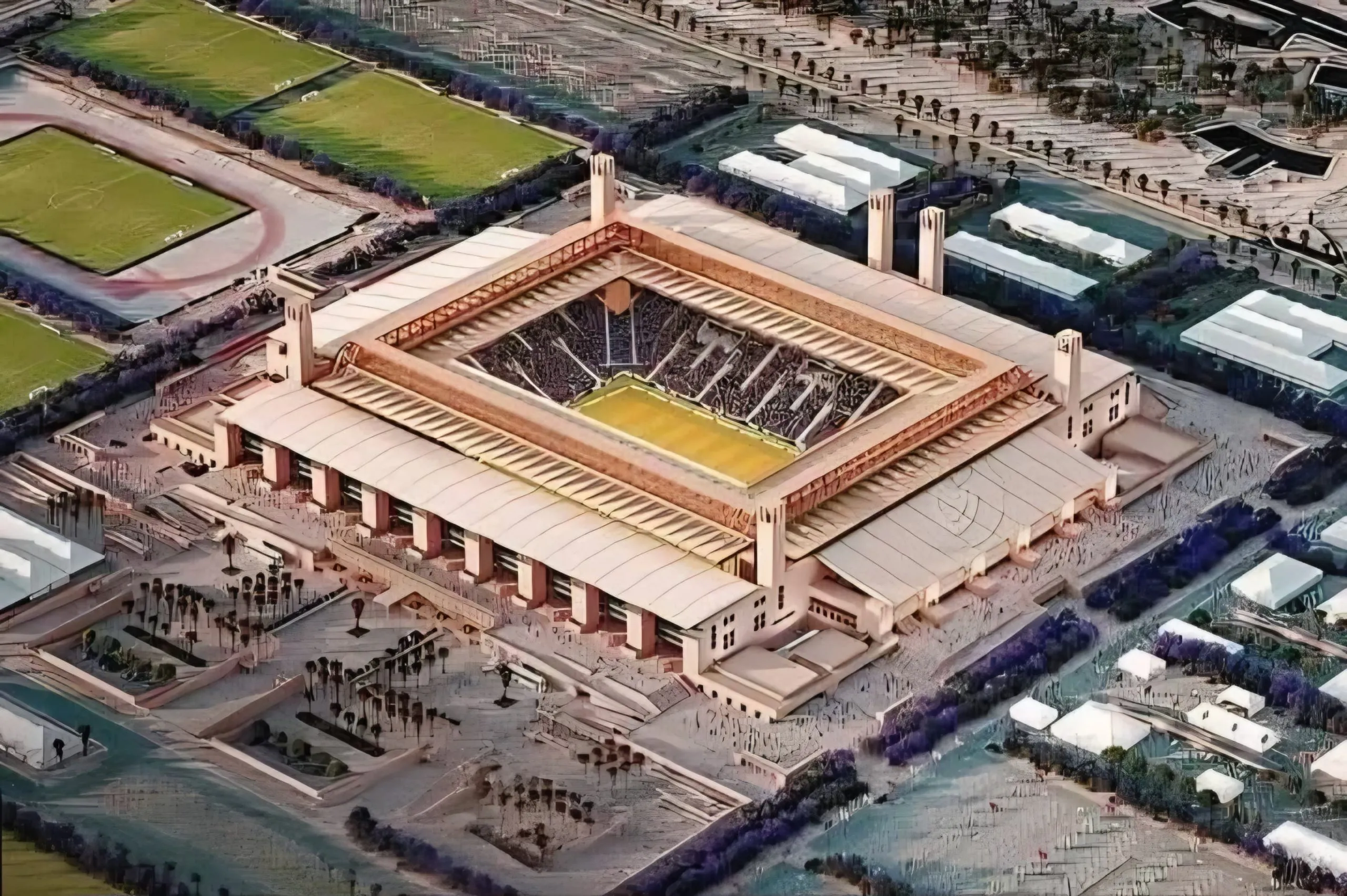
As discussions circulate regarding a substantial budget of approximately 883 million dirhams (around 95 million USD) allocated for the renovation of the Grand Stadium in Marrakech in preparation for the 2030 World Cup, it becomes imperative to ask not only how much has been spent but also how these funds will be utilized and with what aesthetic and architectural vision. The sheer volume of financial resources does not guarantee the creation of a culturally significant project; instead, it could potentially mask a lack of conceptual clarity and confusion in the decision-making process.
In a city as culturally rich and globally recognized as Marrakech, any sporting initiative must serve as a representation of identity rather than merely a functional infrastructure. The available designs for the Grand Stadium have prompted more questions than admiration, raising concerns about whether the proposed final design aligns with the city's stature as a premier tourist destination. Many observers regard the current architectural proposals as uninspiring and inadequate for a city of Marrakech's caliber, which deserves more than just a standard sports facility devoid of distinct architectural character.
The Architectural Ambition: A Comparison to Other Moroccan Projects
When comparing the Grand Stadium of Marrakech to other sports complexes within Morocco, particularly in Rabat, a stark contrast in visual and architectural ambition becomes evident. While some stadiums are promoted as modern facades with a strong architectural identity and compelling visual presence, the designs circulating for Marrakech appear to lack boldness and creativity, leaning towards a more subdued approach.
This raises an unsettling question: Is there a growing divide among cities that is now evident in the language of concrete, steel, and design? The matter transcends mere external aesthetics; it reflects the understanding that architecture today plays a crucial role in the soft power of cities and nations. Modern stadiums worldwide have evolved beyond mere spectator venues, transforming into architectural icons that are intrinsically linked to their cities prior to any events taking place.
In the context of Morocco's ambitious projects, it becomes increasingly perplexing that a city as significant as Marrakech is relegated to an architectural vision that does not correspond with its historical, touristic, and sporting symbolism. Ultimately, the core issue lies not just in the budget or the scale of construction, but in a deeper inquiry: Are we merely renovating stadiums, or are we reimagining our relationship with the city, identity, and beauty? Investing in sports infrastructure devoid of an aesthetic sense and ambitious architectural vision risks leading to the creation of monumental structures that lack soul. Marrakech, with all that it represents, deserves more than just a completed stadium; it deserves a masterpiece that befits its name on the global map.
As reported by nichanealane.ma.