Unveiling Ancient Life in the Dades Valley
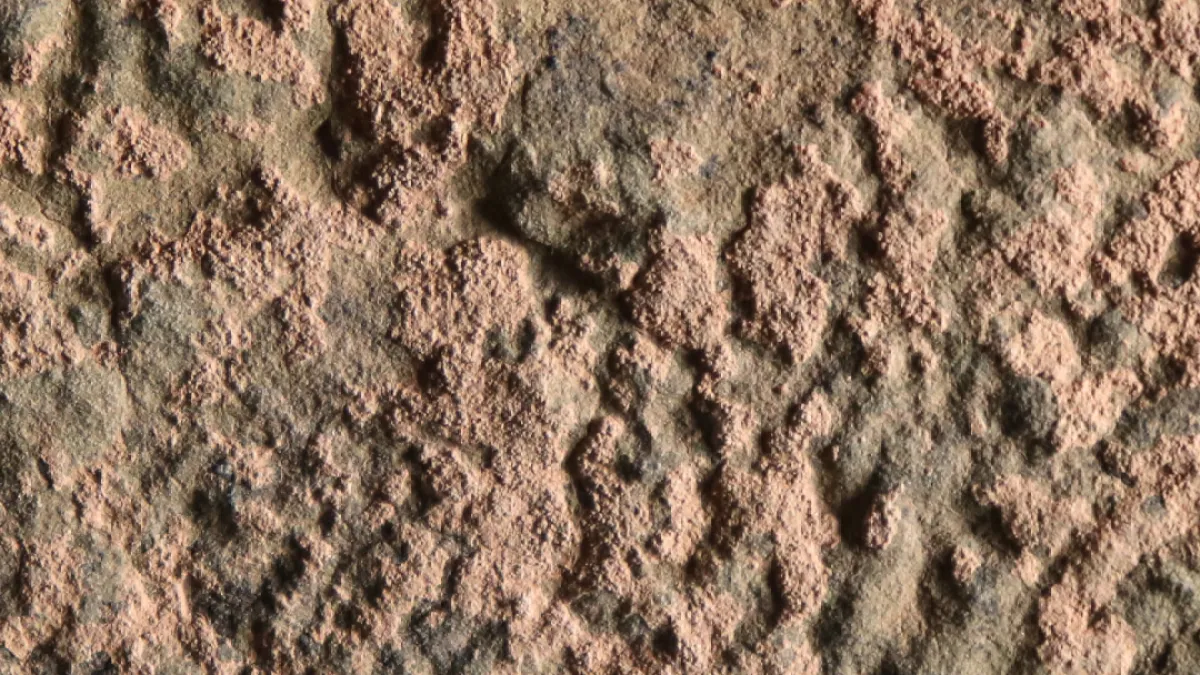
A team of international scientists has made a groundbreaking discovery in Morocco, uncovering strange geological formations resembling wrinkles in the deep-sea sediments of ancient oceans located in the Dades Valley, nestled between the High Atlas Mountains. These formations date back approximately 180 million years and represent a significant anomaly in geological studies, as such structures are typically found in shallow, sunlit marine environments. The current discovery, however, was made at depths exceeding 180 meters below sea level, making it a remarkable site for investigating the mysteries of ancient oceanic ecosystems.
Dr. Rowan Martindale, a paleobiologist and geological ecologist at the University of Texas at Austin, emphasized the importance of Dades Valley for exploring ancient life. In an exclusive statement to Al Jazeera, she stated, "Our research in the Dades Valley focuses on early Jurassic coral reef ecosystems, alongside other ancient marine environments present in the High Atlas Mountains. What captured our attention was the unusual discovery of these deep-sea wrinkles."
Significance of the Discovered Wrinkle Structures
The wrinkle structures identified by the research team are irregular protrusions or depressions, measuring between one millimeter and one centimeter, and can be observed with the naked eye. Dr. Martindale elaborated, "These structures are formed in both ancient and modern environments, with both biogenic and abiogenic origins. Typically, wrinkles develop in shallow waters where blue-green algae thrive under extreme conditions. However, the wrinkles we discovered are remarkable as they formed in depths too great for photosynthetic bacteria, suggesting they were produced by a different type of biological activity. Our detailed examination of the surrounding rock layers revealed significant chemical evidence, notably high levels of carbon in the sediments directly beneath the wrinkles, indicating a likely biological origin."
To further explore this phenomenon, the researchers compared their findings with modern marine environments, utilizing remotely operated submarines to investigate the seabeds within the photic zone, particularly focusing on microbial mats—layers of microscopic organisms such as bacteria that thrive on submerged surfaces. Their findings indicated that such microbial mats could also form in the dark depths of the ocean, produced by chemolithoautotrophic bacteria that derive energy from chemical reactions instead of sunlight.
Dr. Martindale highlighted the challenges in locating microbial life in such extreme environments, stating, "The sediments were deposited in deep waters where photosynthetic microorganisms could not survive. Thus, we searched for examples of microbially produced mats that could persist in such conditions. Today, various chemolithoautotrophic communities exist in deep-sea environments, closely linked to underwater current dynamics that supply nutrients to the depths, consequently leading to lowered oxygen levels in the sediments." The American Geological Society noted that by integrating geological observations, chemical evidence, and modern deep-sea examples, the scientists concluded that they had discovered preserved chemical wrinkle structures in the rock record.
Dr. Martindale asserted, "These wrinkle structures are crucial evidence in understanding the early stages of life. By overlooking their potential existence in sediments, we risk losing vital parts of microbial life history." This discovery not only deepens our understanding of ancient ecosystems but also challenges long-held assumptions regarding the formation of these structures solely by phototrophic microbial mats.
In closing, Dr. Martindale expressed her enthusiasm for continuing research in Morocco, stating, "I am always excited to further our investigations here and hope that this discovery encourages researchers to reconsider environments previously dismissed in the search for ancient life forms."
As reported by aljazeera.net.