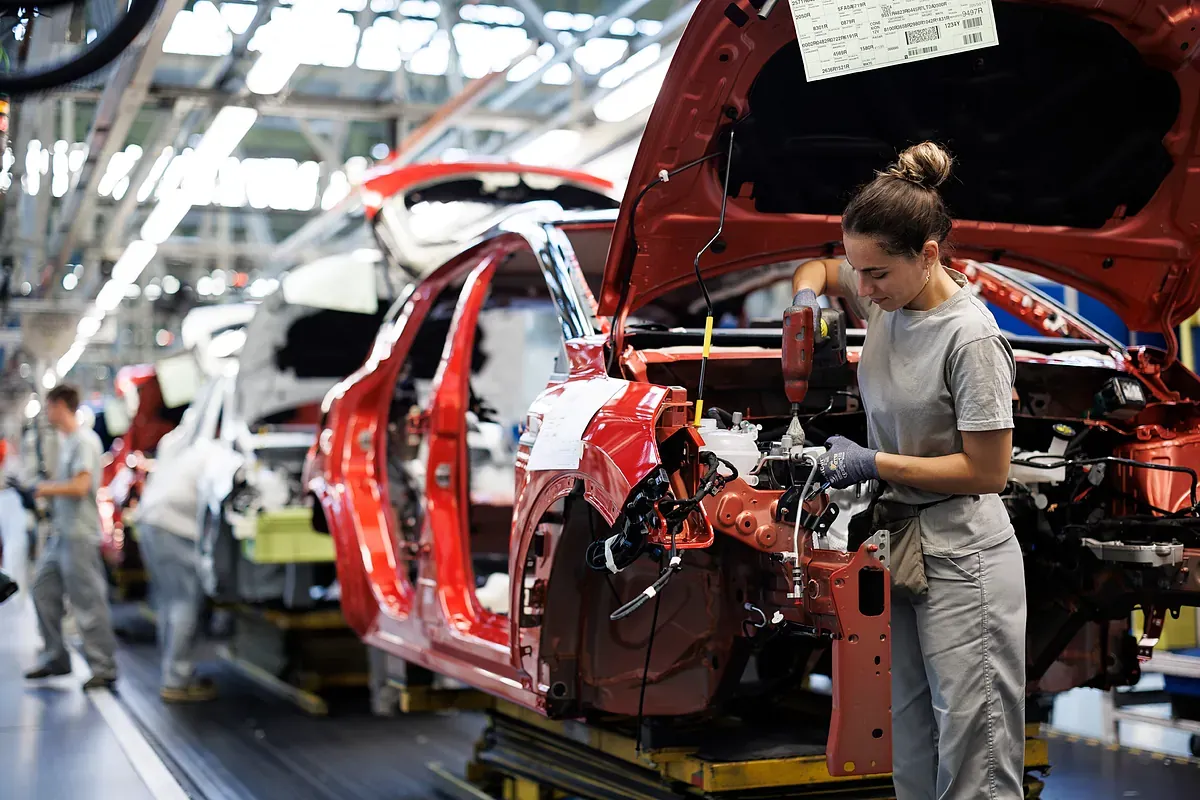

This Thursday marks a pivotal moment for the industrial future of the Renault automotive group in Spain as the tenth meeting takes place between the company’s management and worker representatives to negotiate a new collective bargaining agreement. The discussions are critical for the Spanish plants located in Palencia and Valladolid, as they could pave the way for Renault to secure an industrial plan that ensures long-term employment.
Currently, the positions of Renault and the union representatives remain significantly apart, creating an environment of uncertainty. As negotiations stall, rival companies are positioning themselves to attract projects that are expected to come to Spain; however, without a consensus, these initiatives may need to be relocated. Renault's CEO, François Provost, has repeatedly stated that the company is ideally positioned to handle the production of five new generation models, including both hybrid and electric variants. Provost expressed confidence last December, stating, "Soon there will be several electric vehicles from Renault manufactured in Spain, I have no doubt about that."
Renault's strategic plans involve assigning the production of five new models to Spain, which is currently its hub for hybrid manufacturing. This initiative is expected to provide a steady workload for the next decade. Specifically, the plan includes the production of a new family of electric models based on the RGEV group’s new platform, with Palencia set to produce two multi-energy models (both electric and extended-range electric) alongside a conventional hybrid model. Meanwhile, Valladolid will focus on two hybrid models before transitioning to the production of 100% electric vehicles.
However, concerns are beginning to surface within the company's headquarters in Paris due to the lack of progress in negotiations that began last autumn. The ongoing discrepancies between the demands of the company and the expectations of the workforce representatives have yet to be resolved. Although Spain is the frontrunner for this project due to its favorable cost structure, flexibility, and manufacturing quality, Renault is considering alternative locations if an agreement cannot be reached. This is particularly crucial given that the company is tightening its cost structure after incurring nearly €11 billion in losses in 2025, largely due to its involvement with Nissan.
Within Renault's industrial ecosystem, several candidates are vying to take the project from the Spanish factories, with Morocco, Romania, and Turkey emerging as the most likely contenders due to their lower labor costs. Last year, Renault's Tangier factory in Morocco produced over 300,000 units of the Renault Express commercial vehicle, as well as the Bento, Duo, and Dacia Sandero models, which is the best-selling vehicle in Spain, along with the Jogger.
In Romania, the Mioveni factory serves as the hub for Dacia brand models, employing nearly 7,000 workers and producing vehicles such as the Bigster, Duster, Sandero, Jogger, and Logan. Turkey is also a strong competitor, as Renault manufactures the Clio in its Bursa facility and supports Duster production due to high demand.
As reported by expansion.com.