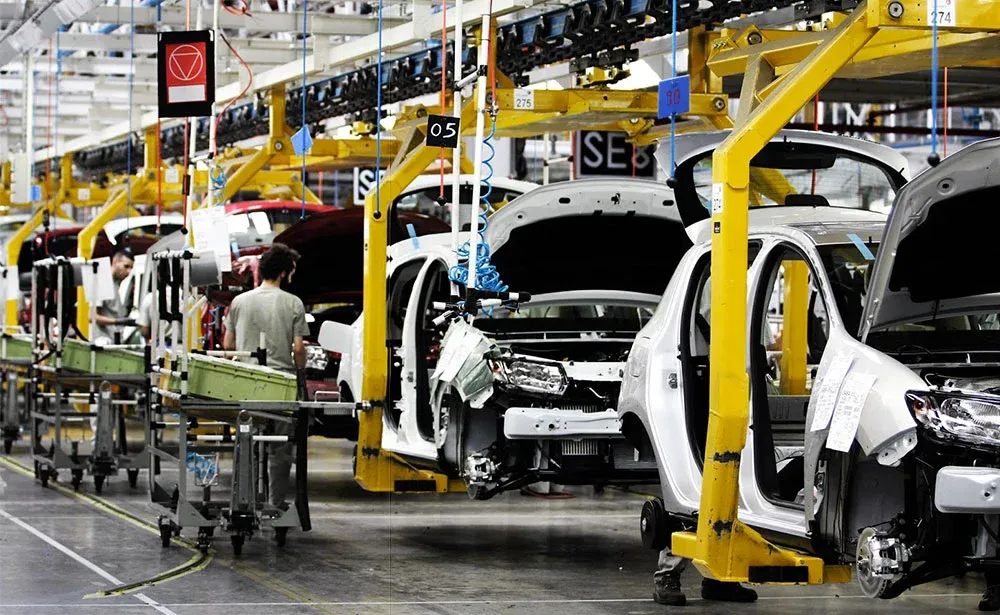

Revamping the Automotive Sector in Morocco
The automotive industry in Morocco is at a critical juncture, necessitating a comprehensive reevaluation of its value chains and skill sets. A national conference held in Rabat, organized by HEM Business & Engineering School in collaboration with the Konrad Adenauer Stiftung, focused on these very issues. Under the theme “Value Chains, Skills, and Industrial Perspectives in the Automotive Sector,” this gathering brought together public decision-makers, industry leaders, academics, and experts to discuss the significant transformations currently impacting the Moroccan automotive ecosystem, especially in light of rapid international changes.
Empowering Local Talent for a Competitive Future
During the conference, Bouchra By, Vice President of LCI Education in Africa and General Director of HEM, emphasized the vital role that academic institutions play in bridging the gap between education and industry. She stressed the importance of preparing future talents to support the growth of a sector that has become pivotal for the national economy. By highlighted the shift in the Moroccan model, which is no longer solely reliant on attracting foreign investments, but is now increasingly supported by a strengthened local workforce and the engagement of the diaspora, particularly from Germany, to facilitate the transfer of skills.
Lahcen Aqartit, another key speaker, pointed out that this initiative aligns seamlessly with Morocco’s economic trajectory aimed at solidifying its position as a regional industrial hub. He underscored the necessity of having highly skilled human resources to keep pace with the rising demands of the sector, especially in a fiercely competitive international environment. According to Aqartit, Morocco’s competitiveness now hinges on its ability to embrace emerging technological requirements, particularly in the realms of electric mobility and digital transformation of production processes.
The conference also shed light on the significant contribution of the Moroccan diaspora to the development of the national automotive industry. Abdessamad Bendahhou, an engineer based in Germany and a member of the Moroccan competencies network there, shared insights about a delegation of seasoned experts participating in the discussions. Their objective is to bring back the international expertise acquired abroad, particularly in forward-looking fields such as advanced engineering and electric mobility, which are seen as crucial for integrating Morocco into new global value chains. Beyond technical exchanges, the conference addressed geopolitical and geostrategic dimensions of the automotive industry, including the strategies employed by manufacturers and ongoing global realignments.
In this context, participants highlighted the need for Morocco to enhance its positioning as a competitive industrial platform capable of meeting the demands for innovation, sustainability, and technological advancement.
As reported by lnt.ma.