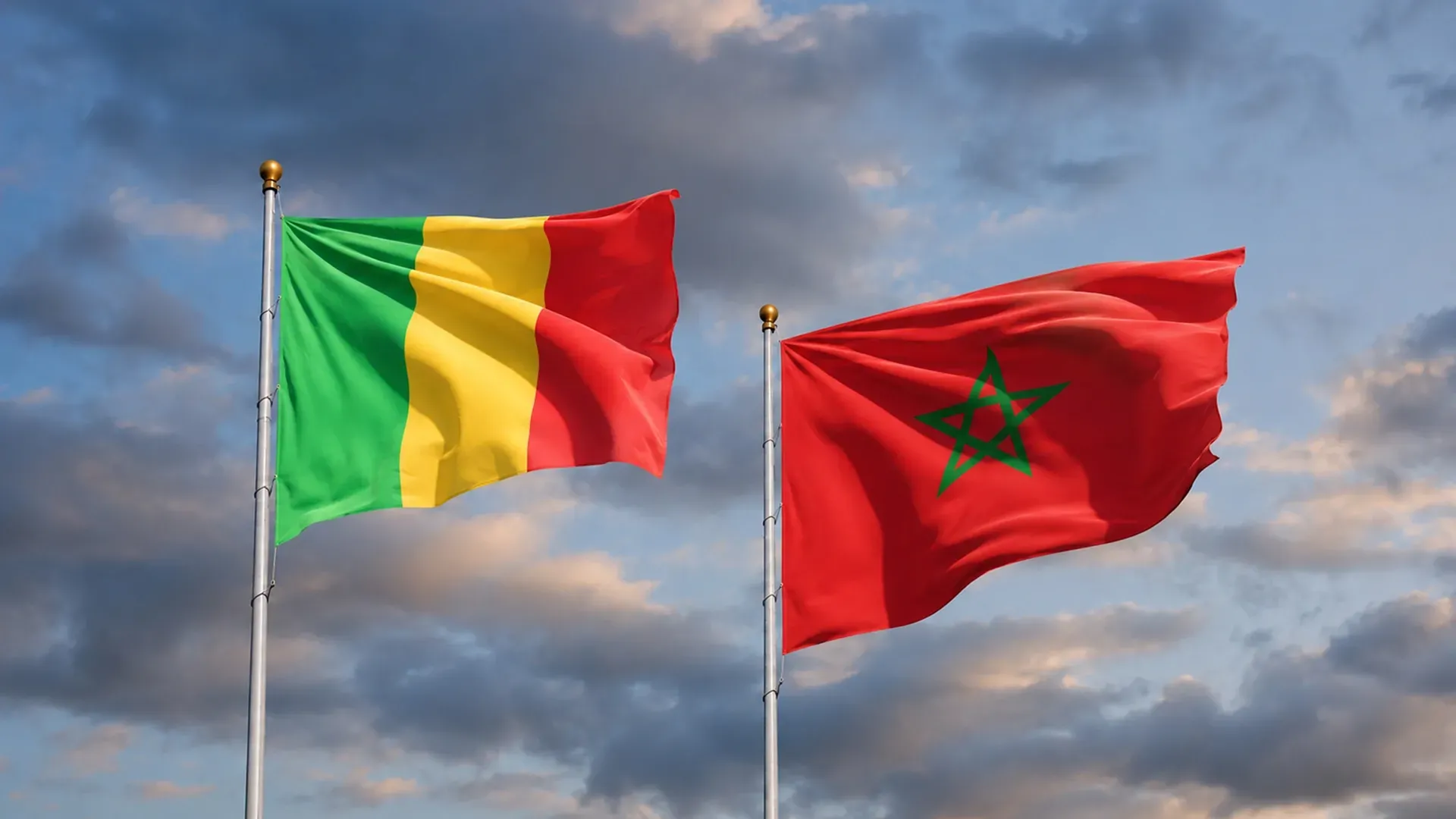
On July 21, 2026, in Bamako, Moustapha Traoré, the Secretary General of the Malian Ministry of Foreign Affairs, and Mohammed El Alaoui, head of the African Affairs Division at the Moroccan Ministry of Foreign Affairs, inaugurated the fourth session of the Mali-Morocco Joint Commission for Cooperation, which had been dormant for twenty-six years. According to Malian authorities, this revival aims to culminate in the signing of new agreements to structure the resumption of economic exchanges and bilateral investments.
The proceedings of the fourth session of the Mali-Morocco Joint Commission began in Bamako with an expert meeting on July 21 and 22, 2026. The experts are tasked with reviewing the state of bilateral cooperation and preparing draft agreements to be submitted to the ministers of foreign affairs during the ministerial session scheduled for July 24, following a business forum planned for July 23. This series of events revitalizes a major institutional framework for dialogue between Bamako and Rabat, which has remained inactive since the last Commission meeting in June 2000.
Reactivating a Bilateral Commission
Established by an agreement signed in Rabat on September 17, 1987, the Mali-Morocco Joint Commission for Cooperation serves as the primary institutional framework for dialogue and monitoring of bilateral cooperation. It had not convened since its third meeting held in Rabat in 2000. The reactivation comes at a time when both capitals are striving to secure clearer economic partnerships amidst a reshaping of regional alliances in the Sahel and Maghreb.
The Malian and Moroccan delegations have been mandated to review existing programs and define new priorities in strategic sectors such as trade, investment, agriculture, energy, infrastructure, mining, health, training, and higher education. For Bamako, which is signaling a desire for greater autonomy from its traditional European partners, the recommissioning of this platform offers a pathway to diversify its economic support beyond strictly security-related channels.
Deepening Relations Driven by Moroccan Enterprises
Trade exchanges between Mali and Morocco remain significantly imbalanced; in 2025, Moroccan exports to Mali reached approximately $184.8 million, according to available trade data, while Malian exports to Morocco were notably lower. This dependency on imports of goods and services from Morocco enhances Mali's interest in attracting more long-term investments and skills transfers. Moroccan entities are already well-positioned in Mali; for instance, Maroc Telecom operates through Moov Africa Malitel in telecommunications, the Bank of Africa is among the leading banking institutions, and the OCP group is involved in programs aimed at improving soil fertility and agricultural productivity. The Mali Chamber of Commerce and Industry is expected to leverage the upcoming business forum to directly connect operators, banks, and industrialists from both countries.
The Malian Ministry of Foreign Affairs presents this fourth session as a step towards a 'new qualitative level' of cooperation, emphasizing the needs for infrastructure, energy, and financial services that could mobilize more Moroccan capital in Mali. This perspective aligns with Rabat’s strategy, which has made West Africa a priority area for the expansion of its banks, telecommunications operators, and industries.
The revival of the Joint Commission occurs against a backdrop of recent diplomatic alignments between Bamako and Rabat, notably when Mali, alongside Burkina Faso and Niger, supported a Moroccan initiative in April 2025 aimed at facilitating access for Sahelian countries to Atlantic ports. For a landlocked country like Mali, these alternative corridors to the ocean are critical in seeking logistical outlets that are less dependent on traditional coastal neighbors.
This trajectory was reaffirmed in April 2026 when Bamako withdrew its recognition of the Sahrawi Arab Democratic Republic (SADR) and aligned itself with Morocco's autonomy plan for Western Sahara. This shift is interpreted in Rabat as a significant and lasting realignment of a key Sahelian partner toward supporting Morocco's narrative on the Sahara, particularly as Maghreb rivalries extend into West Africa.
Simultaneously, the Malian embassy in Rabat is engaging in the development of sectoral cooperations, especially in the cultural domain. On May 19, 2026, a meeting took place between Malian Ambassador Fafré Camara and Salim M. AlMalik, the Director-General of ICESCO, focusing on cooperation mechanisms for the restoration of historical manuscripts from Timbuktu. This cultural dimension complements an agenda that has thus far been dominated by economic and trade corridor concerns.
The business forum scheduled for July 23, 2026, aims to bring together businesses, financial institutions, and representatives from the private sectors of both Mali and Morocco to discuss investment opportunities, local transformation, business financing, and industrial partnerships. Based on the signals sent during this sequence, the two foreign ministers will be called upon on July 24, 2026, to validate the texts negotiated by the experts to provide a new legal backbone to Mali-Morocco cooperation.
As reported by capmad.com.