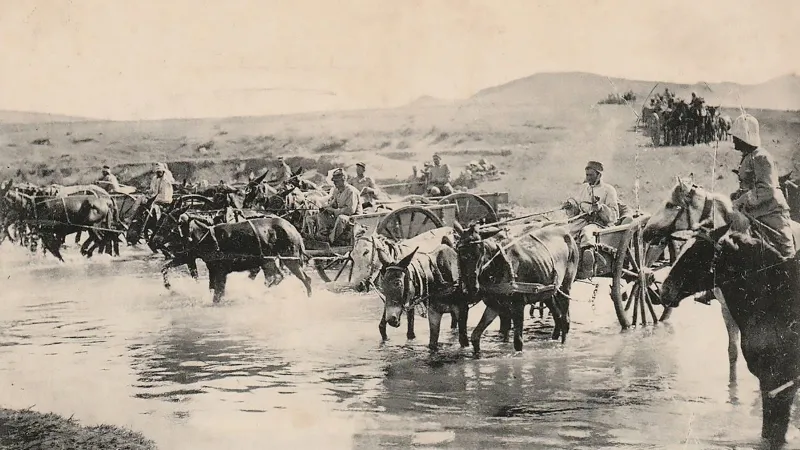

At the heart of our publication, "L'Hebdo," we have received an overwhelming response from our readers, particularly through social media, urging us to continue sharing the works of our late founder, Mustapha Alaoui. In response to the heartfelt requests of these loyal readers who have been yearning for the "Lost Truth" page, which has been absent this month, we are thrilled to reintroduce this segment featuring the writings of the late Mustapha Alaoui, showcasing a portion of the valuable historical literature he left behind.
We begin with the first volume of his acclaimed book, "Foreign Maneuvers Against Moroccan Sovereignty," a comprehensive work published in five parts. This initial installment delves into the phases of Morocco prior to colonization, during the reign of Sultan Hassan I, followed by the occupation period, the stages of resistance against the occupiers, and ultimately, the independence process outlined in the subsequent volumes. Readers will discover elements previously unpublished, enriching their understanding of this pivotal era.
As we reflect on the past, we recount a poignant moment when Lyautey, the French colonial administrator, traversed the revolutionary landscape of Morocco. Before his departure from Morocco in 1925, he visited various regions, including Meknes, to witness a ceremony establishing a memorial for the French officers and soldiers who sacrificed their lives for colonial ambitions in Morocco. At their request, he inscribed a phrase that read: “Whenever you harvest a grain of wheat, remember that every grain is watered by the blood of the sons of France.” This eloquent statement was indeed etched on the memorial located at the military center in Meknes.
Meknes was rife with military monuments commemorating the victories of the French, established following each military engagement against Moroccan rebels resisting occupation. It was here that Prince Moulay Zine engaged in battles against the French forces since 1905. The spirit of defiance against colonial rule thrived within the hearts of the men and women from the tribes of Beni Mtir, Beni Mekild, and Zayan, among others, who witnessed their independence usurped by the French army in 1911, prior to the establishment of the protectorate.
General Dalbiez, stationed in the Meknes region, was never at ease, as skirmishes erupted shortly after the events in Fez in June 1912. The Beni Mtir tribes inflicted significant losses on his troops during the battles of June 21, forcing him to retreat to Meknes after suffering three fatalities and thirteen injuries. Seeking retribution, Dalbiez returned in July 1912, only to find the Beni Mekild tribes rallying to support the Beni Mtir, leading him to request assistance from Commander Depoutori, who was engaged in combat in Saïs, near Fez.
The fighting persisted until December 1912, extending to the thirsty valley, where reinforcements led by Colonel Rose arrived. On January 11, 1913, a fierce battle ensued, claiming the lives of Lieutenant Chambard, eleven junior officers, and soldiers. After a brief withdrawal, the Moroccan rebels returned on January 24 to assault the French center at Ain Maâtoof. Despite the assistance from the Akouray garrison, the rebels aimed to seize the Hajeb center on March 18, 1913, resulting in a brutal melee that left the French garrison commander, Commandant Dolon, injured.
General Lyautey ordered the newly appointed military governor, Colonel Henris, to unleash artillery fire on populated centers. Consequently, four kasbahs were demolished in the Azrou region on April 29, 1913. However, the commander of the region's forces, Commandant Berni, was killed in a clash with the Beni Mtir forces on May 14, highlighting the ineffectiveness of artillery bombardment on the morale of the rebels.
The French officers primarily focused on issuing proclamations of conquest over the bombarded areas. Colonel Coudian, for instance, declared his occupation of the Ouled Mass heights and watched over the Atlas Mountains, although his triumph was short-lived as the Zayan tribes prepared for battle against the occupiers. The French suffered casualties, including two deaths and eight injuries, in their initial encounter at the Ouled Mass front on May 21, 1913. The battles continued until August 1913, with a unit led by Captain Lacoste monitoring the Yato heights, where both Lacoste and two of his aides lost their lives.
All these confrontations waged by the tribes of Morocco in their quest to thwart foreign occupation signify not victories over the occupying forces, but rather a resolute rejection of any form of foreign dominance, regardless of its might. It is crucial to acknowledge that the tribes of Morocco persisted in their fight against an enemy that vastly outmatched them in arms and resources. Moreover, it is essential to recognize that the protectorate document was not the key that the French utilized to enter Morocco.
Historical connections between events are often challenging for a historian to maintain; when the Fez uprising occurred in 1912, similar revolts were simultaneously erupting among the tribes of Beni Mtir, Beni Mekild, and Zayan in various regions of Morocco, as will be elaborated upon later. The rebellion against the occupation was widespread, expansive, and all-encompassing, and it did not cease in the outskirts of Fez, as evidenced by the memorial at Fez military airport commemorating victims from as late as 1936.
We have provided ample evidence to demonstrate that Lyautey employed deception in his communications, alleging Moroccan surrender, knowing full well that any cessation of fighting by the rebels merely indicated a temporary pause dictated by circumstance.
Returning to the Meknes area, we experience the challenges faced by the French military leadership in 1914. After General Blondel established a fortified stronghold in Moulay Bouazza on May 12, 1914, he relied on the forces led by Henris in Meknes and Tadla, while a division of twenty thousand soldiers was mobilized to secure the outskirts of Rabat, alongside 600 soldiers under Colonel Claudel to protect Tikrikhra, 3,400 soldiers under Kross and Fougale, and 4,000 soldiers under Colonel Doublesis to safeguard Tadla.
Consequently, the Zayan rebels vacated this region to launch another assault on the Ifrane center, led by Colonel Claudel on June 6, 1914, inflicting severe losses as the rebels began night attacks to avoid artillery fire. Under the cover of darkness, the rebels inflicted significant casualties on Colonel Claudel's forces, resulting in the injury of Lieutenant Sif, who was struck among a group of junior officers. General Henris personally intervened to support Colonel Claudel, and artillery was deployed to bombard the positions of Sbeit Taboud and the village of Titaoui, leading to the destruction of the tower center, which housed a contingent of Moroccan cavalry on June 12, 1914. They emerged despite the shelling to engage in battles that lasted several days, resulting in numerous French casualties, including the deputy garrison commander, Lieutenant Dufouron.
The death of an officer, as we have counted among the fallen, signifies that French losses were substantial enough to lend credibility to General Lyautey's assertion that "every grain of wheat is watered by French blood.” Thus, June 12, 1914, became a pivotal day in the history of French occupation in the Meknes region. On this day, tens of thousands of French soldiers and their finest officers, led by Colonel Claudel, entered the city of Khénifra, leaving behind a trail of devastation, celebrating their victory under the sound of gunfire, among the casualties was Lieutenant Dufouron.
When General Henris arrived in Khénifra to commemorate the final victory on June 12, 1914, he was met with a barrage of fire from the rebels, who remained entrenched in the city, leading to another confrontation against the Zayan tribes that resulted in seventeen French fatalities, including Captain Kaniouban, with seventy-seven injuries. The following day, another battle ensued, claiming the life of Lieutenant Rock, followed by Lieutenant Fak on July 1, who fell in another engagement in the heart of Khénifra.
In the area of the tower, not far from Khénifra, eleven French soldiers were killed on July 4, including Lieutenant Hugo, with thirty injured. On July 13, the Moroccans launched another assault on Khénifra, successfully expelling the French, who would have to attempt to retake the city once again.
All French military reports speak to the valor of the Zayan tribes, who refuse to yield; they have laid a tight siege around Khénifra, which fell under their mercy.
**The Battle of El-Herri Like Never Before Described**
The French officers besieged in Khénifra did not anticipate that the Moroccan soldiers would revolt against them, assassinating all the officers and shattering the morale of the French army, reminiscent of the events in Fez in 1912. Chaos ensued, and several French soldiers withdrew only to be intercepted by the Zayan forces, resulting in a massacre that the French dared not report in detail.
Those remaining of the French in Khénifra, under Colonel Laverdeur's command, considered themselves besieged on August 20, 1914, before being attacked and losing thirty of their elite men in close-quarters fighting, including Lieutenant Loro, along with sixty-four injuries among them eight officers.
As reported by alousboue.ma.