
Escalating Tragedies Linked to Illegal Migration
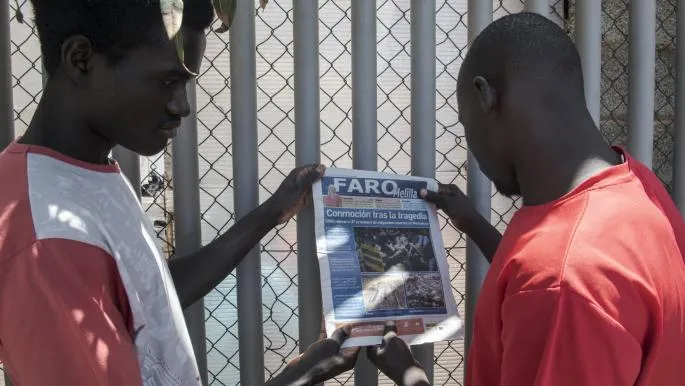
The human rights situation in Morocco is becoming increasingly alarming due to ongoing tragedies associated with illegal migration, which continue to claim the lives of numerous young African migrants. Driven by desperation and a lack of opportunities, these individuals embark on perilous journeys in pursuit of what they believe to be the "European paradise." The issue has resurfaced prominently following a report from the Moroccan Association for Human Rights (AMDH), the largest independent human rights organization in Morocco, detailing the deaths of 26 migrants from sub-Saharan Africa in the eastern region near the Algerian border. This tragic toll includes a woman and a child who was only three years old, with the fatalities occurring between January and April of this year. Thus far, authorities have only been able to identify four of the victims.
According to the AMDH, the bodies of the deceased were found in various locations, including 15 in the Ras Asfour area of Touissit, which is part of the eastern province of Jerada, and 11 in the Figuig province, with six in Ain Chaïr and five in Bouarfa. The organization speculated that harsh weather conditions, characterized by low temperatures and precipitation, likely contributed to these deaths, especially given the lack of official data pinpointing the exact causes.
This grim statistic is further compounded by an additional 21 migrants who perished in the Ras Asfour area between November 27 and December 31, 2025. Consequently, the total number of sub-Saharan migrants who have died in the eastern region from November to April has reached approximately 47, including three women and one child, with 36 fatalities occurring solely in Ras Asfour. The AMDH has raised critical questions regarding the responsibilities of the Moroccan state and the international community, particularly European nations, in light of this high number of casualties within a mere five-month period. They criticized the tightening of border control policies, which often force migrants into unsafe paths.
Calls for Immediate Humanitarian Action
In light of the deaths of these African migrants who aspire to reach Europe, Jamal Eddin Rayan, the head of the Communication and Migration Observatory in Amsterdam, expressed profound concern over the shocking statistics, stating that these figures should not be viewed as mere numbers, but rather as a recurring humanitarian tragedy that calls into question our collective conscience and international obligations to protect human rights and the rights of migrants. He emphasized the urgent need for the establishment of immediate border relief mechanisms, arguing that it is unacceptable to rely solely on security-based approaches. There is a pressing need for flexible and sustainable humanitarian relief mechanisms along the border.
Rayan stressed the importance of providing comprehensive support that encompasses medical, legal, and psychological assistance. He called for enabling migrants and newcomers at border crossings to access urgent medical care and psychological support to help them cope with the traumas of their asylum and transit journeys, as well as ensuring legal support that guarantees the respect of their fundamental human rights. He also highlighted the necessity of special attention for unaccompanied minors and women through the activation of social protection channels that align with national laws and international charters ratified by Morocco. He asserted that "the preservation of human lives must take precedence over all other considerations" and urged all parties involved, including authorities, human rights organizations, and civil society, to collaborate in crafting a courageous humanitarian approach that protects the right to life and upholds the dignity of migrants regardless of their legal status.
Similarly, Idris Sadraoui, president of the Moroccan Association for Citizenship and Human Rights, expressed grave concern regarding the deaths of 26 migrants from sub-Saharan Africa within just five months, describing it as a "humanitarian tragedy that reflects the severity of the prevailing conditions in the region." He noted that the ongoing border closures and the Algerian authorities' security-oriented approach exacerbate the suffering of migrants, pushing them towards dangerous and deadly routes. Sadraoui also expressed concern for the situation of hundreds of Moroccan migrants in Algeria, caught between imprisonment and an uncertain fate.
He emphasized that addressing illegal migration cannot be achieved through security solutions alone but requires tackling the root causes, including poverty, lack of democracy and human rights, ongoing conflicts, separatist movements, and instability. Additionally, he assigned part of the historical and political responsibility to Europe, arguing that its support for certain dictatorial regimes and the exploitation of Africa's resources have directly contributed to deepening poverty and despair, driving thousands of young people towards migration and death at borders.
As reported by alaraby.co.uk.