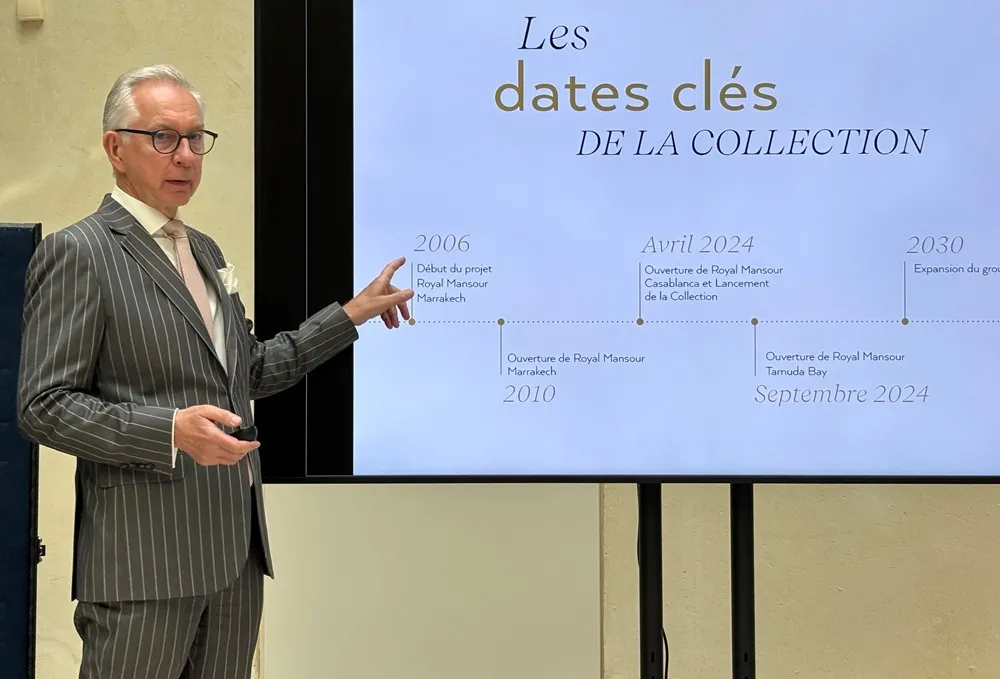

The Royal Mansour Collection, owned by the King of Morocco, is set to elevate its luxury hospitality offerings with the introduction of a new establishment in Rabat by the end of 2028. In addition, a second project has recently been initiated in another Moroccan location, which remains undisclosed for now. Jean-Claude Messant, the General Director of the Royal Mansour Collection, announced these exciting developments, signaling the brand's ongoing commitment to expansion within the Moroccan hospitality sector.
After successfully launching its first unit in Marrakech in 2010, featuring 53 riads, and establishing two more locations last year in Casablanca and Tamuda Bay, which consist of 149 rooms and suites, and 55 villas respectively, the company is poised for further growth. The upcoming complex in Rabat will comprise 55 to 60 keys and will be strategically located next to the Royal Theatre. Messant emphasized that while construction is underway, details about the second establishment's location will remain confidential for the time being, asserting that Royal Mansour has no plans for international expansion, focusing solely on enhancing its presence in Morocco.
At Royal Mansour, luxury transcends mere infrastructure; it embodies the experiences that guests encounter during their stays. The group aspires to redefine hospitality as an art form, where exceptional service, emotional connections, and meticulous attention to detail set them apart in the competitive luxury market. Messant succinctly describes the distinction between a standard hotel experience and that of Royal Mansour, where guests may find similar basic amenities but at a significantly higher price point, reflecting the emotional and service-driven experience they curate.
The Royal Mansour Collection currently employs nearly 2,000 staff, each contributing to the livelihood of their families, thereby indirectly supporting a community of 15,000 to 20,000 people. This highlights the responsibility the brand feels towards its employees and the broader community. Operationally, the Marrakech establishment boasts an average occupancy rate of 70%, while the newer locations are still ramping up their performance. The primary clientele includes tourists from the United States, France, and the United Kingdom, with an emerging interest from the Chinese market.
In alignment with its growth strategy, Royal Mansour places a significant emphasis on training and development. The recently relocated hospitality school from Marrakech to Rabat serves as a strategic asset in nurturing talent. Since its inception, the school has trained 450 students, with 90% of them joining the Royal Mansour team, demonstrating the commitment to fostering homegrown talent in the luxury hospitality sector.
During the World Tour Royal Mansour in Paris, Achraf Fayda, the Director General of the Moroccan National Tourist Office (ONMT), highlighted the pivotal role of high-end establishments like Royal Mansour in enhancing Morocco's tourism landscape. Such luxury venues do not merely contribute economically; they also elevate Morocco's brand image and serve as a showcase for Moroccan excellence. With the upcoming 2030 World Cup co-hosted by Morocco, Spain, and Portugal, the nation has set ambitious tourist goals, aiming for 30 million visitors by 2030. This target is seen as realistic, as the ONMT continues to innovate and prepare for a post-2030 landscape, drawing inspiration from successful international models.
As reported by lechotouristique.com.