
Senegal's Legal Challenge Tensions Mount Over CAN 2025
The ongoing saga surrounding the Africa Cup of Nations (CAN) 2025 between Senegal and Morocco is on the verge of entering a critical phase. As preparations are underway for an appeal before the Court of Arbitration for Sport (CAS), the president of the African Football Confederation (CAF), Patrice Motsepe, is actively working to ease rising tensions. The legal proceedings regarding the appeal of Senegalese supporters detained in Morocco are expected to bring renewed attention and intensity to an already charged situation.
For several weeks, the football community in Africa has been holding its breath, with legal procedures and diplomatic strains clouding the atmosphere. The forthcoming week could prove pivotal in this ongoing narrative. For nearly a month, Senegal and Morocco have found themselves embroiled in a mix of heated exchanges and calls for calm, each side staunchly defending its position in a matter that has transcended mere sports. While the eyes of many are focused on the appeal lodged by the Senegalese Football Federation with CAS, another significant judicial milestone is set to unfold in Rabat. The long-awaited trial for the Senegalese supporters arrested during the CAN 2025 final is scheduled to commence on Monday, promising to add another layer of complexity to the diplomatic discourse between Dakar, Rabat, and African football authorities.
Anticipation Builds for Legal Proceedings
The month of March was particularly tumultuous for both nations, culminating in a political and sports uproar following the CAF's decision on March 17 to strip Senegal of its title, which they had secured on the field against Morocco. The CAF's Appeals Jury determined that the temporary exit of Senegalese players from the pitch during the final constituted a forfeit, granting an administrative victory to the host nation—a conclusion that has been met with fierce opposition in Dakar. The legal representatives for Senegal's football federation have characterized the ruling as "grossly absurd and irrational," pledging to escalate the matter to the highest echelons of global sports jurisdiction. Since then, the battle has shifted into the legal realm, with the Senegalese Football Federation claiming to retain its title of "African Champion" and demanding an expedited review by the CAS to obtain a verdict before the 2026 World Cup.
In this ongoing dispute, the Royal Moroccan Football Federation maintains that it has acted strictly within regulations and is fully cooperating with international bodies, even as Senegal celebrated its victory at the Stade de France during a recent international break with a friendly against Peru. Amidst these turbulent developments, CAF president Patrice Motsepe has been actively engaging in diplomatic missions aimed at mitigating tensions. Following a visit to Dakar where he met with Senegalese President Bassirou Diomaye Faye, Motsepe traveled to Rabat to express his commitment to dialogue and reform. He emphasized the need for African football to be "free of all issues that could undermine its integrity."
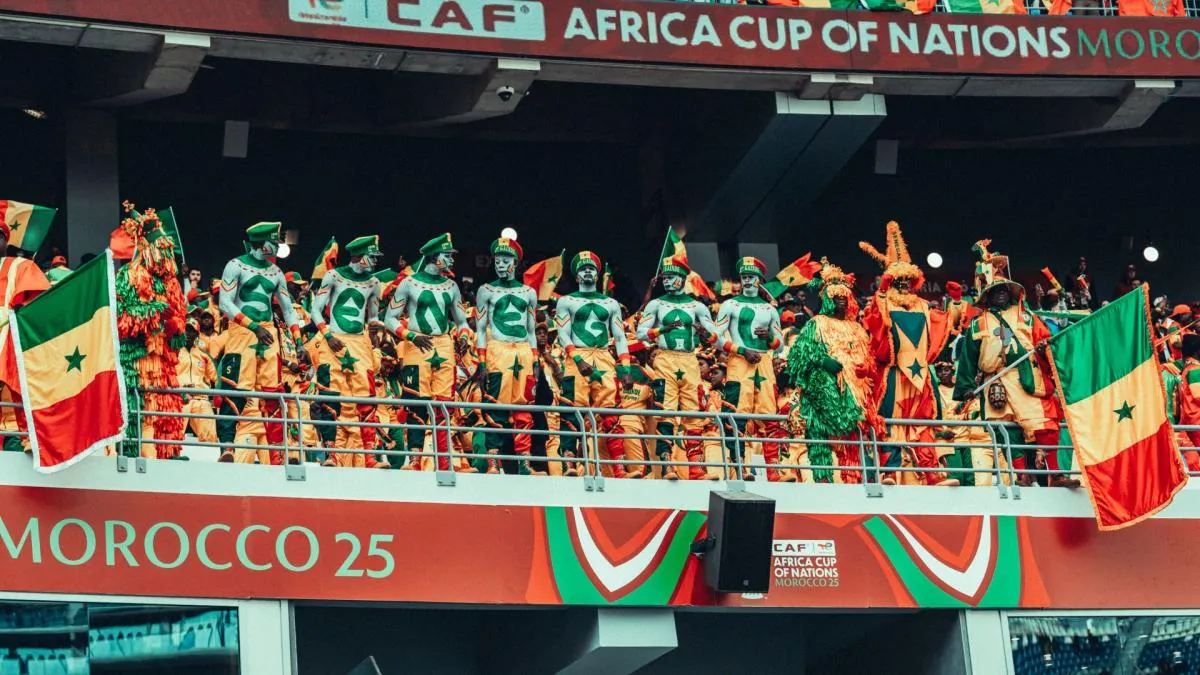
As the trial for the 18 Senegalese supporters arrested post-final approaches, anticipation is palpable. Initially scheduled for late March, the proceedings have been postponed multiple times and are now set for April 13. These supporters, who received sentences ranging from three months to one year for hooliganism and violence during a sporting event, have become sensitive symbols amid the ongoing crisis. The Moroccan National Human Rights Council has pledged to closely monitor the trial to ensure transparency and the protection of fundamental rights, having attended hearings and engaged with detainees in prisons without the presence of penitentiary administration.
According to the Council, the accused have not reported any violations of their rights, and the monitoring aims to uphold principles such as the presumption of innocence, public access to hearings, and the effective exercise of defense rights. It is essential to note that the FRMF does not play a direct role as a civil party or claimant in Moroccan courts. This criminal procedure falls under Moroccan domestic law, initiated by local judicial authorities following the violent incidents at the CAN 2025 final. The law enforcement and Moroccan prosecution have pursued criminal charges for unauthorized field intrusion, violence linked to a sporting event, projectile throwing, and violence against law enforcement officials, which will be addressed in the appropriate Moroccan jurisdictions in Rabat. The role of FRMF remains strictly within the sporting and institutional realm, directly engaging with CAF on the sporting dispute with Senegalese Federation regarding the final, but not in the criminal prosecution of supporters governed by Moroccan penal law.
As the focus intensifies on these proceedings, the observation by the Moroccan National Human Rights Council seeks to ensure a fair trial, although it does not alter the civil or criminal nature of the authorities handling these cases. All these factors contribute to what has evolved into one of the most sensitive issues within African football over the weeks.
As reported by footmercato.net.