Transforming Urban Development in Africa
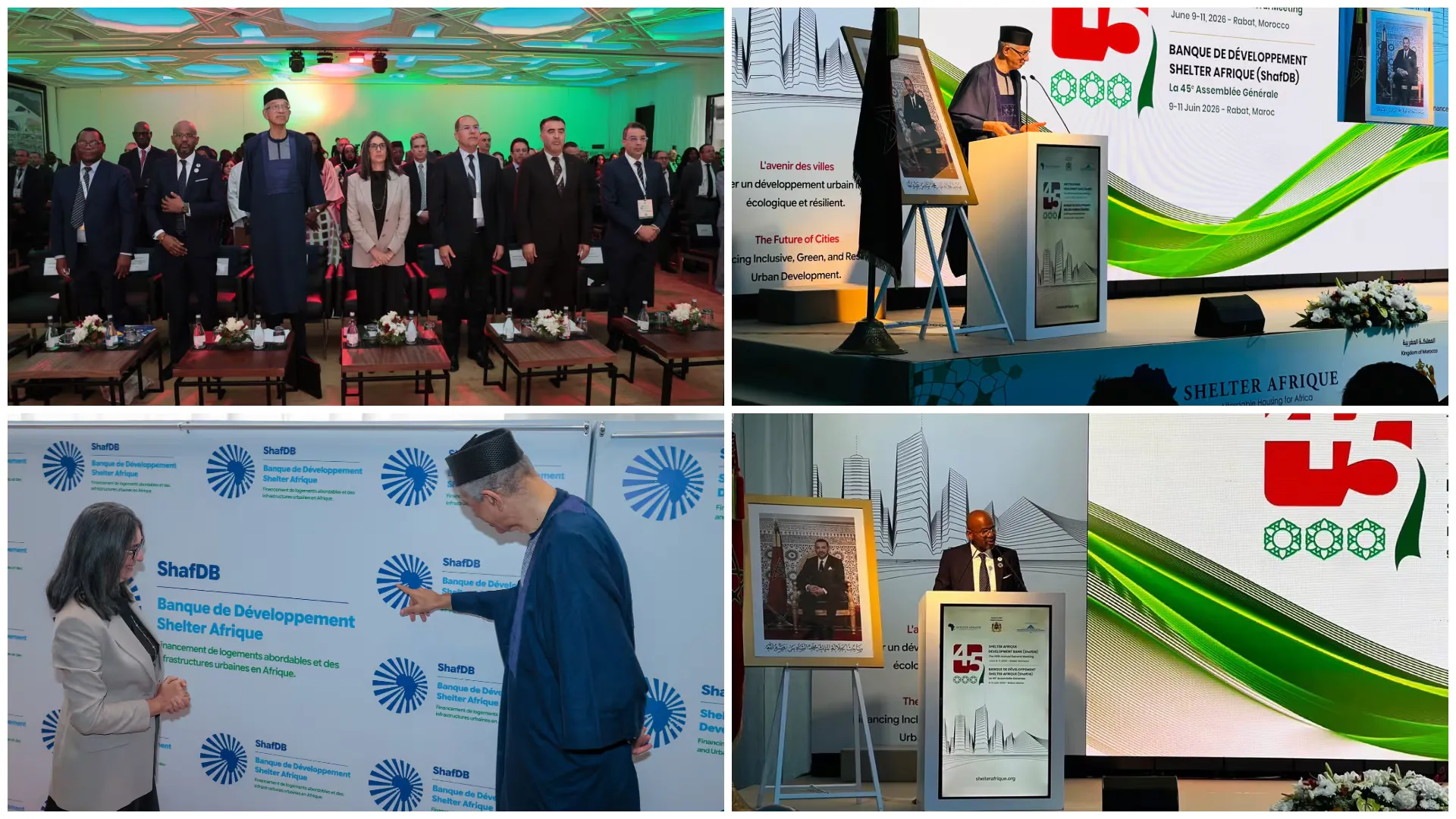
The 45th Annual General Assembly of Shelter Afrique (ShafDB) commenced on June 9, 2026, in the Moroccan capital, a UNESCO World Heritage site. The theme for this year's assembly, _“The Future of Cities: Financing Inclusive, Green, and Resilient Urban Development,”_ highlights the urgent need for innovative financing solutions to address the critical housing deficit across the continent. During this pivotal event, the pan-African institution unveiled a refreshed brand identity and, more significantly, a completely revamped legal status, redefining itself as a multilateral development bank with the capacity to engage across the entire housing value chain.
The scale of the housing crisis in Africa is staggering, as reiterated by Morocco’s Minister of Economy and Finance, Nadia Fettah Alaoui. Current estimates indicate a shortfall of 53 million housing units, necessitating an investment of approximately $1.4 trillion. Projections suggest that by 2030, the deficit could escalate to 130 million units. Concurrently, urbanization is accelerating, with a forecast that by 2050, 65% of Africans will reside in urban areas. The financial impact of extreme climate phenomena is expected to range between $45 billion to $50 billion annually by 2040. Minister Fettah emphasized that these realities demand not mere adjustments but comprehensive economic, social, and territorial transformations.
Innovative Financial Solutions and Institutional Evolution
Morocco's experience in restructuring its housing policy played a pivotal role in the discussions at the assembly. Rabat, described by General Director Thierno-Habib Hann as a “city of history, trust, and renewal,” was selected for its progressive housing initiatives. The kingdom has shifted from a model that provided tax incentives to developers towards a system offering direct assistance to households. This new framework, set to be deployed from 2024 to 2028, allocates between 70,000 and 100,000 dirhams per housing unit to middle and low-income families, benefiting approximately 105,000 individuals thus far.
Additionally, guarantee funds such as Fogarim and Fogaloge have facilitated property ownership for 320,000 households, with the total mortgage credit increasing by 30% over the last decade. The construction sector now contributes 6% to the GDP and accounts for 12% of national employment. Notably, 62 cities have been declared slum-free. Minister Fettah articulated that the goal extends beyond mere quantity and speed of construction; it emphasizes building better, fostering cities that mitigate inequalities while prioritizing citizens' needs.
The recent transformation of Shelter Afrique marks a historic shift for the institution established in 1981. Chairman Lionel Zinsou highlighted the significance of the newly ratified statutes that position the bank as a genuine development entity. With 44 member states and backing from the African Development Bank and Africa-Re, ShafDB is prepared to welcome new stakeholders and substantially increase its capital with support from BADEA. This strategic repositioning will enable the issuance of local currency bonds and the introduction of products ranging from mortgage refinancing to private project financing and public-private partnerships.
The assembly also tackled the pressing issue of financing for informal sector households, which constitute up to 90% of the labor force in countries like Benin. Zinsou stressed the importance of addressing informal sector challenges, as it represents the primary client base for urban development. He pointed out the potential of data revolution, where digital transaction histories can facilitate credit ratings for previously unbanked populations, enabling access to financing.
Finally, the assembly served as a platform to reinforce South-South cooperation, symbolized by the presentation of an official gift to His Majesty King Mohammed VI, crafted by a Malian artist from recycled materials. This gesture epitomizes the partnership philosophy championed throughout the ceremony. Minister Fettah reiterated that Africa cannot resolve its urban challenges in isolation, as crises transcend borders and solutions must be collaborative.
In summary, the assembly underscored a shared belief: housing is no longer merely a deficit to address but a crucial lever for job creation and social stability. As articulated by Thierno-Habib Hann, a home represents more than just a structure; it embodies security for families, dignity for parents, and a foundation for education, work, and health. The ambition now lies in translating these commitments into tangible achievements, with Zinsou noting that success will be measured by the number of financed housing units, rehabilitated cities, jobs created, and lives transformed. With Africa's youth population and growth rates surpassing those of Asia, the time for decisive action is now.
As reported by afrique.le360.ma.