
Transforming the Automotive Landscape: Morocco's Strategic Role
The automotive industry is undergoing a significant transformation as manufacturing models shift from Madrid to Kenitra. This shift has sparked heated discussions across the Strait of Gibraltar. Over the years, each announcement of industrial activity involving Morocco has reignited fears in Spain regarding a gradual relocation of automotive manufacturing. However, this perspective oversimplifies a more profound transformation at play. Rather than merely transferring factories, an entire industrial organization is being redefined on a Euro-Mediterranean scale. Adil Zaidi, who leads the Automobile Federation within the CGEM, offers a more nuanced interpretation grounded in value chain dynamics, specialization, and interdependence.
Zaidi asserts that the notion of vehicles being 'relocated from Europe to Morocco,' as frequently reported by Spanish media, requires clarification. He emphasizes that the automotive sector does not involve a straightforward transfer of a European factory to a Moroccan site; instead, it operates within a framework of reallocating platforms, industrial specialization, and optimizing capabilities within the same group. Currently, several iconic models intended for the European market are produced in Morocco while remaining deeply connected to the continent's industrial ecosystem. For instance, the Dacia Sandero and Dacia Duster, which are top sellers in Europe, are manufactured in Tangier but incorporate numerous components and inputs from European sites, including Spanish factories. The same applies to the Peugeot 208 in Kenitra and the entire range of electric micro-mobility vehicles such as the Citroën Ami, Opel Rocks Electric, and Fiat Topolino, illustrating a shift towards industrial recomposition rather than mere substitution.
A Complementary Industrial Relationship
According to Zaidi, the relationship between Morocco and Spain extends far beyond a straightforward rivalry. He argues that it is fundamentally complementary, even if there are naturally competitive areas, particularly concerning small vehicles and cost-sensitive productions. Spain remains a significant automotive power in Europe, deeply integrated technologically and industrially, while Morocco has established itself as a competitive, agile platform close to the European market. This evolving relationship is increasingly characterized as an expanded industrial space. Spain also exports automotive components to Morocco, which is one of its crucial markets outside the European Union, demonstrating that the relationship is not merely one of rivalry but a shared value chain.
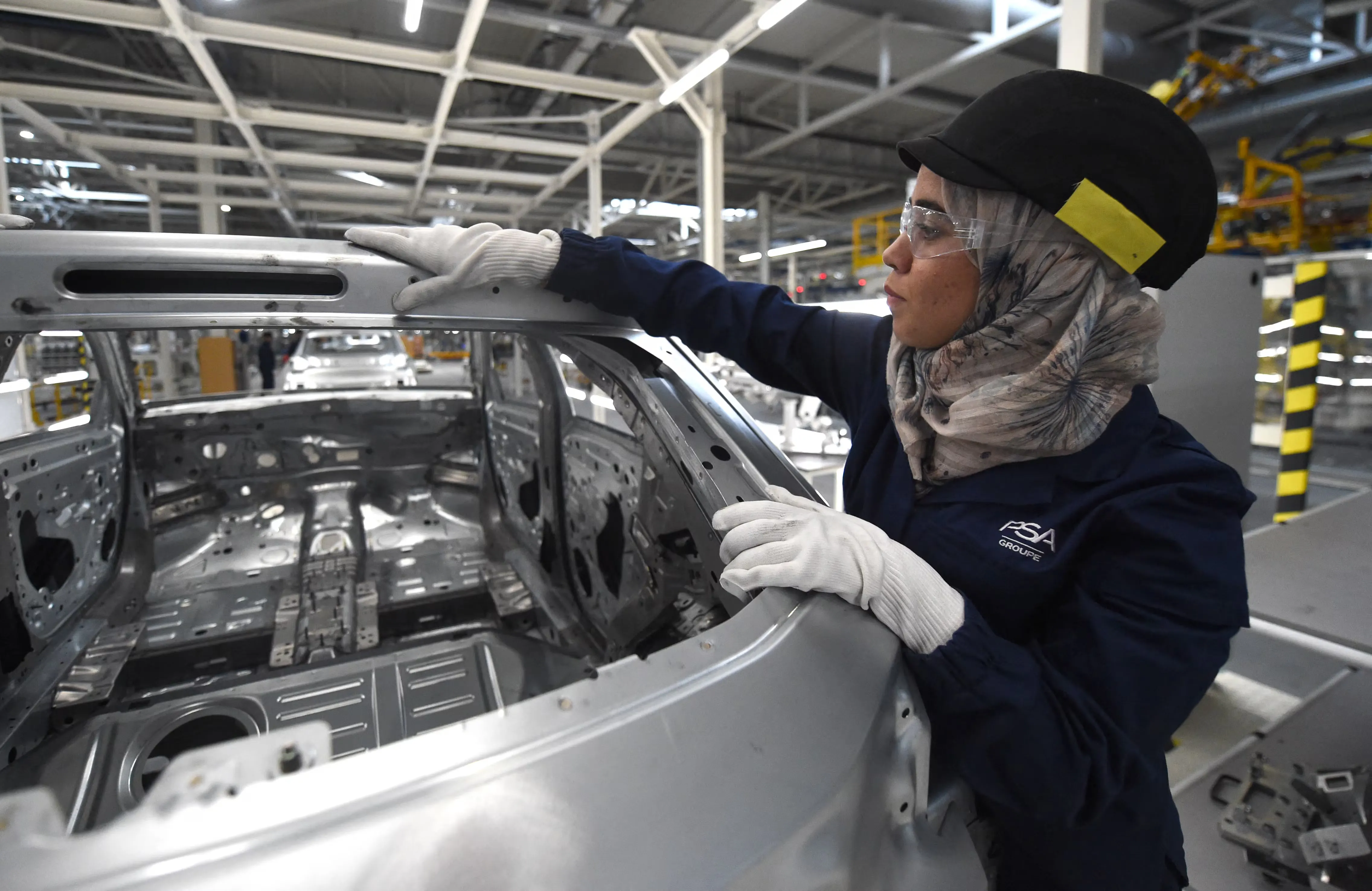
The statistics corroborate this interdependence, with commercial ties between Morocco and Spain intensifying significantly, especially since the automotive industry's growth. Spain has become Morocco's leading foreign trade partner, with a trade volume nearing €23 billion. Beyond mere figures, the nature of exchanges is evolving, with Morocco-Spain flows not only measured in commercial terms but also in co-production dynamics. Components can cross the Strait multiple times before becoming finished products. While cost remains a crucial factor, it alone no longer suffices to explain manufacturers' decisions. International producers distribute their manufacturing based on various criteria, including site competitiveness, specialization in specific models, logistical proximity to destination markets, securing flows, and the capacity to serve Europe, the Mediterranean, and increasingly, Africa. Morocco's role has shifted from being a simple low-cost workshop to a strategic site specializing in specific product families, with Zaidi pointing to the Kenitra factory as a prime example of this upgrade.
Today, Morocco's advantage derives from a combination of complementary factors: cost competitiveness, integration into the value chain, logistical performance, and a favorable commercial framework. Additionally, its geographic and logistical positioning plays a crucial role, providing immediate proximity to Europe, a leading port facility at Tangier Med, a strong export orientation, and a network of trade agreements that enhances its appeal to investors. As a result, Moroccan platforms have evolved into a proficient link in the global chain, regardless of their national location. With the transition to electric vehicles, Morocco aims to position itself further upstream in the value chain, beyond its historical assembly role. Zaidi believes that Morocco can capture a significant share of new value chains, provided it continues its in-depth efforts. The question is no longer whether Morocco can integrate into this value chain, as it already does; instead, it concerns how far it can advance.
The industrial evolution has raised concerns in Spain, particularly among political and union circles. Zaidi acknowledges these reactions as understandable but argues that they often oversimplify the industrial dynamics at play. Reducing the relationship between the two countries to mere relocation overlooks the complexity of contemporary production chains. Today, automotive groups operate on the scale of regional value chains, where part of the value is created in Spain, another in Morocco, and flows between the two sides according to industrial needs. In this configuration, Morocco appears less as a direct competitor and more as a lever for optimization, providing opportunities rather than threats. This complementary relationship, according to Zaidi, also contributes to job preservation in Europe. He asserts that maintaining and developing employment in Spain now requires intelligent collaboration with Moroccan industrial platforms.
Ultimately, a new industrial organization is emerging between the two shores, with the central issue being the construction of a competitive Euro-Mediterranean complementarity capable of preserving and enhancing industrial value in the face of Asian and American competition. In this context, the opposition between Europe and Morocco is gradually losing relevance in favor of a regional integration logic. The appropriate perspective is not one of Europe opposing Morocco but rather an intelligent organization of a shared value chain across both shores. As reported by fr.le360.ma.