
Stellantis Expands Circular Economy Efforts with New Facility in Casablanca
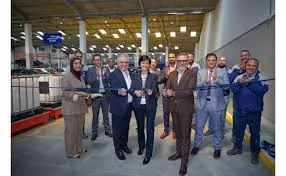
In a significant move towards enhancing its circular economy initiatives, Stellantis has officially inaugurated its first vehicle dismantling center in Africa, located in Casablanca, Morocco. This state-of-the-art facility, covering an area of 6,000 square meters, is designed to serve as a regional industrial hub. It aims to bolster the supply of reused auto parts while also structuring the sector for end-of-life vehicles (ELVs) and supporting Stellantis's aftermarket network with high-quality, pre-owned components. This center marks a pivotal addition as the third global facility dedicated to vehicle dismantling, joining the ranks of similar centers in Turin and São Paulo, with another planned for Poissy.
A Regional Hub for North Africa and Beyond
Stellantis's strategic vision extends beyond the Moroccan market; the company intends for this center to function as a distribution hub for North Africa and parts of Sub-Saharan Africa, particularly West Africa. The Casablanca facility will play a crucial role in organizing the flow of end-of-life vehicles and fostering an industrial offering of reused parts within the Middle East and Africa (MEA) region. As part of its commitment to sustainability, Stellantis has established the SUSTAINera division, which focuses on circular economy activities including remanufacturing, repair, reuse, and recycling. Samir Cherfan, Stellantis's director of operations for the MEA region, emphasizes that circular economy practices are a strategic priority for the company, aiming to secure a long-term industrial footprint in the area.
The Casablanca center is set to undertake various functions, including sourcing end-of-life vehicles, dismantling operations, marketing used parts, and recovering materials for recycling. The extracted components will not only supply Stellantis's aftermarket network but also support third-party digital platforms. The initiative is expected to enhance the availability of reusable original parts in a region where ELV processes are still developing, underscoring the importance of establishing compliant and traceable circuits to support market growth.
Stellantis has committed an investment of €1.6 million for the establishment of this facility, which aims to dismantle up to 10,000 vehicles annually. At full capacity, it is projected to create approximately 150 direct and indirect jobs, with vehicles sourced from insurance companies, auctions, and local ELV streams. Furthermore, the center will adapt to new challenges posed by the electrification of the vehicle fleet, ensuring that certain dismantled products will include carefully selected electric vehicle batteries.
As reported by auto-infos.fr.