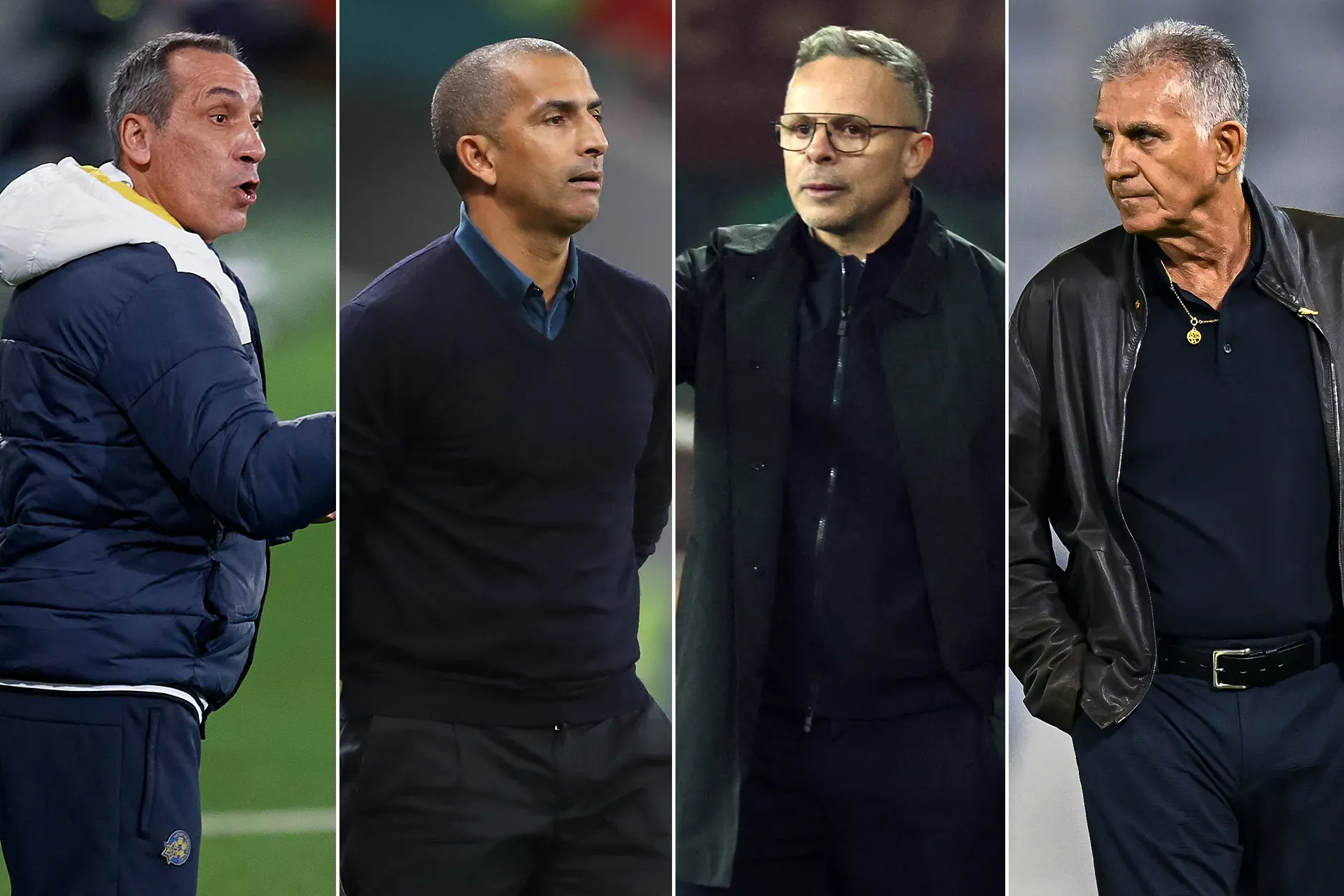

As the countdown to the 2026 World Cup, set to kick off in June across the United States, Mexico, and Canada, intensifies, football associations are making swift, decisive changes. Coaching positions have become focal points for transformation, as teams seek to establish technical stability and appoint leaders capable of steering their national squads toward peak readiness. Amidst unexpected dismissals and appointments laden with implications, several teams, including Saudi Arabia, Morocco, Tunisia, and Ghana, are embarking on a new phase aptly titled "the final gamble" before the World Cup. With mounting pressure from results, fan expectations, and the associations' calculations at a tournament of such magnitude, there is a collective hope that these changes will lead to better outcomes.
On April 23, the Saudi Football Association announced the appointment of Greek coach Georgios Donis as the new head coach of the national team, a role he will hold until July 2027, succeeding Frenchman Hervé Renard just under two months before the World Cup in North America. In a statement released on X, the Saudi Football Association detailed that they had finalized a contract with Donis, who brings extensive coaching experience from various European and local clubs, including AEK Athens and PAOK, and has significant familiarity with the Saudi Pro League through his previous roles with clubs like Al Hilal and Al Wehda, as well as his recent stint at Al Khaleej. This experience is expected to facilitate a smooth transition into his new role.
Donis has previously enjoyed success, capturing the Cypriot League title in the 2013-2014 season and winning multiple domestic cups, including the King’s Cup and the Saudi Super Cup. The Saudi Football Association has announced a press conference to introduce Donis and the coaching staff in Riyadh before the national team's final preparatory camp in the United States for the World Cup 2026.
Saudi Arabia experienced two recent friendly defeats against Egypt and Serbia in March, leading to severe criticism of Renard in the media due to the team's declining performance. Two months prior, Renard publicly acknowledged his dismissal from the Saudi national team, confirming he was indeed relieved of his duties. He stated, "This is football... Saudi Arabia has qualified for the World Cup seven times, twice under my leadership. I am proud to be the only coach to have led the team through the qualifiers and the World Cup in 2022. At least that pride will remain."
Saudi sports journalist Naif Mashhoor noted that the recent decisions by the Saudi Football Association are filled with surprises, not just regarding Renard's dismissal—which some fans and critics had been calling for—but also concerning the new leadership with the appointment of Donis. Mashhoor emphasized that Donis is no stranger to Saudi football, having made a significant impact in the league over the past decade. He remarked that while Donis’s hiring carries numerous advantages, there are also potential drawbacks.
According to Mashhoor, Donis’s past experiences, particularly his notable tenure with Al Hilal, demonstrate his ability to effectively engage with Saudi players and prepare them optimally. He recalled Donis’s earlier statements expressing his deep understanding of Saudi football and its players, which likely bolstered his candidacy for the national team role following discussions with the Saudi Football Association. Donis has played a pivotal role in the discovery of key players who are now essential to the national squad, including Feras Al-Breikan and Saleh Abu Shamatt.
Despite the positive aspects, Mashhoor expressed concerns regarding Donis’s upcoming experience with the national team, noting that he has never coached at this level before, and the added pressure of the World Cup could lead to unfavorable outcomes. He pointed out another downside being the limited time available for Donis to select the right players, given the tight schedule and lack of opportunities for friendly matches to finalize his squad and playing style, which might impede the full communication of his strategies to the players before the tournament.
In the 2026 World Cup, the Saudi national team faces a challenging group, competing against powerhouse Spain, Uruguay, and the Cape Verde Islands, who are making their World Cup debut. Meanwhile, Morocco’s football federation honored coach Walid Regragui’s contributions following a remarkable tenure that began in 2022, initiating a new era under Mohammed Wahbi on March 5, with hopes of replicating the success achieved with the youth team that won the World Cup in Chile in 2025.
During the ceremony, Moroccan Football Federation President Fouzi Lekjaa praised Regragui’s accomplishments as a "historic achievement" that will be remembered, highlighting his role in fostering a new spirit within the Moroccan team. He emphasized the importance of striving for the future with the same ambition and determination. As the federation looks ahead to the World Cup in North America, Wahbi has already stated that there will be no drastic changes to the team, prioritizing continuity and building upon the existing framework.
Wahbi is currently preparing his initial squad for the national team, focusing on performance-based selections without favoritism towards youth or experienced players. His first test will be friendly matches against Ecuador and Paraguay at the end of March, as part of the World Cup preparations. In a positive move, he has called up five local players, including rising stars from the domestic league, demonstrating a commitment to recognizing and rewarding talent from within Morocco, despite the fierce competition from professional players in top European leagues.
With the deadline for submitting the final squad approaching on June 1, 2026, Moroccan fans are eagerly anticipating the announcement of Wahbi's final lineup, which is expected to reflect his technical project and player selections. In light of the limited time, various football enthusiasts in Morocco view the upcoming friendly matches as critical tests to assess player cohesion and the implementation of Wahbi’s tactical ideas.
Former sports journalist Khalid Yassine noted that Wahbi displayed
As reported by aljazeera.net.