The Growing Economic Relationship Between Spain and Morocco
At the recent Doing Business event in the Tangier-Tetouan-Alhucemas region, Adil Rais, co-chairman of the Morocco-Spain Economic Council, emphasized the strengthening of economic relations between Spain and Morocco. These relations are characterized by industrial integration, productive complementarity, and a mutual interest in investment, showcasing a progressively structured interdependence between the two economies and paving the way for a new phase of cooperation. Over the decades, the geographical proximity of both nations has gradually transformed into a significant economic bond, evolving into a shared production system across the Strait of Gibraltar.
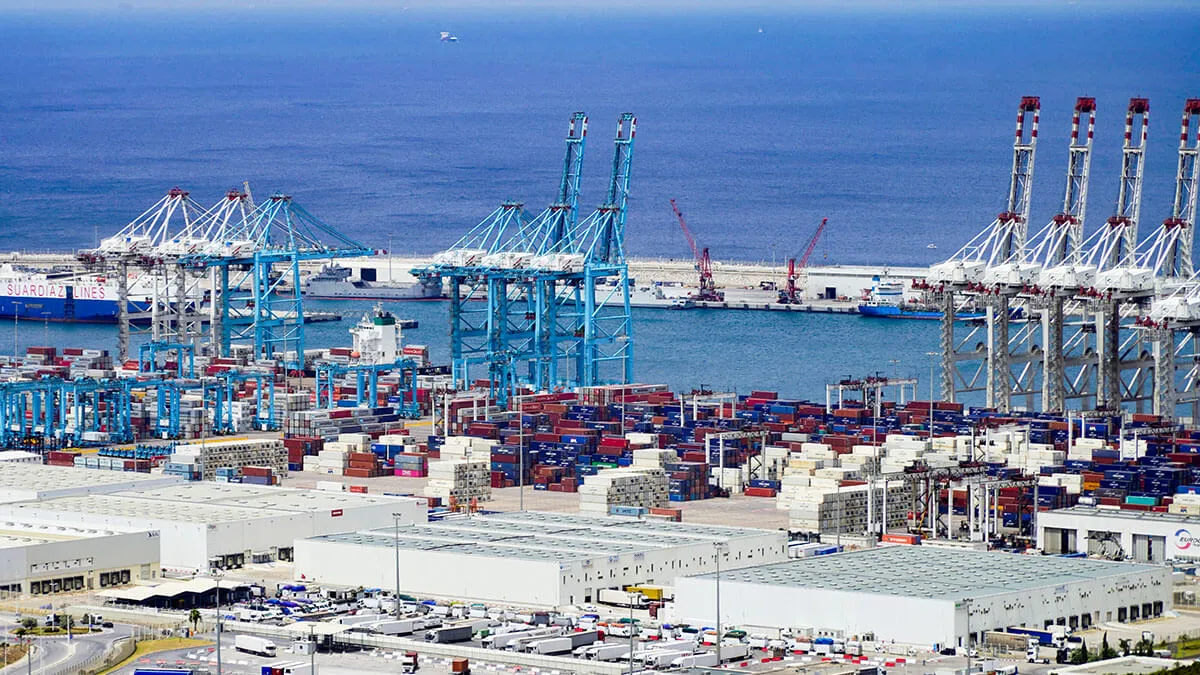
Rais highlighted the necessity of developing investment as a driving force behind the bilateral relationship between the two countries, asserting, “We are structurally very important trade partners for each other.” The bilateral trade between Rabat and Madrid exceeds €22 billion annually, transcending mere commodity trading to establish a relationship of interdependence within the Euro-Mediterranean space, involving various strategic industrial sectors.
Key Sectors of Cooperation
Spain has emerged as Morocco's primary trading partner over the past several years, thanks to significant growth in imports, exports, and investments. The economic relationship between Morocco and Spain is marked by a high level of industrial integration, with several sectors already operating under a shared value chain logic where companies from both countries participate at different stages of the production process. For instance, components manufactured in Spain are utilized in vehicles produced in Morocco, which are subsequently exported to the European market. Rais pointed out the automotive industry as a prime example of this productive dynamic that extends beyond the traditional logic of foreign trade, creating a robust interdependence between the two nations. Morocco imports parts that are incorporated into vehicles manufactured in the Kingdom, which are then exported to Spain.
This industrial integration extends beyond the European market, with a notable influence from the free trade agreement between Morocco and the United States. A significant portion of the products manufactured by Inditex in Morocco is exported to the U.S., accounting for 85% of their exports. In the automotive sector, the electric vehicle segment is starting to gain traction, representing an increasing share of Moroccan exports to Spain.
The economic complementarity between Spain and Morocco is not confined to the automotive sector; it has also permeated the textile industry, making it a key aspect of their bilateral trade relations, with Morocco being one of the top four global suppliers to Inditex.
In addition to these historical sectors, other areas of cooperation further illustrate the productive complementarity between the two economies, especially agriculture and fishing, which have historically been pillars of bilateral trade. Morocco has emerged as one of Spain's leading agricultural suppliers, with Spanish imports of fruits and vegetables from Morocco representing 26% of Spain's purchases in this segment. In early 2025, Spain imported over 188,000 tons of Moroccan fruits and vegetables (including tomatoes, peppers, and green beans) valued at approximately €481 million.
Fishing also plays a crucial role in the bilateral economic relationship, with the Moroccan fishing sector generating between $2 billion and $3 billion in exports annually, particularly to Europe, with Spain being one of its main markets. In 2024 alone, Spanish imports from the Moroccan fishing industry exceeded $130 million.
Despite the intensity of bilateral trade, Spain is yet to become the leading foreign investor in Morocco. However, its position has significantly improved in recent years, rising from sixth to third place among foreign investors in the North African country, indicating a clear upward trend. Rais noted that this evolution reflects a gradual shift in Spanish companies' perception of the Moroccan market, as Spain begins to view Morocco as a strategic platform and a priority destination for investments, especially in key sectors such as tourism, water and energy infrastructure, and the aerospace industry.
Simultaneously, there is an inverse investment movement from Moroccan companies increasingly interested in the Spanish market, particularly in the distribution sector and through acquisitions by Moroccan groups. “For the first time, Moroccan investments in Spain have exceeded the equivalent of 1 billion dirhams, as Moroccan companies begin to see the Spanish market as an expansion opportunity,” said the co-chairman of CEMAES.
In light of this new phase of internationalization, following substantial development and investment in the African continent, Moroccan firms are beginning to focus more on Europe, with Spain emerging as a natural destination for their expansion. Given the consolidation of industrial chains and the increase in investments, the economic relationship between Morocco and Spain appears poised for even greater strengthening in the coming years. Rais remains confident that Spain's position among foreign investors in Morocco will continue to grow as a natural consequence of the existing level of economic integration between the two countries.
As reported by atalayar.com.