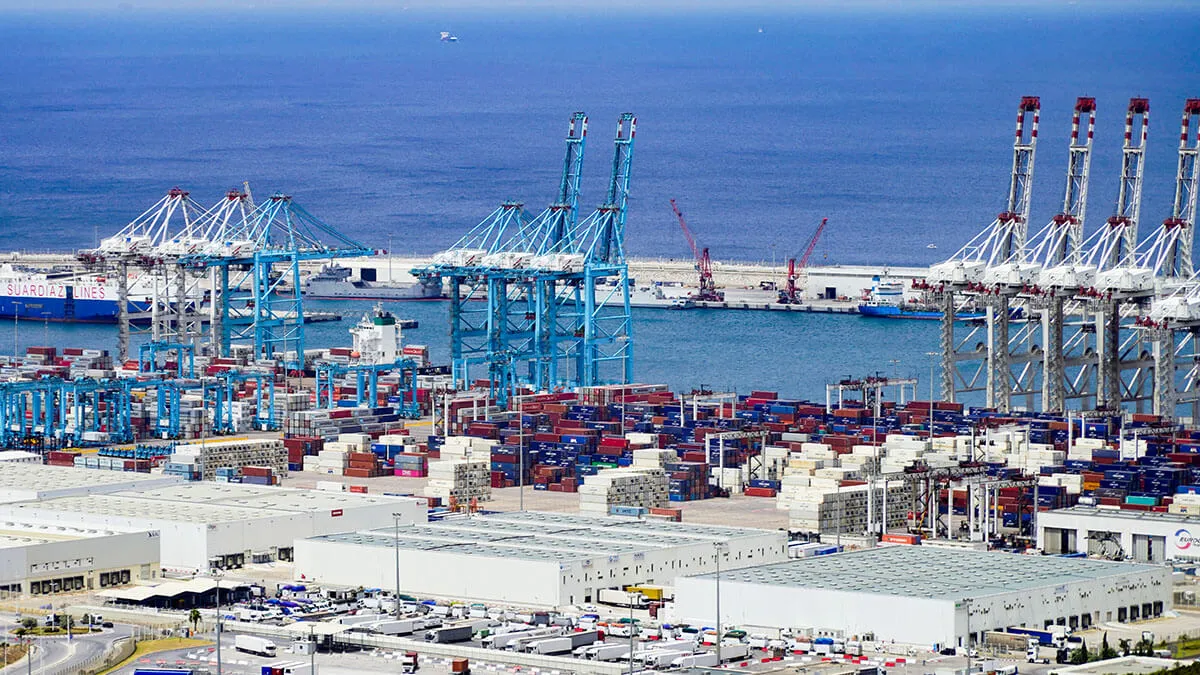

Morocco and Spain: A Strategic Economic Partnership
During the recent Doing Business event held in Tangier-Tetouan-Al Hoceima, Adil Rais, the co-chair of the Morocco-Spain Economic Council, emphasized the growing strength of economic relations between Morocco and Spain. This burgeoning partnership is characterized by industrial integration and productive complementarity, underscoring a deepening interdependence between the two economies. As both nations navigate this evolving landscape, they are poised to enter a new phase of cooperation that promises to enhance investment opportunities and mutual benefits.
The geographical proximity of Morocco and Spain has historically facilitated trade; however, this relationship has matured into a sophisticated economic alliance, creating a shared production ecosystem that spans the Strait of Gibraltar. Adil Rais highlighted the significance of investment as a catalyst for this bilateral relationship, stating, 'We are structurally very important trading partners for each other.' This assertion is reinforced by the impressive figure of over €22 billion in annual bilateral trade, which transcends mere commodity exchange to encapsulate a complex web of interdependence within the Euro-Mediterranean region, engaging various strategic industrial sectors.
Spain has consistently been Morocco's primary trading partner, bolstered by substantial increases in imports, exports, and investments. This economic synergy is further illustrated by the high level of industrial integration that characterizes their relationship. Numerous sectors operate under a shared value chain model, wherein companies from both nations collaborate at different production stages. For instance, components manufactured in Spain are incorporated into vehicles produced in Morocco, which are subsequently exported to the European market. Rais noted that the automotive industry exemplifies this productive dynamism, highlighting the strong interdependence that goes beyond traditional foreign trade paradigms. Indeed, Morocco exports vehicles to Spain that incorporate parts sourced from its own manufacturing sector.
Expanding Horizons Beyond Traditional Trade
The implications of the free trade agreement between Morocco and the United States extend this industrial integration beyond the confines of the European market. A significant portion of products manufactured by Inditex in Morocco finds its way to the U.S. market, with 85% of these exports directed there. This trend is mirrored in the automotive sector, where the electric vehicle segment is gaining traction and increasingly shaping Moroccan exports to Spain.
This economic complementarity is not confined to the automotive industry; it also encompasses the textile sector, where Morocco has established itself as a vital supplier for Inditex, one of the world’s leading fashion retailers. Moreover, agricultural and fisheries sectors—historically significant pillars of bilateral trade—continue to thrive, with Morocco emerging as a key agricultural supplier to Spain. In the early months of 2025, Spanish imports of Moroccan fruits and vegetables reached over 188,000 tonnes, valued at approximately £481 million, demonstrating Morocco's crucial role in feeding the Spanish market.
Fishing remains another cornerstone of this economic partnership, with Morocco's fishing sector generating between $2 to $3 billion in annual exports. The European market, particularly Spain, constitutes a primary destination for these exports, with Spanish imports from Morocco exceeding $130 million in 2024. Despite the robust nature of bilateral trade, Spain has yet to become the leading foreign investor in Morocco. However, recent years have seen a marked improvement in Spain's position, rising from sixth to third among foreign investors in Morocco, indicative of a positive trend.
Adil Rais noted that this upward trajectory reflects a shifting perspective among Spanish companies towards the Moroccan market, which is increasingly viewed as a strategic platform and priority investment destination. Key sectors such as tourism, water and energy infrastructure, and the aeronautics industry are particularly attractive to Spanish investors. Concurrently, there is a notable reverse investment trend, with Moroccan companies keenly exploring opportunities in Spain, especially in distribution and through strategic acquisitions. For the first time, Moroccan investments in Spain surpassed 1 billion dirhams, signaling a growing recognition of the Spanish market as a viable expansion avenue for Moroccan enterprises.
As Moroccan firms develop their presence in Europe, Spain appears to be an ideal destination for their internationalization efforts. The strengthening of industrial chains and the increase in investment indicate that the economic relationship between Morocco and Spain is set for further growth in the years to come. Rais is optimistic that Spain's position as a foreign investor in Morocco will continue to rise, driven by the already substantial level of economic integration between the two nations.
As reported by atalayar.com.