
A Symbolic Visit with Political Significance
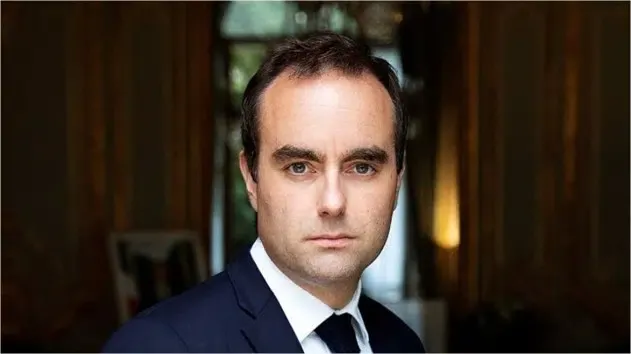
The visit began with a significant gesture. On Thursday, July 16, 2026, French Prime Minister Sébastien Lecornu laid a wreath at the graves of the late Moroccan kings, Mohammed V and Hassan II, in the Mohammed V Mausoleum in Rabat. This act is part of diplomatic protocol, yet the timing and political context lend it additional weight, highlighting the evolving relationship between France and Morocco.
Lecornu traveled to Morocco for an official visit to co-chair the 15th session of the high-level meeting (HLM) between both nations alongside Moroccan Prime Minister Aziz Akhannouch. His delegation included a wide array of government ministers and representatives, covering foreign affairs, the interior, economy, defense, agriculture, digitalization, and culture. However, this visit was not a mere renewal of relations; rather, it represented a crucial moment following a significant political shift in 2024, when France, under President Emmanuel Macron, redefined its stance on the Sahara issue, asserting that the present and future of the Sahara should be viewed within the framework of Moroccan sovereignty.
Building on Political Understanding for Tangible Cooperation
The discussions in Rabat focused on the next phase of this political understanding: transitioning from diplomatic dialogue to concrete collaboration and institutionalizing the rapprochement initiated in 2024. Prior to that year, Franco-Moroccan relations had faced a challenging period marked by differing positions on the Sahara issue, visa tensions, and political disagreements. The shift in France's position has since provided a new political foundation, allowing both Paris and Rabat to transform their renewed closeness into enduring structures.
During the meeting in Rabat, Prime Minister Lecornu emphasized the importance of developing bilateral relations further, referencing shared challenges such as security, counter-terrorism, environmental issues, and developments across the African continent. Moroccan Prime Minister Akhannouch referred to the implementation of an expanded partnership that is now entering an operational phase. Since President Macron's state visit in October 2024, numerous high-level contacts have been established, yielding advancements in several areas. The key question now is not whether Paris and Rabat will work more closely together politically, but rather if this rapprochement can produce lasting economic, technological, and institutional outcomes.
The most pronounced political dimension of the meeting was once again evident in discussions regarding the Sahara. At the joint press conference following the high-level meeting, Lecornu reaffirmed France's position in support of Moroccan sovereignty over the Sahara, stating that this stance is "unwavering" and will not change; France will draw the appropriate consequences from this position. For Morocco, this endorsement bears great significance, as France is not only a vital European ally but also a former colonial power and a permanent member of the UN Security Council. Support from Paris enhances Morocco's international standing.
Prime Minister Akhannouch highlighted that France's position on Morocco's territorial integrity has been crucial in fostering a new atmosphere of trust between the two nations. However, the issue remains regionally sensitive. Algeria, which supports the Frente Polisario and rejects Morocco's claims over the Sahara, views France's positioning with skepticism. Consequently, the closer collaboration between Paris and Rabat also alters the political landscape in the Maghreb.
This new cooperation extends beyond diplomacy and economics, as evidenced by the composition of the delegations. During the visit, French Minister for Armed Forces and Veterans, Catherine Vautrin, met with Moroccan Minister of National Defense, Abdeltif Loudyi. The Inspector General of the Royal Armed Forces (FAR) and Commander of the Southern Zone also participated in the discussions. According to the Moroccan National Defense Administration, both sides signed a technical agreement and a memorandum of collaboration in the defense industry, although specific details were not disclosed. These agreements indicate an expansion of military cooperation under new legal frameworks, as Morocco has been modernizing its armed forces for years, collaborating with various international partners. France, in turn, aims to enhance its security role in North Africa amidst changing political dynamics in parts of West Africa, where it has lost influence in recent years.
The involvement of the interior ministers from both countries also underscored that security matters remain a critical component of their bilateral relations, encompassing counter-terrorism and regional security issues. In addition to traditional areas such as security and trade, future-oriented topics were also central to the discussions. Conversations between Moroccan Minister for Digital Transformation and Administrative Reform, Amal El Fallah Seghrouchni, and French Minister Delegate for Artificial Intelligence and Digital, Anne Le Hénanff, focused on research, innovation, digital infrastructure, and the application of artificial intelligence. For Morocco, this partnership is essential for enhancing its technological capabilities and reinforcing its position as a digital hub in Africa, while France seeks to connect its extensive research and technology expertise more closely with African partners.
Classic infrastructure also remains a focal point of collaboration. Several agreements were signed during the high-level meeting, addressing issues such as energy transition, industrial decarbonization, and connectivity to rail and port networks. Additionally, agriculture was a key topic, with Moroccan Minister Ahmed El Bouari and his French counterpart, Annie Genevard, discussing cooperation in research, training, and sustainable resource management. Given the recurring droughts in the Maghreb, the management of water resources is increasingly significant. The collaboration in this sector illustrates that bilateral relations are becoming increasingly focused on tangible economic and societal challenges.
Lecornu's visit is also linked to further political planning between the two countries. As reported by maghreb-post.de, a state visit by King Mohammed VI to France is expected in the coming autumn, although no specific date has been officially announced. Such a visit could signify the next high-level milestone in Franco-Moroccan relations, showcasing both parties' commitment to securing their new closeness in the long term following the political shift in 2024 and its subsequent implementation at the governmental level. Ultimately, Lecornu's trip to Rabat represented not just a new beginning but a test for a relationship that has fundamentally changed since 2024. The critical factor now is whether political agreements can translate into concrete projects and whether France and Morocco can reconcile their differing interests sustainably.