
Enhancing Cooperation Between Morocco and Germany
The collaboration between Morocco and the Federal Republic of Germany is set to deepen, as evidenced by the recent visit of German Foreign Minister Johann Wadephul to Rabat. During this two-day visit, Wadephul emphasized Morocco's significance as a key partner for Germany. He stated, "Morocco is a key partner for us," highlighting the robust political and economic relations that exist between the two nations. Wadephul expressed a vision for the future, where both countries aim to grow even closer, particularly in areas such as economic cooperation, renewable energy initiatives, and the recruitment of skilled professionals.
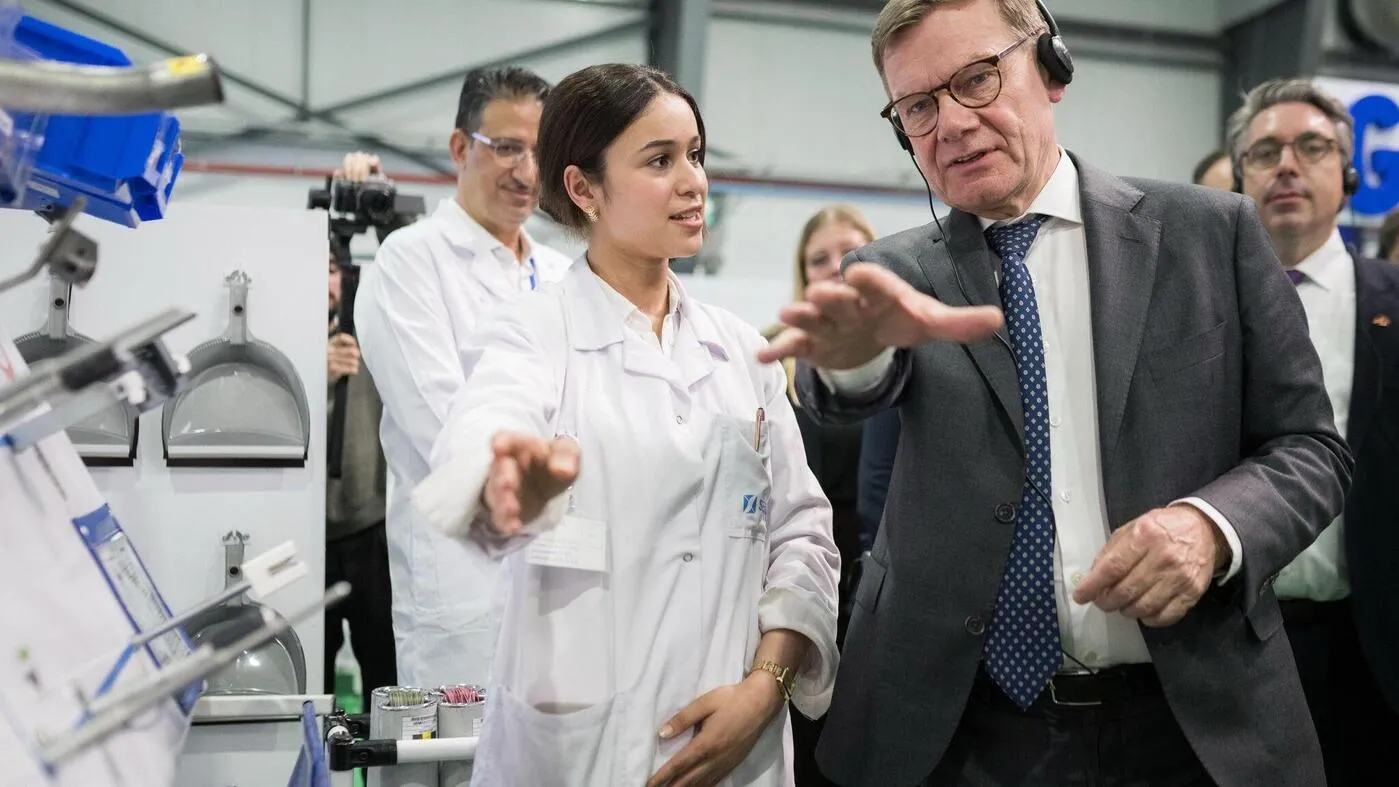
Upon his arrival in Rabat on Wednesday afternoon, the primary focus of Wadephul's trip was the strategic dialogue designed to enhance bilateral relations. His agenda included a visit to SE Bordnetze Maroc, a German automotive supplier, followed by a trip to the national football academy. Demonstrating a commitment to fostering goodwill through sports, Wadephul participated in a friendly match against a girls' team, with assistance from former Bundesliga player Karim Bellarabi. Notably, Morocco, along with Spain and Portugal, is set to co-host the FIFA World Cup in 2030, further cementing its position on the global stage.
Economic Potential and Future Collaboration
As part of his visit, Wadephul attended a reception celebrating the 70th anniversary of diplomatic relations between Germany and Morocco. Scheduled for Thursday is a meeting with Moroccan Foreign Minister Nasser Bourita to continue discussions centered on the strategic dialogue between the two countries. Wadephul noted that Morocco stands as Germany's second-largest trading partner in Africa, following South Africa, and stressed the untapped potential that lies within their economic cooperation. He praised Morocco's leadership in solar and wind energy across the African continent and its ambitions to become a leading global producer of green hydrogen.
In light of geopolitical tensions, such as the ongoing conflict in Iran, Wadephul underscored the urgency of reducing dependence on fossil fuels and enhancing efforts to establish a renewable energy supply that is both independent and diversified. He pointed out that Morocco's critical raw materials and capabilities in battery production are essential future fields that must be explored. These areas present opportunities for Germany to diversify its supply chains and lessen its dependencies.
Additionally, Wadephul expressed his intention to attract Moroccan professionals to Germany, noting that Moroccan labor already plays a crucial role in sectors experiencing shortages, such as healthcare and nursing. As a transit country for many African migrants heading to Europe, Morocco has recently signed a migration agreement with Germany aimed at reducing irregular migration while strengthening labor migration.
Recently, Morocco has been placed on an EU list of safe countries of origin, which will allow for expedited processing of asylum applications from Moroccan nationals starting in summer 2024. For Germany, Morocco's political stability in a region marked by various conflicts makes it an important ally. The two countries agreed to restart their relations in February 2022, following earlier disagreements, particularly concerning the status of the disputed Western Sahara region.
Wadephul concluded by highlighting the shared interests between Germany and Morocco, especially in pursuing long-term solutions to the Middle East conflict and ensuring stability in the neighboring Sahel region. In February, Morocco became the first Arab nation to pledge police and military support for a stabilization force in the Gaza Strip. However, it is important to note that non-governmental organizations frequently criticize the human rights situation in Morocco, with the country ranking 120th out of 180 on the Press Freedom Index by Reporters Without Borders in 2025.
As reported by tagesspiegel.de.