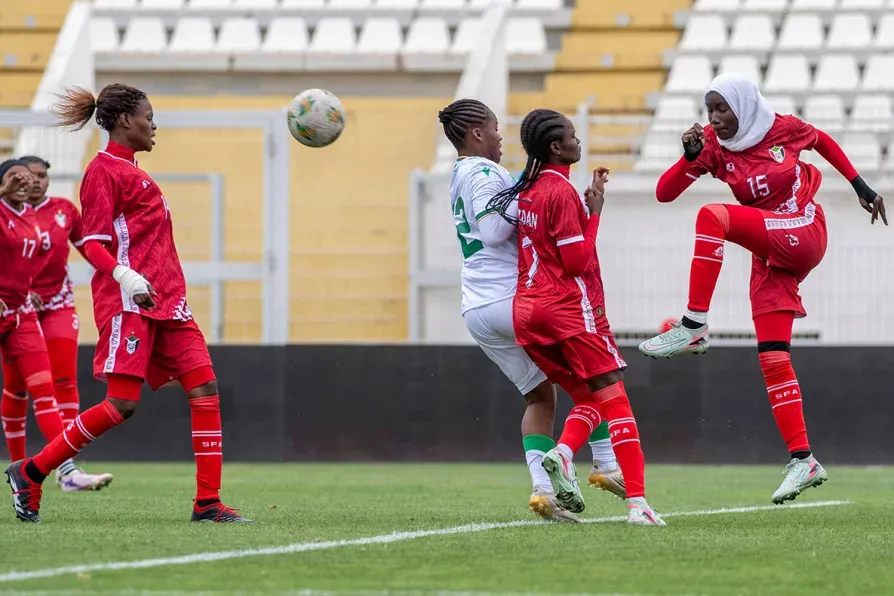

The sight of the Sudanese women's football team, clad in striking red jerseys against the verdant backdrop of Larbi Zaouli Stadium in Casablanca, Morocco, serves as a poignant reminder of resilience amid adversity. Comprising mainly teenage girls, many of whom have fled the ravages of war, this squad marks a significant milestone as Sudan's first venture into international women's football since the outbreak of civil conflict, a time when the involvement of women in sports has been fraught with challenges. Nura Mohamed, the 17-year-old captain, expressed her aspirations, stating, 'My goal is to lift up soccer in my country.' For these young athletes, the experience of playing on such a prominent stage is both exhilarating and emotional, as they navigate their love for the game against the backdrop of personal and societal upheaval.
Traveling to Morocco for qualifying matches leading to the 2028 Los Angeles Olympics, Sudan's under-17 women's national team faced formidable opponents, resulting in significant defeats, including a staggering 17–0 loss to Comoros. The team's inexperience was evident as they collectively grappled with the complexities of organized football, often looking to their coach for guidance. Burhan Tia, a seasoned football coach overseeing Sudan's women's teams, acknowledged the stark differences in experience and fitness levels, highlighting the immense gap that exists between his young squad and their rivals, many of whom play at competitive levels in Europe. This situation underscores the critical need for development and support in women's sports within Sudan, especially in the wake of a civil war that has decimated the infrastructure for athletics.
Women's Football: A Beacon of Hope for Sudan
The emergence of this team amidst the turmoil represents a flicker of hope for the future of women's football in Sudan. The war, which erupted in 2023, has had devastating effects on the nation, halting all sports activities and particularly impacting women's football, which had only recently begun to gain a foothold after the 2019 revolution that overthrew long-standing oppressive regimes. Manal Ali Bushra, a prominent figure within the women's football committee, emphasized the perseverance of these young players who travel long distances for training, often separated from their families yet undeterred in their pursuit of athletic dreams. The federation is actively seeking to improve infrastructure, including plans for a sports city and renovations of key stadiums in safer regions to facilitate the growth of women's football.
However, the journey to rebuild women's football in Sudan is fraught with challenges. Coach Tia faced the daunting task of identifying players amid a landscape shaped by war, requiring him to scout schools across Sudan and even in neighboring Egypt where many families have sought refuge. The complexities of age verification and the loss of identification documents for many girls further complicate efforts to establish a cohesive team. The physical and emotional toll of war has left many young athletes struggling to adapt to the rigors of competitive sports, a reality that is painfully evident in their performance on the field.
Challenges Beyond the Pitch
The humanitarian crisis in Sudan is alarming, with the United Nations labeling it the world's worst, as the conflict has led to mass displacement, severe violence, and widespread famine. The societal implications extend beyond the battlefield, as cultural and political dynamics continue to shape perceptions of women in sports. The historical context of women's football in Sudan, which faced significant opposition from conservative factions, adds another layer of complexity to the current situation. Despite these challenges, the players embody a spirit of resilience and defiance against the societal norms that have long restricted their freedoms.
While the military government has permitted participation in international competitions, the underlying issues of gender-based violence and systemic oppression persist, raising questions about the true intent behind such support. Activists like Hala Al-Karib call for substantial reforms within the football federation to ensure sustained investment and genuine support for women's athletics in Sudan. Nevertheless, in the midst of political maneuvering and societal strife, the Sudanese women's football team stands as a testament to the power of sport to unite and inspire. As they chase the ball on the field in Casablanca, they are not merely playing a game; they are forging a path toward a brighter future for themselves and future generations.
As reported by morningstaronline.co.uk.