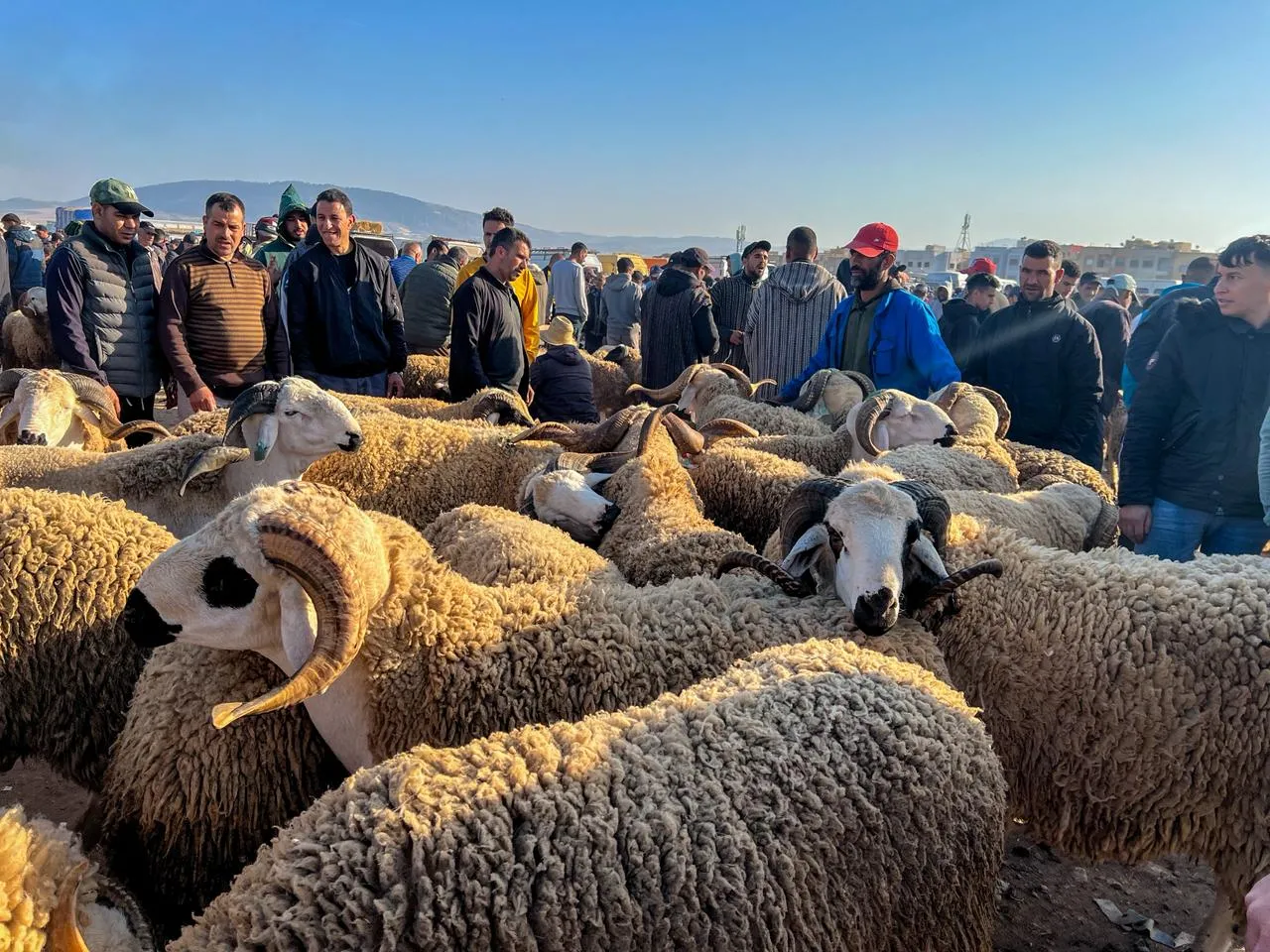

Increased Demand for Eid Sacrifices in Fes Markets
The Le360 camera captured the bustling atmosphere in various local markets and sales points for Eid sacrifices in Fes and its surrounding areas, showcasing a marked increase in citizens looking to purchase their sacrificial animals. This year, there is a notable diversity in the Moroccan breeds available, including the ‘Sardi,’ ‘Tamhdid,’ ‘Berkki,’ ‘Beni Kil,’ and ‘Daman,’ alongside other local varieties. The presence of goats and cattle of different sizes further enriched the offerings, creating a vibrant environment characterized by anticipation and numerous negotiations between sellers and buyers as they finalize their purchasing decisions.
According to various statements made to Le360, many farmers reported a significant rise in the demand for sacrificial animals over the last two days compared to the previous week. They attributed this spike to the abundant supply, which they believe has contributed to a relative decrease in prices. These prices vary according to breed, weight, and the overall quality of the sacrifice.
Price Range and Buyer Sentiments
Several vendors indicated that the prices for the sacrificial animals range between 3000 and 8000 dirhams, emphasizing that the market provides a variety of options to accommodate different financial capacities. Some sellers noted that while the current prices may seem high to consumers, they barely cover the costs incurred throughout the year for raising livestock, including feed, transportation, and care of the animals. They highlighted the considerable effort farmers invest from the start of the season until the sale of the sacrifices during Eid days.
Conversely, numerous consumers expressed their dissatisfaction with the persistent rise in the prices of sacrificial animals despite the apparent abundance in the markets. They argued that these prices are not in line with the purchasing power of a large segment of families, particularly those with lower incomes, who in previous years were able to purchase sacrifices priced between 2000 and 2500 dirhams. Many in this demographic, they claimed, have become nearly absent from the market this year.
Some individuals observed that certain sheep on sale, priced between 4000 and 5000 dirhams, appear larger in size, but upon closer inspection, they do not justify the asking price. This discrepancy raises questions regarding the pricing strategies employed in the market. Furthermore, they pointed out that the issue is not solely linked to intermediaries and speculators but also extends to the greed of some farmers. Many farmers, when asked about prices, simply state, ‘It was bought at this price,’ without providing a clear selling price. During negotiations, they often increase the price directly, which gives the impression that some vendors are attempting to achieve the highest price possible rather than adhering to a transparent pricing structure.
In this context, consumers also questioned how the measures and support directed toward the livestock sector have influenced the prices of sacrificial animals. They noted the significant rainfall the kingdom has experienced during this agricultural season, which has improved vegetation cover and provided ample fodder. Such factors, they believe, should have contributed to a reduction in prices. Additionally, they mentioned that the exemption of farmers from market-related fees has not translated into tangible changes in the prices being offered.
As farmers strive to maintain a balance between production costs and breeding conditions, and consumers seek prices that align more closely with their purchasing abilities, the market remains open to the developments in the hours leading up to Eid, which typically influence the dynamics of supply and demand within these seasonal trade spaces.
As reported by ar.le360.ma.