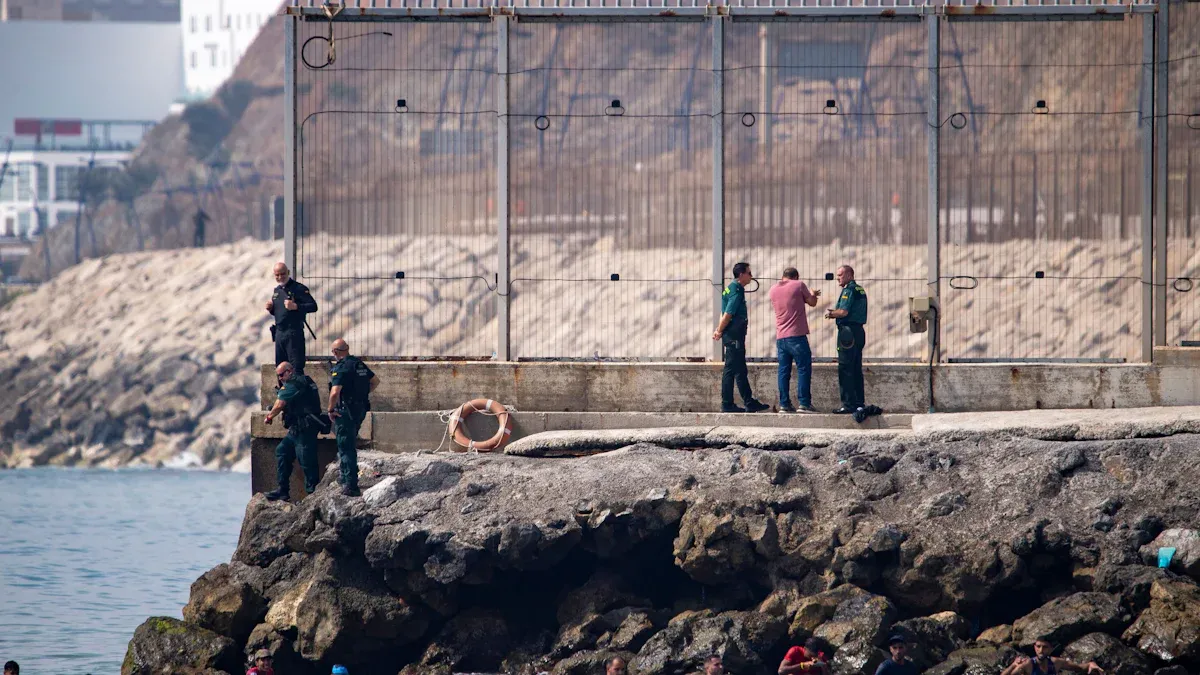
Ceuta Faces Influx of Migrants Amid Calls for Military Support
In recent days, the Spanish exclave of Ceuta, located at the border with Morocco, has experienced a significant surge in the number of migrants attempting to enter the region. Reports indicate that over 1,500 individuals have reached Ceuta, primarily by swimming, within a single week. This alarming influx has prompted the regional president, Juan Jesús Vivas, to urge the Spanish government to declare a state of emergency and deploy military forces to the border. The situation is compounded by the fact that many of these migrants are young individuals, who face perilous conditions during their attempts to reach safety.
Eyewitness accounts and media reports reveal that hundreds of migrants have been able to breach the barriers surrounding Ceuta, particularly during moments when police presence was minimal. As the Moroccan security forces retreated upon the migrants' arrival, individuals could be seen celebrating their arrival by chanting, "Long live Spain!" This dramatic scene follows a week where more than 1,500 migrants had already made similar journeys across treacherous waters. The local government has expressed concern that their reception facilities are overwhelmed, leaving many migrants to sleep on the streets.
Tragic Consequences of the Dangerous Journey
The journey to Ceuta is fraught with danger, as many migrants must swim for nearly four hours from Moroccan territory to reach the Spanish shores, often using flotation devices due to their limited swimming abilities. Tragically, in the past week, at least four young migrants have lost their lives attempting this perilous passage. Rescue operations by the Red Cross and Spanish maritime services have seen over a hundred individuals saved from drowning as they sought to reach Ceuta. The majority of these migrants are Moroccan youths, but there are also significant numbers from Algeria and Sudan.
This recent surge in migration has been linked to a recent ruling by the Spanish Supreme Court, which prohibited the practice of "pushbacks"—the immediate return of migrants who have crossed borders seeking asylum. While such practices have been contested under European law, Spain has traditionally relied on prior rulings that allowed for the return of individuals who forcibly crossed the border. However, the latest court decision clarifies that migrants who arrive by sea cannot be summarily returned, as they have not breached any border barriers. This legal shift is expected to impact Spain's immigration policies and the handling of future migrant crises.
As reported by sueddeutsche.de.