U.S.-Iranian Relations Reach a Boiling Point
In a significant escalation of tensions between the United States and Iran, President Donald Trump announced a new phase of confrontation, asserting that Washington would target any site that Iran may use for nuclear purposes in the future. He specifically mentioned the heavily fortified site known as ‘Jabal al-Fas’ near the Natanz facility, warning that military action could occur 'very soon.' Trump emphasized that the U.S. has not finished with Iran and will continue to undermine its military and nuclear capabilities. This declaration comes amid rising threats to maritime navigation in the Red Sea, particularly from Houthi forces, coinciding with Trump's warnings of retaliation should the Houthis follow through on their threats to hijack commercial shipping.
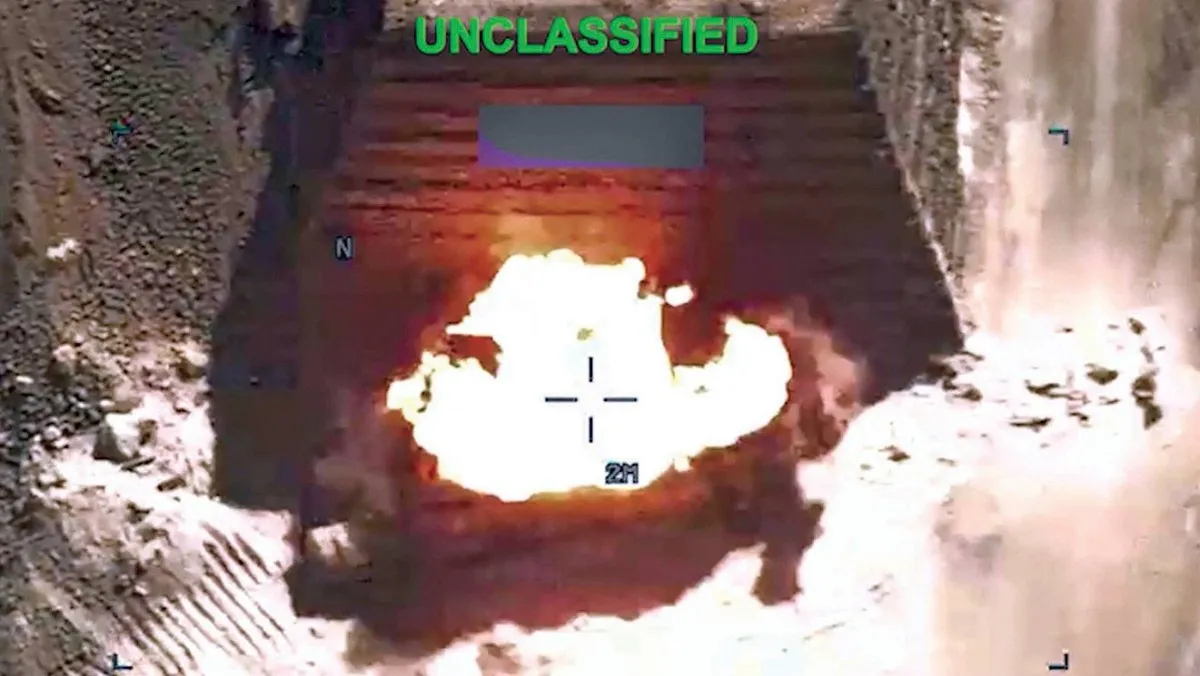
Recently, the U.S. Central Command (CENTCOM) confirmed the execution of a new series of strikes targeting command centers, military installations, missile and drone launch sites, and air defense systems within Iran. These operations are geared towards degrading Iran's ability to threaten American forces and to ensure freedom of navigation in the Strait of Hormuz. The statement added that U.S. forces remain prepared to hold Iran accountable for its unprovoked aggression against civilian sailors attempting to navigate the strait safely and freely.
During a recent White House address, Trump intensified his rhetoric against Iran, declaring that the blockade in the Strait of Hormuz remains steadfast and that 'no one is passing through.' He reiterated that the U.S. is committed to preventing Iran from acquiring nuclear weapons, stating that any facility Iran seeks to reactivate will face renewed strikes. He estimated that it could take Iran between 20 and 25 years to rebuild what has been destroyed by American actions, suggesting that the agreement sought by Washington would effectively prevent Iran from ever obtaining nuclear weapons in the future. Furthermore, he hinted at a potential strike on the fortified ‘Jabal al-Fas’ site, which houses deep tunnel complexes believed to be beyond the reach of the most potent conventional bunker buster bombs in the U.S. arsenal.
Regional Reactions and Ongoing Mediation Efforts
Regarding the possibility of resuming political communications, Trump indicated that Iranians 'desperately want to meet,' but he added that Washington is 'not interested' in holding a meeting at this moment unless Tehran is ready for a 'meaningful dialogue.' However, he acknowledged that there are back-channel communications with Iran as they seek an end to the situation that is causing them significant damage. Additionally, Trump expanded his warnings to include piracy in the Red Sea, remarking that if any incidents occur, the U.S. would be compelled to respond. He noted that the U.S. had undertaken about 45 days of substantial actions against the Houthis, claiming no problems have arisen since then.
In the Strait of Hormuz, the British Maritime Trade Operations reported yesterday that an oil tanker was struck by an unidentified projectile eight nautical miles east of the Omani city of Lima, prompting crew members to evacuate to a lifeboat, with no reported marine pollution. The relevant authorities have launched an investigation into the incident. In a related development, the Kuwaiti Foreign Ministry summoned the Iranian ambassador to Kuwait, Mohammad Toutunji, delivering a note of protest regarding the targeting of the Kuwaiti tanker 'Kifan' while transiting the Strait of Hormuz, which resulted in injuries to several crew members.
The United Arab Emirates has condemned in the strongest terms the renewed Iranian aggressive attacks targeting Bahrain, Kuwait, and Jordan with missiles and drones. In a statement, the Ministry of Foreign Affairs emphasized that these aggressive acts represent a blatant violation of the sovereignty of brotherly nations and pose a threat to their security and stability. The ministry reiterated the UAE's full solidarity with Bahrain, Kuwait, and Jordan, supporting all measures to maintain their security and stability.
Furthermore, the Bahrain Defense Force reported intercepting and destroying several Iranian missiles and drones targeting the kingdom, stating that attacks on civilians and private property constitute a severe violation of international humanitarian law. The Kuwaiti military also announced that its air defenses successfully intercepted hostile missiles and drones. The Kuwaiti Ministry of Electricity, Water, and Renewable Energy reported that several power generation and desalination plants have faced attacks for the fourth consecutive day. In Jordan, the armed forces announced the interception and downing of three missiles originating from Iranian territory after entering Jordanian airspace, confirming no injuries or damage.
Amid the military escalation, U.S. media reports highlight ongoing mediation efforts led by Qatar, Egypt, Oman, and Pakistan aimed at reviving a path towards de-escalation, while indirect communications between Washington and Tehran continue, despite the U.S. administration's insistence on maintaining military pressure at this stage. Pakistani Prime Minister Muhammad Shehbaz Sharif recently hosted Iranian Interior Minister Eskandar Momeni, confirming Pakistan's commitment to acting as a neutral facilitator and urging all parties to exercise restraint and avoid any actions that could further destabilize the region.
As reported by albayan.ae.