
Shifting Power Dynamics in Global Football
The 2026 FIFA World Cup may not crown the first champion from Asia or Africa, but it is poised to mark a significant shift in the balance of power within global football. For nearly a century, the World Cup has been predominantly an event for European and South American teams. From the inaugural tournament in 1930 to Argentina's triumph in Qatar 2022, no team from outside these two continents has reached the pinnacle of success, leading to a narrative often centered around the so-called 'Great Eight'—a cohort including powerhouse nations like Brazil, Argentina, Germany, Italy, France, Spain, England, and Uruguay. In contrast, teams from Asia and Africa have typically been regarded as mere guests, capable of delivering the occasional upset but ultimately falling short of advancing deep into the tournament.
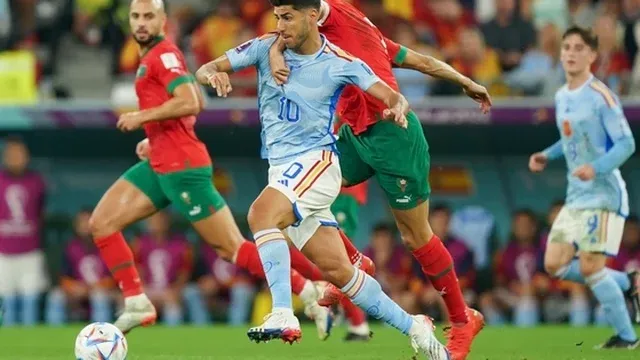
However, the developments of the past decade suggest that this narrative is gradually changing. A prime example of the rising footballing prowess outside Europe and South America is Morocco's remarkable journey during the 2022 World Cup. Prior to the tournament in Qatar, no African team had ever reached the semifinals. Teams such as Cameroon in 1990, Senegal in 2002, and Ghana in 2010 came close but ultimately failed to make history. Morocco managed to achieve what previous generations could not, defeating Belgium in the group stage, eliminating Spain in the Round of 16, and overcoming Portugal in the quarterfinals to become the first African team to reach the semifinals of a World Cup.
The Rise of Asian Football
This unprecedented success is not attributed to luck; rather, the majority of Moroccan players honed their skills in European football environments, training in elite academies and competing in some of the strongest leagues worldwide. Their tactical, physical, and mental foundations are unparalleled. Morocco's achievement is not an isolated incident; it serves as evidence that the gap between footballing nations is rapidly closing. Similarly, Japan has taken on a comparable role in Asia, showcasing their prowess by defeating both Germany and Spain—two former World Cup champions—during the 2022 tournament, thus securing top position in what was deemed the toughest group. This success is not fleeting; Japan has consistently reached the knockout phase of the World Cup since 2002 and has established a robust training system that has facilitated the transition of numerous players into European top leagues, solidifying their standing among the continent's elite teams.
South Korea has also followed a similar trajectory. After their sensational run to the semifinals in 2002, the South Korean national team has maintained impressive competitiveness, regularly qualifying for World Cups and boasting many players active in Europe. Meanwhile, nations such as Iran, Saudi Arabia, Australia, and Uzbekistan are making notable strides. Saudi Arabia's shocking victory over Argentina at the 2022 World Cup and Uzbekistan's first-ever qualification for the 2026 tournament are signs that Asian football is entering a new phase of development.
One of the most significant changes for the 2026 World Cup is the expansion of the tournament from 32 to 48 teams, which presents enormous opportunities for both Asian and African football. Historically, Asia typically had four or five representatives, while Africa had about five. This situation is evolving, as the Asian Football Confederation (AFC) now has eight direct qualification spots along with one intercontinental playoff slot, while the African Football Confederation (CAF) has been allocated nine direct qualifiers plus one playoff spot. This does not simply mean that more teams will qualify for the World Cup; more importantly, it allows emerging football nations to gain experience, enhance their skills, and develop long-term ambitions.
Teams such as Uzbekistan, Jordan, and Cape Verde had previously struggled to showcase themselves on the grandest stage of world football, but now they could become potential dark horses. The expansion also implies that Asian and African football will wield greater influence on the global stage. Despite the continued dominance of European and South American football powerhouses—who possess superior squad depth, premier league systems, and substantial financial resources—teams like France, England, Spain, Germany, Brazil, and Argentina remain strong contenders for the 2026 World Cup title. Thus, it still seems premature to speak of Asian and African representatives as potential champions. Morocco, the most successful African team in World Cup history, has yet to earn the status of a title contender four years after their historic upset in Qatar.
Although the gap has narrowed, it is far from closed. The only distinction now is that Asian and African teams will no longer enter the World Cup as mere underdogs. They aspire not only to survive the group stages but also to make strong runs into the quarterfinals, semifinals, and beyond. While the 2026 World Cup may not be the first to see a champion from outside Europe and South America, it could very well be remembered as a tournament where the concept of 'dark horses' is redefined. Nations such as Morocco, Senegal, Nigeria, Japan, South Korea, and even newcomers like Uzbekistan are all capable of challenging the established football giants. Modern football is evolving rapidly, driven by technology, data, sports science, and globalization. In this dynamic landscape, power is no longer an enduring privilege.
Who knows, perhaps fans in North America will witness a pivotal moment in World Cup history come summer 2026, as teams once deemed 'minnows' carve their paths onto the center stage of the world's greatest football tournament.
As reported by vietnam.vn.