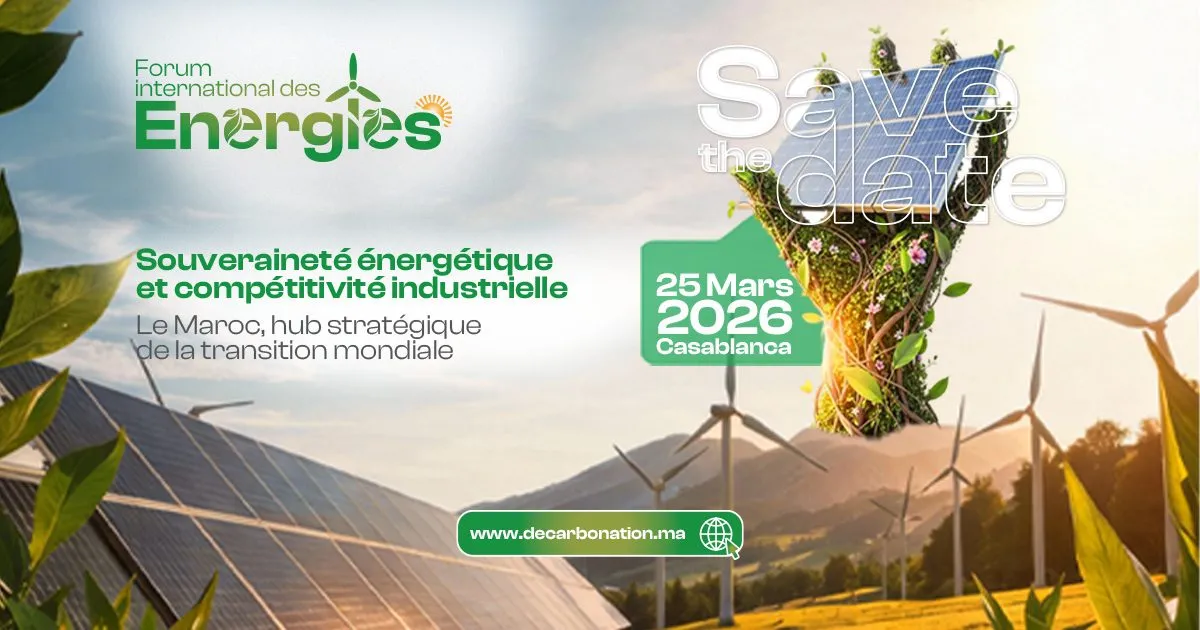

Exploring Energy Sovereignty and Industrial Competitiveness
On March 25, 2026, Casablanca will host the 4th edition of the International Energy Forum, organized by Industrie du Maroc Magazine. This year's theme, "Energy Sovereignty and Industrial Competitiveness: Morocco as a Strategic Hub for Global Transition," highlights the pivotal role of energy in shaping Morocco's industrial landscape. The event is held under the auspices of the Ministry of Energy Transition and Sustainable Development and the Ministry of Industry and Trade, bringing together institutional leaders, business executives, experts, and solution providers to discuss critical changes in the energy and industrial agenda of the Kingdom.
In an international context characterized by shifting energy balances, increasing climate constraints, and intensifying competitive pressures, the forum aims to reposition energy as a strategic focal point. The discussions will extend beyond mere technical transitions, addressing issues of sovereignty, industrial attractiveness, infrastructure financing, and innovation, ultimately determining Morocco's role in future value chains.
A Comprehensive Agenda for Energy Transformation
The forum will commence with a session dedicated to the national vision and direction of Morocco, setting the tone for a dialogue space where public decision-makers, industrialists, energy operators, investors, and innovation ecosystems can converge. The first keynote will tackle the crucial topic of using energy as a catalyst for decarbonizing the Moroccan industry.
The first panel will focus on geostrategy, energy sovereignty, and financing, examining how Morocco can reduce its energy vulnerability amidst external dependencies, market volatility, and geopolitical changes. The discussions will also delve into Morocco's positioning within regional and international production, exchange, and interconnection dynamics, alongside identifying necessary leverage points to accelerate the deployment of capacities, networks, and infrastructures. Financing will play a central role in these conversations, emphasizing the importance of robust, bankable, and sustainable models.
The second panel will address the intersection of industry, decarbonization, and competitiveness, grappling with how to leverage low-carbon energy for enhanced industrial performance. Key topics will include adapting to new international requirements, enhancing Morocco's attractiveness for productive investments, and aligning energy transition efforts with industrial advancement and local value creation.
In the afternoon, the spotlight will shift to one of the most watched topics currently: a third panel on green hydrogen, territories, and new value chains. This session will explore the transition from potential to viable industrial projects in Morocco, questioning the ability of local territories to host and structure new energy, industrial, and logistical ecosystems. Topics such as land use, networks, infrastructures, industrial transformation, market access, local integration, skilled employment, and technology transfer will be at the forefront of discussions.
Another keynote will underscore the significance of legal security as a foundational asset for corporate transformation, reminding participants that beyond industrial and technological ambitions, energy transition depends on the stability of the regulatory framework, clarity of rules, and investment security.
The day will conclude with an "Innovation & Business" session dedicated to startups, highlighting emerging solutions and entrepreneurial dynamics that support sector transformation. This session will focus on two main topics: energy efficiency and industrial performance, alongside AI-powered software for solar assessment and sizing.
Through its fourth edition, the International Energy Forum reaffirms its commitment to fostering a substantive debate on the role of energy in reshaping Morocco's future.
As reported by industries.ma.