
Morocco's Aviation Sector: A Driving Force for Economic Transformation
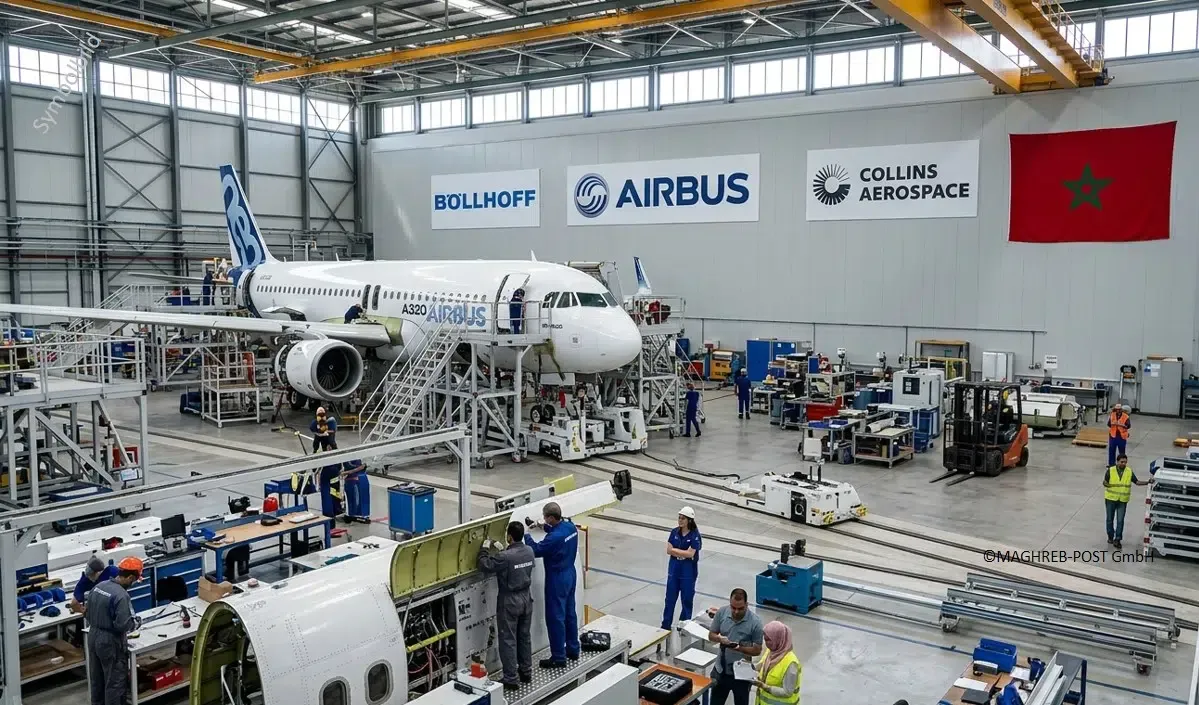
The Moroccan aviation industry is experiencing a remarkable transformation that extends far beyond the recovery from recent crises. With ambitious expansion targets set for 2026, the sector has achieved a dynamic growth trajectory that is evident in its recent performance. In early April, the aviation sector reported an impressive export increase of 16.5%, reaching 5.2 billion Moroccan Dirhams (approximately €479.38 million). This growth is significantly bolstered by the collaboration between the German family-owned company Böllhoff from Bielefeld and the US conglomerate Collins Aerospace, both of whom are significantly expanding their operations at the Nouaceur site near Casablanca.
The Midparc industrial zone, located close to Mohammed V Airport, now hosts over 140 companies within the aerospace industry. The recent announcement on April 29 regarding the completion of a new production facility by Böllhoff Morocco signals a fundamental structural shift within the Moroccan industrial ecosystem. No longer is the focus solely on simple assembly tasks or labor-intensive manufacturing processes; instead, Böllhoff will now produce high-precision mechanical components for the Airbus A320 program directly in Casablanca. Manufacturing such components requires complex certification processes, high traceability, and stringent industrial quality standards—demands that were previously associated mainly with established European production sites.
Building a Skilled Workforce for the Future
Wissem Ellouze, Co-CEO of Böllhoff Group Europe, emphasized that the decision to establish operations in Casablanca was not a standard choice but rather a performance-oriented one. This perspective highlights the growing industrial maturity of the site, with the local integration rate—defined as the proportion of value creation occurring within Morocco—now nearing 40%. Companies aim to make supply chains more resilient to global disruptions while minimizing transport times and production downtimes through geographical proximity to final assembly lines.
A key factor contributing to Morocco's increasing appeal lies in the development of specialized skilled labor. The ability of companies like Böllhoff to establish complex production processes in the country is closely linked to the targeted development of industrial training structures. The Institute of Aeronautical Trades (IMA) plays a pivotal role in this regard, with plans to train an additional 2,500 technicians annually by the end of 2026 to meet the growing workforce demands of the expanding industry. This close alignment of educational policy and industrial development directly responds to the rising requirements of international major clients such as Airbus, which plans to ramp up production of the A320 family to 75 aircraft per month, necessitating suppliers to expand their capacities as well.
While the aviation sector is poised for growth, it also represents a broader transformation of Morocco's economic structure. The automotive industry has long been recognized as an industrial growth engine, but the aviation sector is increasingly emerging as a second technology-intensive pillar of the export economy. According to Bank Al-Maghrib, the automotive sector recently grew by 10.3% as traditional industries have lost momentum.
This shift indicates a long-term reorientation of industrial policy: moving away from resource-based exports towards integrated industrial value chains. For German industrial companies, this creates a location profile that combines geographical proximity to the European market with competitive cost structures and growing industrial specialization—factors that are becoming increasingly significant for European firms as production costs rise in other global regions.
Despite the current growth momentum in Midparc, the industry remains closely linked to the production cycles of the international aviation sector. Estimates suggest that by 2026, approximately 65% of local production volume could still be directly or indirectly tied to the Airbus A320 program, even though Boeing is also active in the country. Bank Al-Maghrib frequently highlights the high sensitivity of export-oriented industries to fluctuations in global demand.
Looking ahead, additional uncertainties stem from potential regulatory changes in air traffic. For example, France has already restricted domestic flights on certain routes for climate protection reasons, provided that efficient rail connections exist. Should similar measures be expanded internationally, this could impact the demand for short- and medium-haul aircraft unless new markets can be developed and served from Morocco, particularly in the burgeoning African aviation market. Concurrently, the industry in the kingdom is working towards gradual diversification through programs involving the Boeing 737 and Brazilian Embraer aircraft.
The investments in Nouaceur exemplify how Morocco has evolved from a low-cost production site to a strategic component of European supply chains, increasingly recognized by the German mid-market, which is now competing more vigorously with established players from France and Japan.
As reported by maghreb-post.de.